

News
Energy governance group faults ADC, says Tinubu’s approval of NNPC legacy balance reconciliation restores fiscal transparency, not revenue loss

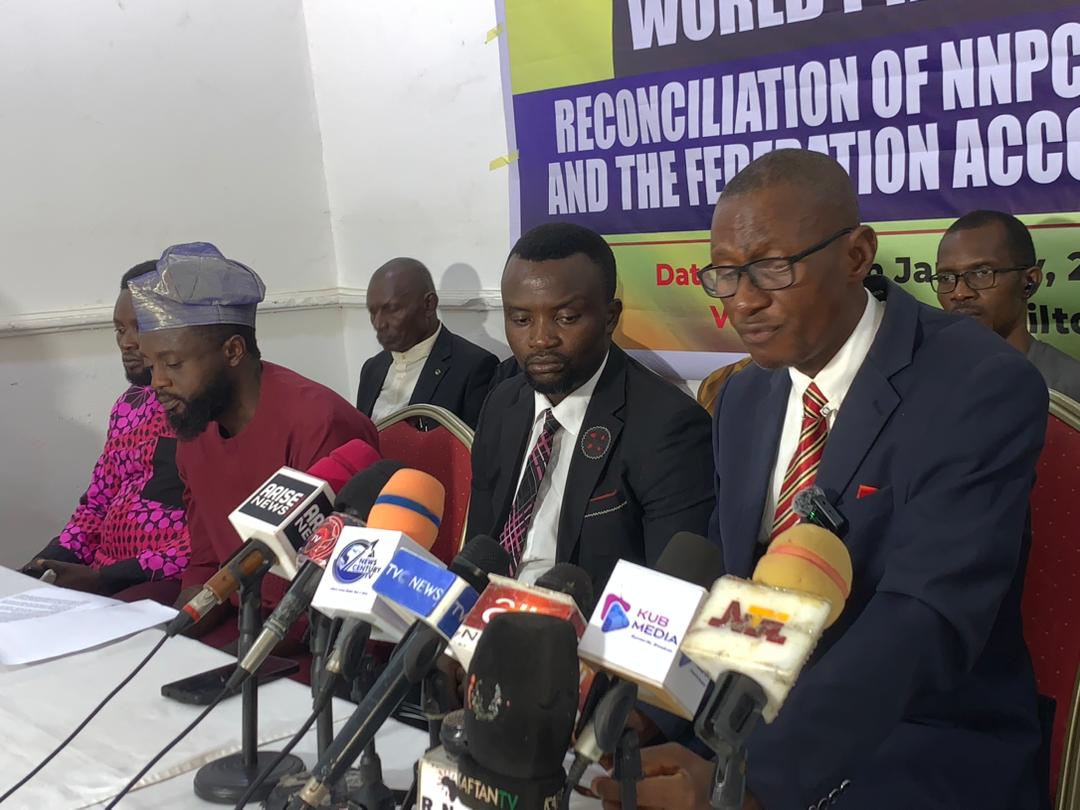
The Centre for Energy Governance and Public Finance Accountability (CEGPFA) has dismissed claims by the African Democratic Congress (ADC) that President Bola Ahmed Tinubu’s approval of the reconciliation and removal of certain Nigerian National Petroleum Company Limited (NNPC Ltd) legacy balances from the Federation Account was unconstitutional or financially harmful to states and local governments.
Speaking on Friday at a press conference held at the Transcorp Hilton, Abuja, the centre said the allegations ignored the historical, legal and fiscal realities surrounding the disputed balances, describing them as “unfounded” and “misleading”.
Dr Julius Osagie Eromonsele, executive director of the centre, said the balances in question were not fresh revenues generated under the current administration but long-standing legacy entries accumulated over several decades, many of which predated the Petroleum Industry Act (PIA).
“It is crucial to note that the balances in question are not recent revenues generated under the current administration. They are long-standing legacy entries accumulated over decades, many of them arising before the enactment of the Petroleum Industry Act,” Eromonsele said.
He explained that the disputed figures stemmed from unresolved production sharing contract disputes, domestic crude supply obligations under the former fuel subsidy regime, royalty assessment disagreements and reconciliation gaps between NNPC, regulators and revenue agencies.
According to him, these balances had remained on the Federation Account books for years despite repeated audits that questioned their accuracy, legal enforceability and collectability, creating a distorted picture of public finances across all tiers of government.
Countering claims that the balances were arbitrarily written off by presidential fiat, Eromonsele said the approval followed a formal reconciliation process involving relevant fiscal and regulatory institutions, with presentations made to the Federation Account Allocation Committee (FAAC).
“Official records show that approximately $1.42 billion and N5.57 trillion were removed from the Federation Account books after reconciliation established that these figures were either duplicated, overstated, unsupported by verifiable documentation, or no longer legally recoverable,” he said.
He stressed that the directive applied strictly to legacy balances accumulated up to December 31, 2024, adding that reconciliation should not be confused with the cancellation of valid revenue.
“Reconciliation is a recognised public finance practice. It is not the same as cancelling valid revenues. Rather, it is the process of aligning records to reflect economic and legal reality,” Eromonsele said.
He also clarified that no cash was removed from the Federation Account and that no allocations to states or local governments were reversed.
“The funds in question were not sitting as cash in the Federation Account. What occurred was the correction of inherited accounting distortions that had long outlived their practical relevance,” he added.
Addressing constitutional concerns raised by the ADC, the centre said Section 162 of the Constitution applies only to revenues that are lawfully due and payable, not to disputed or extinguished claims.
“Public finance administration requires constant reconciliation to ensure that only valid, auditable and legally enforceable revenues are presented for distribution,” Eromonsele said.
He argued that sustaining false receivables undermines budgeting, fiscal discipline and revenue predictability for subnational governments, noting that credible and realistic revenue flows are more beneficial than inflated figures that never materialise.
The centre said the reconciliation aligns with reforms introduced by the PIA, which repositioned NNPC Ltd as a commercial entity operating under international accounting standards.
Concluding, the centre commended President Tinubu for approving what it described as a difficult but necessary decision.
“Writing off long-standing, unverifiable legacy balances required political will and a commitment to fiscal honesty over convenience. It sends a clear signal that Nigeria is prepared to confront the structural weaknesses of its energy revenue system rather than perpetuate them,” Eromonsele said.
He urged politicians and stakeholders to approach the issue responsibly and support reforms that strengthen transparency and accountability in Nigeria’s public finance system.
*Full speech attached*
*BEING FULL TEXT AT A PRESS CONFERENCE ORGANISED BY THE CENTRE FOR ENERGY GOVERNANCE AND PUBLIC FINANCE ACCOUNTABILITY ON THE RECONCILIATION OF NNPC LTD LEGACY BALANCES AND THE FEDERATION ACCOUNT HELD AT TRANSCORP HILTON, ABUJA, ON FRIDAY, JANUARY 10, 2025*
Ladies and gentlemen of the press, distinguished stakeholders, and fellow Nigerians, the Centre for Energy Governance and Public Finance Accountability has convened this important press conference to respond to unfounded claims by the African Democratic Congress (ADC) concerning President Bola Ahmed Tinubu’s approval of the reconciliation and removal of certain legacy balances attributed to the Nigerian National Petroleum Company Limited (NNPC Ltd) from the Federation Account.
The debate has been framed as a constitutional crisis and a deliberate deprivation of revenue due to states and local governments. Given the gravity of such allegations, it is important to ground this conversation in facts, law, and the historical context of Nigeria’s petroleum revenue administration.
*BACKGROUND*
It is crucial to note that the balances in question are not recent revenues generated under the current administration. They are long-standing legacy entries accumulated over decades, many of them arising before the enactment of the Petroleum Industry Act (PIA). These entries stem from unresolved production sharing contract disputes, domestic crude supply obligations under the fuel subsidy regime, royalty assessment disagreements, and persistent reconciliation gaps between NNPC, regulators, and revenue agencies.
For years, these balances remained on the Federation Account books despite repeated audits and reviews that questioned their accuracy, legal enforceability, and collectability. Treating such disputed figures as assured income created a distorted picture of public finances and fostered unrealistic revenue expectations across all tiers of government.
WHAT THE PRESIDENTIAL APPROVAL ACTUALLY MEANS
Contrary to claims of an arbitrary executive write-off, the President’s approval followed a formal reconciliation process involving relevant fiscal and regulatory institutions, including presentations made to the Federation Account Allocation Committee (FAAC).
Official records show that approximately $1.42 billion and N5.57 trillion were removed from the Federation Account books after reconciliation established that these figures were either duplicated, overstated, unsupported by verifiable documentation, or no longer legally recoverable. The directive applied strictly to legacy balances accumulated up to December 31, 2024.
Reconciliation is a recognised public finance practice. It is not the same as cancelling valid revenues. Rather, it is the process of aligning records to reflect economic and legal reality. Revenues that are not collectible cannot be distributed, and carrying them indefinitely on public accounts does not create wealth—it merely postpones fiscal clarity.
It is also critical to note that the funds in question were not sitting as cash in the Federation Account. No existing allocations to states or local governments were reversed or withdrawn. What occurred was the correction of inherited accounting distortions that had long outlived their practical relevance.
*CONSTITUTIONAL AND FISCAL IMPLICATIONS*
The ADC has cited Section 162 of the Constitution to argue that the President lacks authority to approve the removal of these balances. However, Section 162 applies to revenues that are lawfully due and payable to the Federation. It does not compel the perpetuation of disputed or legally extinguished claims as revenue.
Public finance administration requires constant reconciliation to ensure that only valid, auditable, and legally enforceable revenues are presented for distribution. Without this, the Federation Account would become a repository for accounting fiction rather than a transparent reflection of national income.
Furthermore, the Federation Account is administered collectively through FAAC, which includes representatives of the federal, state, and local governments. The reconciliation process was not unilateral, secretive, or detached from institutional oversight.
From a fiscal standpoint, sustaining false receivables undermines planning, budgeting, and fiscal discipline. States and local governments are better served by predictable, credible revenue flows than by inflated figures that repeatedly fail verification and never materialise in cash form.
This reconciliation also aligns with the reforms introduced by the Petroleum Industry Act, which repositioned NNPC Ltd as a commercial entity subject to international accounting standards. Legacy balances accumulated under a fundamentally different governance structure cannot be allowed to distort the post-PIA fiscal framework indefinitely.
*CONCLUSION*
In conclusion, the Centre for Energy Governance and Public Finance Accountability affirms that the reconciliation and removal of NNPC Ltd’s legacy balances from the Federation Account does not constitute a constitutional violation, nor does it deprive states and local governments of legitimate revenue.
Rather, it represents a necessary and responsible step toward restoring transparency, credibility, and realism to Nigeria’s public finance system—particularly in the oil and gas sector, which has long suffered from opaque accounting and inherited distortions.
The Centre acknowledges and commends President Bola Ahmed Tinubu for approving this difficult but necessary decision. Writing off long-standing, unverifiable legacy balances required political will and a commitment to fiscal honesty over convenience. It sends a clear signal that Nigeria is prepared to confront the structural weaknesses of its energy revenue system rather than perpetuate them.
True fiscal federalism cannot be built on numbers that exist only on paper. It must rest on transparent accounts, enforceable obligations, and a shared commitment to accuracy and accountability.
We urge all politicians and stakeholders to approach this issue with responsibility and restraint, and to support reforms that strengthen, not weaken, the integrity of Nigeria’s public finances.
Thank you.
*[Questions]*
Signed:
Dr Julius Osagie Eromonsele
Executive Director,
Centre for Energy Governance and Public Finance Accountability

The United States government has insisted that Nigeria should retain its Country of Particular Concern, CPC, designation, saying the country has not done enough to protect Christians from attacks.
Assistant Secretary of State for African Affairs, Frank Garcia, made this statement on Thursday during a congressional hearing on violence in Nigeria.
Garcia was responding to questions from US Congressman Riley Moore, who asked about the government’s efforts to dismantle militia strongholds and kidnapping camps in the Middle Belt, particularly in Benue and Plateau states.
Moore also raised concerns over the exclusion of the states from the forest guard initiative and delays in deploying 1,000 approved guards to Plateau.
“Before you answer that, we cannot take this CPC designation off of this country. They have not done enough,” Moore said.
Garcia acknowledged the lack of progress, but said Nigeria was taking steps to address the concerns, although they had yet to produce results.
He said the country’s security capacity was still being developed and that deployments were not happening fast enough.
“Unfortunately, the violence has not stopped,” Garcia added, citing continued attacks in Kaduna and Plateau states.
He said the US had provided police training and equipment, expanded intelligence sharing and worked with Nigerian financial institutions to disrupt terrorist financing.
Garcia added that Washington would continue diplomatic engagements and security cooperation to protect vulnerable communities and ensure accountability.
However, the Nigerian government has consistently rejected claims of a “Christian genocide” or targeted religious persecution, maintaining that insecurity affects Nigerians of all faiths.


Liquefied Petroleum Gas, commonly known as cooking gas, has risen significantly, forcing Nigerians to spend more to purchase the product.
The increase comes as depot owners and retailers raised their prices over the past two days.
StockGap increased its depot price by N25 to N1,440 per kilogram. Nigerian Independent Petroleum Company Limited, NIPCO, Mobil (now 11 Plc) and Ardova, on the other hand, sold the product at N1,400 and N1,390 per kilogram, respectively.
Similarly, LPG retail outlets, including Raniol, Juda Oil and Nigerian National Petroleum Company Limited, NNPC, outlets in Abuja and its environs, now dispense cooking gas at between N1,550 and N1,600 per kilogram, up from N1,400 and N1,500.
Micro-LPG dealers sell the product for between N1,700 and N1,800 per kilogram, depending on the location in Abuja.
Earlier, NIPCO’s spokesperson, Taofeek Lawal, had exclusively told DAILY POST that LPG prices could increase further between November and January next year.
The latest price increase means that Nigerians who previously spent N17,500 to refill a 12.5kg cylinder at N1,400 per kilogram will now pay N20,000 at the new rate of N1,600 per kilogram, representing an additional N2,500.
News
2027: Tinubu Must Withdraw ‘All Is Fair in Politics’ Remark, Embrace Peaceful Coexistence — ADC-PCC

The African Democratic Congress Presidential Campaign Council (ADC-PCC) has called on President Bola Ahmed Tinubu to publicly retract his controversial “All Is Fair in Politics” remark, warning that such rhetoric fuels political division, emboldens thugs and poses a grave threat to the nation’s peace and stability.
The ADC-PCC also expressed concern over what it described as the President’s disturbing silence on the conduct of some APC governors and party chieftains who have openly made inflammatory statements and allegedly encouraged political violence.
In a statement signed by its Director of Media and Publicity, Kola Ologbondiyan, the ADC-PCC urged President Tinubu to rise above partisan interests and demonstrate the statesmanship expected of a national leader, citing former President Goodluck Jonathan’s unequivocal declaration that no presidential ambition was worth the blood of any Nigerian.
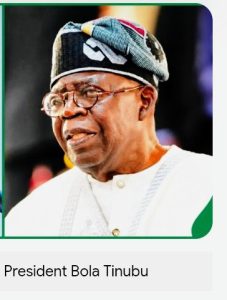
The Council described as shocking the President’s failure to condemn the growing wave of political violence, noting that, through his spokesman, Mr. Bayo Onanuga, the Presidency had instead chosen to caution opposition parties while shielding those allegedly responsible for violence within the ruling APC.
“President Tinubu cannot claim to desire peace when his own words provide cover for violence.
“‘All Is Fair in Politics’ is not the language of a Head of State. It is the language of political desperation and an open licence for thuggery, ballot snatching, intimidation and bloodshed.
“From Edo to Cross River, Gombe to Lagos, and Kebbi to Kaduna, Nigerians have witnessed attacks on opposition gatherings, destruction of campaign materials and the brutalisation of innocent supporters, allegedly by APC-sponsored thugs.
“Yet, Mr. President has not considered it necessary to call his governors and party members to order.
“Instead, the Presidency has resorted to diversionary tactics, blaming victims and preaching restraint to the opposition while members of the ruling party are accused of unleashing violence across the country,” the statement said.
The ADC-PCC challenged President Tinubu to explain why his condemnation of political violence appears directed at the opposition rather than members of his own party.
It asked: “Why has Mr. President refused to condemn APC governors who openly threaten opposition supporters? Why has he remained silent over public incitement by officials of his party? Why is his anger always directed at the opposition and never at those within his own political fold?”
The Council maintained that the ADC remains committed to peaceful, issue-based political engagement, insisting that its campaign is focused on addressing the country’s pressing challenges, including hunger, insecurity, unemployment, corruption and what it described as the failures of the Tinubu administration.
It accused the APC of resorting to violence because it had little to offer Nigerians in terms of credible solutions to the country’s problems.
Consequently, the ADC-PCC demanded that President Tinubu immediately and publicly withdraw his “All Is Fair in Politics” remark, condemn and call to order APC governors and party officials accused of inciting violence, and direct security agencies to protect all Nigerians impartially rather than allow them to become instruments of intimidation and oppression against opposition parties.
” Nigeria belongs to all of us. No political ambition is worth the blood of any Nigerian.
“If former President Goodluck Jonathan could make that profound declaration in 2015, President Tinubu has no excuse not to say so and demonstrate the sincerity of his commitment to peace in 2026.
“The ADC will not be intimidated. We will continue to campaign peacefully, and in 2027, Nigerians will have the opportunity to vote for competence, integrity and a new beginning,” the statement added.




-
News5 days ago
IGP Disu decorates 29 senior police officers with new ranks….charges them on professionalism, integrity,others
-
News4 days ago
Airstrikes kill 40 ISWAP terrorists in Borno
-
News4 days ago
We finally received CTC Of Lifu’s Judgement, without Atiku, Other Candidates Names Mentioned—Senator Melaye
-
News4 days ago
2026 U-17 WWC: Tinubu rewards each Flamingos player with ₦100m
-
News5 days ago
How Federal High Court Chief judge is beign blackmailed with EFCC, CCB- ADC Campaign Council
-
News2 days ago
Crowd Shouts ‘Bamayi’ at Tinubu, pelt convoy in Abuja
-
News5 days ago
Oil price fall: We ‘ll take appropriate action against marketers, petrol stations over unfair practices- FCCPC
-
News5 days ago
Nigerian Businessman Hands IGP Disu 7 Days Tọ Probe Police Officers Over Alleged Release Of Recovered N600m Rolls-Royce To Suspects