

News
NNPCL Says It Recorded N502bn Profit, Reduces Petrol Price Below N800/litre

The Nigerian National Petroleum Company Limited has said it recorded a profit after tax of N502bn in November 2025, sustaining its profitability streak despite a decline in crude oil and condensate production during the month.
This came as the state-owned energy firm simultaneously joined an intensifying price war in the downstream sector by cutting the pump price of petrol below N800 per litre.
Figures from the NNPC Monthly Financial and Operations Report for November 2025, released on Wednesday, showed that the national oil company generated N4.36tn in revenue during the month, reflecting a marginal increase compared with October.
The improved performance was attributed to stronger gas output, full pipeline availability, and steady domestic fuel supply, which helped offset challenges in crude oil production.
Crude oil and condensate production averaged 1.36 million barrels per day in November, recovering slightly from the 1.30mbpd recorded in October, but remaining below the year’s peak of 1.77mbpd achieved earlier in 2025. The November figure marked the first rebound after three consecutive months of decline between August and October.
Gas production, however, remained relatively resilient. Output stood at 6,968 million standard cubic feet per day in November, compared with 6,997mmscf/d in October, underscoring the continued role of gas in stabilising the company’s operational performance amid crude-related disruptions.
“NNPC said the N502bn profit recorded in November was driven by improved gas production, strong trading performance, and sustained infrastructure availability, despite operational challenges in some crude-producing assets,” the report read.
The November profit represented a slight improvement on October’s performance, consolidating the company’s strong earnings momentum in the second half of the year. Revenue for the month stood at N4.358tn, driven largely by gas sales, trading activities, and improved infrastructure uptime.
Cumulatively, statutory payments to the Federation Account rose to N12.12tn between January and October 2025, highlighting NNPC’s growing fiscal contribution to government revenues at a time of heightened pressure on public finances.
The sustained profitability reflects the company’s post-commercialisation structure, improved cost discipline, and expanding gas footprint, even as oil production remains vulnerable to operational setbacks and asset-specific disruptions.
Data from the report showed that crude and condensate output in November benefited from partial recovery at some assets following earlier disruptions. Production averaged 1.36mbpd, compared with 1.30mbpd in October, representing an increase of about 60,000 barrels per day month-on-month.
However, output remained below levels recorded in the first half of the year, when production averaged above 1.40mbpd between January and July. Production declined steadily from 1.38mbpd in August to 1.37mbpd in September and 1.30mbpd in October, before the modest rebound in November.
NNPC attributed the subdued performance to ongoing repairs on the Forcados export line (OML 30), a force majeure at Egbema (OML 61), and delays in achieving first oil from the West African Exploration Project.
Petrol price cut
While posting strong earnings, NNPC also moved to adjust to changing dynamics in the downstream market. The company bowed to market pressure by dropping the price of Premium Motor Spirit (petrol) below N800 per litre, joining an intensifying price war triggered by recent cuts by the Dangote refinery.
The development came about three weeks after the Dangote refinery slashed the ex-depot price of petrol from N828 to N699 per litre and directed all MRS filling stations to adjust pump prices to N739 from around N900 per litre.
Checks showed that the state-owned oil company, which serves as a supplier of last resort, was selling petrol at about N875 per litre two weeks earlier when MRS began selling at N739 per litre. A week later, NNPC reduced prices to between N825 and N845 per litre, depending on location.
Many NNPC filling stations in Lagos and Ogun states reportedly struggled to attract customers as motorists opted for cheaper fuel at rival outlets. In response, NNPC joined the fray by slashing pump prices below N800 per litre to retain customers.
NNPCL records ₦502bn profit in November despite lower crude output
Checks on Wednesday confirmed that some NNPC filling stations along the Lagos-Ibadan Expressway sold petrol at N785 per litre, enabling them to compete with nearby outlets.
According to the Nigerian Midstream and Downstream Petroleum Regulatory Authority, NNPC was one of the biggest petrol importers in November, having imported fuel to build inventory and guarantee supply during the peak demand period. However, with a landing cost of about N828 per litre, importers such as NNPC struggled to compete with Dangote’s N739 per litre pump price, forcing them to sell below cost.
With the commencement of petrol production by the Dangote refinery in September 2024, the sector became fully deregulated, leading to the disappearance of queues at NNPC stations that were once caused by price differentials.
Other marketers also adjusted prices. Heyden sold petrol at about N840 and N850 per litre, while AP filling stations sold petrol at prices ranging from N740 to N839 per litre, depending on location. Filling stations close to MRS outlets were observed to have cut prices to avoid losing customers.
Nigerians who spoke with our correspondent commended Dangote for what they described as a Christmas gift, urging him to reduce prices further in the new year. Dangote had earlier vowed to enforce the new pricing regime.
“We are going to use whatever resources we have to make sure that we crash the price down. For this December and January, we don’t want people to sell petrol for more than N740 nationwide. Those who want to keep the price high to sabotage the government, we will fight as much as we can to make sure that these prices are down,” Aliko Dangote said.
Speaking on the price competition, the spokesperson of the Independent Petroleum Marketers Association of Nigeria, Chinedu Ukadike, said marketers who refused to reduce prices would lose customers as bank interest charges accumulate.
“We are in a situation where competition can be determined by price. Patronage will be determined by pricing. Nobody is against you; nobody is regulating you. You will regulate yourself. The market will regulate itself. The time has gone when people were queuing at NNPC filling stations. Wherever the fuel is cheap, that is where the marketers go. So, we are in a price war. Demand and supply determine the price,” Ukadike said.
Meanwhile, the Group Chief Executive Officer of NNPC, Bayo Ojulari, assured Nigerians that the ongoing price competition in the downstream petroleum sector would ultimately benefit consumers.
He described the current market tensions as a natural consequence of Nigeria’s transition from total import dependence to domestic refining, emphasising that the company is no longer responsible for petroleum product pricing or regulation under the Petroleum Industry Act.
Gas production stable
Meanwhile, in contrast to crude output as contained in the NNPC financial report for November, gas production remained comparatively stable throughout 2025. November output of 6,968mmscf/d was broadly in line with October’s 6,997mmscf/d, following a rebound from a sharp dip to 6,284mmscf/d in September. Earlier in the year, gas production peaked at 7,722mmscf/d in July before moderating in the third quarter.
Gas sales, reported on a two-month lag basis, stood at 4,650mmscf/d in November, slightly lower than the 4,713mmscf/d recorded in October, but significantly higher than September’s 3,443mmscf/d. The sustained gas performance reinforced NNPC’s strategic push to deepen gas monetisation as Nigeria positions itself as a regional gas hub and transitions to a lower-carbon energy mix.
The report also showed that upstream pipeline availability reached 100 per cent in November, an improvement that helped stabilise production and evacuation during the period.
On the downstream front, PMS availability across NNPC Retail Limited stations stood at 61 per cent, while the company’s nationwide wetness map indicated moderate to high fuel availability across most states, easing supply concerns that had flared intermittently earlier in the year.
NNPC also disclosed significant progress on key gas infrastructure projects during the month. The Ajaokuta–Kaduna–Kano gas pipeline achieved completion of its mainline welding and pressure testing and is now on track for completion in 2026. Similarly, work progressed on the Obiafu-Obrikom-Oben gas pipeline, with geotechnical data acquisition completed at the River Niger crossing and early construction works underway ahead of drilling.
The company said it was intensifying collaboration with its joint venture and production-sharing contract partners to complete scheduled turnaround maintenance across facilities and position assets for stronger output in 2026.
Beyond operations, the NNPC Foundation recorded major recognition in November, winning five awards at the 2025 SERAS Sustainability Africa Awards, including Most Responsible Organisation in Africa and Best in Gender Equality. The Foundation also reported that the rehabilitation of three wards at the National Orthopaedic Hospital, Igbobi, Lagos, had reached 90.1 per cent completion as of November 30.

The United States government has insisted that Nigeria should retain its Country of Particular Concern, CPC, designation, saying the country has not done enough to protect Christians from attacks.
Assistant Secretary of State for African Affairs, Frank Garcia, made this statement on Thursday during a congressional hearing on violence in Nigeria.
Garcia was responding to questions from US Congressman Riley Moore, who asked about the government’s efforts to dismantle militia strongholds and kidnapping camps in the Middle Belt, particularly in Benue and Plateau states.
Moore also raised concerns over the exclusion of the states from the forest guard initiative and delays in deploying 1,000 approved guards to Plateau.
“Before you answer that, we cannot take this CPC designation off of this country. They have not done enough,” Moore said.
Garcia acknowledged the lack of progress, but said Nigeria was taking steps to address the concerns, although they had yet to produce results.
He said the country’s security capacity was still being developed and that deployments were not happening fast enough.
“Unfortunately, the violence has not stopped,” Garcia added, citing continued attacks in Kaduna and Plateau states.
He said the US had provided police training and equipment, expanded intelligence sharing and worked with Nigerian financial institutions to disrupt terrorist financing.
Garcia added that Washington would continue diplomatic engagements and security cooperation to protect vulnerable communities and ensure accountability.
However, the Nigerian government has consistently rejected claims of a “Christian genocide” or targeted religious persecution, maintaining that insecurity affects Nigerians of all faiths.

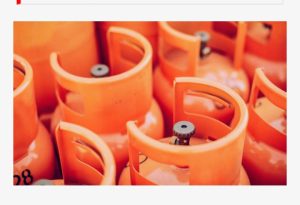
Liquefied Petroleum Gas, commonly known as cooking gas, has risen significantly, forcing Nigerians to spend more to purchase the product.
The increase comes as depot owners and retailers raised their prices over the past two days.
StockGap increased its depot price by N25 to N1,440 per kilogram. Nigerian Independent Petroleum Company Limited, NIPCO, Mobil (now 11 Plc) and Ardova, on the other hand, sold the product at N1,400 and N1,390 per kilogram, respectively.
Similarly, LPG retail outlets, including Raniol, Juda Oil and Nigerian National Petroleum Company Limited, NNPC, outlets in Abuja and its environs, now dispense cooking gas at between N1,550 and N1,600 per kilogram, up from N1,400 and N1,500.
Micro-LPG dealers sell the product for between N1,700 and N1,800 per kilogram, depending on the location in Abuja.
Earlier, NIPCO’s spokesperson, Taofeek Lawal, had exclusively told DAILY POST that LPG prices could increase further between November and January next year.
The latest price increase means that Nigerians who previously spent N17,500 to refill a 12.5kg cylinder at N1,400 per kilogram will now pay N20,000 at the new rate of N1,600 per kilogram, representing an additional N2,500.
News
2027: Tinubu Must Withdraw ‘All Is Fair in Politics’ Remark, Embrace Peaceful Coexistence — ADC-PCC
The African Democratic Congress Presidential Campaign Council (ADC-PCC) has called on President Bola Ahmed Tinubu to publicly retract his controversial “All Is Fair in Politics” remark, warning that such rhetoric fuels political division, emboldens thugs and poses a grave threat to the nation’s peace and stability.
The ADC-PCC also expressed concern over what it described as the President’s disturbing silence on the conduct of some APC governors and party chieftains who have openly made inflammatory statements and allegedly encouraged political violence.
In a statement signed by its Director of Media and Publicity, Kola Ologbondiyan, the ADC-PCC urged President Tinubu to rise above partisan interests and demonstrate the statesmanship expected of a national leader, citing former President Goodluck Jonathan’s unequivocal declaration that no presidential ambition was worth the blood of any Nigerian.
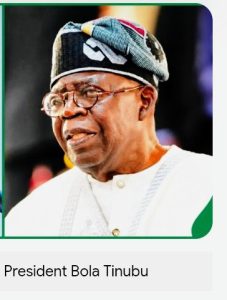
The Council described as shocking the President’s failure to condemn the growing wave of political violence, noting that, through his spokesman, Mr. Bayo Onanuga, the Presidency had instead chosen to caution opposition parties while shielding those allegedly responsible for violence within the ruling APC.
“President Tinubu cannot claim to desire peace when his own words provide cover for violence.
“‘All Is Fair in Politics’ is not the language of a Head of State. It is the language of political desperation and an open licence for thuggery, ballot snatching, intimidation and bloodshed.
“From Edo to Cross River, Gombe to Lagos, and Kebbi to Kaduna, Nigerians have witnessed attacks on opposition gatherings, destruction of campaign materials and the brutalisation of innocent supporters, allegedly by APC-sponsored thugs.
“Yet, Mr. President has not considered it necessary to call his governors and party members to order.
“Instead, the Presidency has resorted to diversionary tactics, blaming victims and preaching restraint to the opposition while members of the ruling party are accused of unleashing violence across the country,” the statement said.
The ADC-PCC challenged President Tinubu to explain why his condemnation of political violence appears directed at the opposition rather than members of his own party.
It asked: “Why has Mr. President refused to condemn APC governors who openly threaten opposition supporters? Why has he remained silent over public incitement by officials of his party? Why is his anger always directed at the opposition and never at those within his own political fold?”
The Council maintained that the ADC remains committed to peaceful, issue-based political engagement, insisting that its campaign is focused on addressing the country’s pressing challenges, including hunger, insecurity, unemployment, corruption and what it described as the failures of the Tinubu administration.
It accused the APC of resorting to violence because it had little to offer Nigerians in terms of credible solutions to the country’s problems.
Consequently, the ADC-PCC demanded that President Tinubu immediately and publicly withdraw his “All Is Fair in Politics” remark, condemn and call to order APC governors and party officials accused of inciting violence, and direct security agencies to protect all Nigerians impartially rather than allow them to become instruments of intimidation and oppression against opposition parties.
” Nigeria belongs to all of us. No political ambition is worth the blood of any Nigerian.
“If former President Goodluck Jonathan could make that profound declaration in 2015, President Tinubu has no excuse not to say so and demonstrate the sincerity of his commitment to peace in 2026.
“The ADC will not be intimidated. We will continue to campaign peacefully, and in 2027, Nigerians will have the opportunity to vote for competence, integrity and a new beginning,” the statement added.




-
News5 days ago
IGP Disu decorates 29 senior police officers with new ranks….charges them on professionalism, integrity,others
-
News4 days ago
Airstrikes kill 40 ISWAP terrorists in Borno
-
News4 days ago
We finally received CTC Of Lifu’s Judgement, without Atiku, Other Candidates Names Mentioned—Senator Melaye
-
News4 days ago
2026 U-17 WWC: Tinubu rewards each Flamingos player with ₦100m
-
News5 days ago
How Federal High Court Chief judge is beign blackmailed with EFCC, CCB- ADC Campaign Council
-
News2 days ago
Crowd Shouts ‘Bamayi’ at Tinubu, pelt convoy in Abuja
-
News5 days ago
Oil slump opens door to cheaper petrol for Nigerians …as Brent hits lowest since August
-
News5 days ago
Oil price fall: We ‘ll take appropriate action against marketers, petrol stations over unfair practices- FCCPC