
News
2026 Budget/MTEF,FSP: Fed Govt Mobilises Aggressive Revenue Drive*

The Federal Government may be swaying away from heavy borrowing and embracing aggressive revenue mobilisation, in a decisive move tọ bring down public debt stock amounting tọ N152 trillion and finance its Budget handsomely going forward
Similarly Senate Committee Chair on Finance, Sen Mohammed Sani Musa, has advised the Federal Inland Revenue Service (FIRS) to embark on aggressive nationwide enlightenment to prepare Nigerians for the new tax reform laws scheduled to take effect next year
According tọ Musa, poor public understanding could undermine the gains of the far-reaching reforms.
Presenting the 2026 – 2028 Medium Term Expenditure Framework (MTEF) and Fiscal Strategy Paper (FSP), before the Senate Committee on Finance, the Minister of Finance and Coordinating Minister for the Economy, Dr Olawale Edun, said the focus of government policy going forward would be on strengthening revenue generation rather than accumulating new debt.
Edun further disclosed that the country recorded N30trillion revenue shortfall in the outgoing year.
According to him, out of the N40trillion revenue target for 2025, only the sum of N10trillion was realised.
“The focus of the Medium-Term Expenditure Framework is not on increased borrowing. The emphasis is squarely on revenue generation,” the minister told lawmakers.
He said the MTEF, which is a statutory requirement under the Fiscal Responsibility Act, sets out the government’s fiscal direction over a three-year period and reflects the realities confronting public finance.
On budget performance, the minister said the 2024 budget had been largely implemented, with both recurrent and capital components substantially executed.
He explained that the capital component of the 2024 budget was extended into 2025, with funding fully available for the finalised capital projects up to September.
“Funding is available for part of the remaining capital expenditure, while the balance is planned to be rolled over into the 2026 budget,” he said.
On the 2025 budget, he disclosed that funding arrangements and approvals had been secured, with about 30 per cent of the capital budget already funded.
According to him, the balance would also be rolled over into 2026, subject to the cooperation and approval of the National Assembly.
The minister admitted that weak revenue performance remains the biggest challenge to effective budget implementation. He said total revenue for 2024 was projected at about N25.9 trillion, but actual federal government revenue stood at roughly N8.27 trillion.
“The reality is that revenue performance has consistently fallen short of budget estimates,” he said, adding that treasury management measures and financial engineering had been deployed to bridge the gap.
For 2025, he said revenue was estimated at about N40 trillion, but actual Federal Government cash revenue is projected at about N10 trillion, a gap he described as unsustainable.
“This historical trend clearly shows the need for a far more robust and realistic revenue effort going into 2026,” the minister said.
To address the challenge, he said the government is rolling out a comprehensive revenue optimisation programme anchored on automation, digitalisation, technology deployment and process re-engineering.
As part of the reforms, he disclosed that four circulars had been issued mandating revenue- and investment-generating ministries, departments and agencies to migrate to a transparent digital platform.
“They must stop collecting revenue in cash and must also stop deducting expenses or charges before remitting revenues to the Treasury Single Account,” he said.
The minister stressed that the reform would be a major pillar of the 2026 budget, noting that revenue projections in recent years had significantly exceeded actual collections.
Despite the revenue shortfalls, he said the government has continued to meet its key obligations.
“Even with revenue performance of about 25 per cent in some instances, salaries, pensions, statutory transfers and debt service—both domestic and foreign—have all been fully paid,” he said.
Explaining the surge in public debt, the minister said Nigeria’s total public debt rose from about N70 trillion in 2023 to approximately N152 trillion, largely due to transparency-driven adjustments rather than fresh borrowing.
“A significant portion of this increase—about N30 trillion—arose from bringing previously unrecorded Ways and Means financing onto the government’s books,” he said.
He added that about N50 trillion resulted from exchange-rate adjustments following Central Bank monetary policy actions to clear foreign exchange backlogs and rebuild external reserves.
“Consequently, about N80 trillion of the total debt stock does not represent new borrowing, but rather reclassification, regularisation and valuation adjustments,” the minister said.
He emphasised that the government is now looking beyond borrowing to mobilise domestic savings to drive growth.
“For an economy where about 90 per cent of activity is driven by the private sector, there must be broad-based mobilisation of savings,” he said.
According to him, President Bola Tinubu is considering a public-private partnership initiative aimed at mobilising mass savings across the population.
“This will go beyond the relatively small number of Nigerians with pension or stockbroking accounts and encourage tens of millions of citizens to save and invest productively in the economy,” he said.
He urged lawmakers to support the proposed reforms, saying they are critical to restoring fiscal sustainability and strengthening the economy.
The Minister of Budget and Economic Planning, Sen Atiku Bagudu and Minister of State (Petroleum), Sen Heineken Lokpobiri in their submissions, defended the parameters set for the proposed N54. 4trillion 2026 budget.
The parameters are 1.84million oil production per day, $64.85 oil price benchmark, N1, 512.00 to 1USD as exchange rate etc.
Speaking at the interactive session with key revenue-generating agencies, ministries and departments, the committee chairman, Sani Musa, said the scope and implications of the new tax architecture being finalised by the National Assembly were extensive and would significantly alter Nigeria’s tax administration, incentives regime and revenue profile.
According to him, Nigerians must be adequately informed ahead of January 1, when several of the reforms are expected to commence, to avoid confusion, misinformation and resistance.
He stressed that FIRS, as the lead agency in tax administration, has a responsibility to clearly explain the benefits and obligations embedded in the new laws.
“With the kind of reforms that are coming, there will be serious issues if Nigerians are not properly enlightened.
“There is a strong need for FIRS, working with the Ministry of Finance and other relevant agencies, to step up public communication so citizens understand what these reforms mean for them and for the economy,” Musa said.
As part of the enlightenment drive, the lawmaker specifically called on FIRS to utilise national media platforms to clarify contentious issues around memoranda of understanding, incentives and compliance requirements, noting that he had received numerous complaints and enquiries from the public on such matters.
“The reforms are intended to strengthen tax administration and management, not to punish Nigerians. That message must be clearly communicated,” he said, while commending the participation of ministers, heads of agencies and stakeholders at the session.
The lawmaker noted that the National Assembly is pushing for a consolidated tax framework that simplifies compliance, removes duplication of charges and harmonises incentives, particularly to support investment, exports and revenue growth.
He explained that under the proposed tax regime, incentives would be streamlined into a single, development-focused framework rather than multiple, overlapping concessions that often result in revenue leakages.
He also highlighted ongoing reforms in Nigeria’s special economic and free trade zones, explaining that only 25 per cent of goods produced in the zones would be allowed into the Nigerian customs territory duty-free, while the rest would attract applicable taxes and duties.
He said the measure was designed to boost government revenue while ensuring that the zones truly serve as export hubs rather than channels for tax avoidance.
“We have realised that a lot of revenue has been missed over the years. These reforms are meant to close those gaps while still supporting investors to use Nigeria as a base to export across Africa under the African Continental Free Trade Area and to the rest of the world,” he added.
The committee chairman further disclosed that the Senate would, immediately after the Christmas recess, conduct investigative hearings to assess the actual budget performance of ministries, departments and government-owned enterprises, particularly in the area of revenue generation.
He said the outcome would inform an amortised fiscal strategy paper aimed at producing a more realistic and implementable national budget.
He urged revenue agencies and government-owned enterprises to align their projections with the realities of the new tax laws, stressing that the legislature would demand stronger revenue outcomes in the coming fiscal years.
The Committee expressed displeasure with multiple budgets implementation in a fiscal year by the federal government as experienced in 2025.
It consequently tasked the Federal Inland Revenue Service (FIRS), to increase its projected revenue target for 2026 from N31trillion to N35trillion.
He added that a three man adhoc committee would be set up by the committee to liaise with the Minister and the Accountant-General of the Federation on payment of local contractors for projects executed in 2024 before expiration of the budget on 31st of this month.
For FIRS, Sen Musa tasked its Chairman, Zacch Adedeji, to work towards realizing N35trillion as target revenue for 2026 fiscal year and not the earlier projected N31trillion mentioned by the Chairman.
The FIRS boss had in making the projection said the agency under him, realised N20.2trillion revenue in 2024 and N25.2trillion in 2025.
He however said that the huge revenue being realized by FIRS and other agencies like Customs, are being swallowed and made insufficient by multiple budget implementations in a fiscal year.
Courtesy Thẹ Nation:

The United States government has insisted that Nigeria should retain its Country of Particular Concern, CPC, designation, saying the country has not done enough to protect Christians from attacks.
Assistant Secretary of State for African Affairs, Frank Garcia, made this statement on Thursday during a congressional hearing on violence in Nigeria.
Garcia was responding to questions from US Congressman Riley Moore, who asked about the government’s efforts to dismantle militia strongholds and kidnapping camps in the Middle Belt, particularly in Benue and Plateau states.
Moore also raised concerns over the exclusion of the states from the forest guard initiative and delays in deploying 1,000 approved guards to Plateau.
“Before you answer that, we cannot take this CPC designation off of this country. They have not done enough,” Moore said.
Garcia acknowledged the lack of progress, but said Nigeria was taking steps to address the concerns, although they had yet to produce results.
He said the country’s security capacity was still being developed and that deployments were not happening fast enough.
“Unfortunately, the violence has not stopped,” Garcia added, citing continued attacks in Kaduna and Plateau states.
He said the US had provided police training and equipment, expanded intelligence sharing and worked with Nigerian financial institutions to disrupt terrorist financing.
Garcia added that Washington would continue diplomatic engagements and security cooperation to protect vulnerable communities and ensure accountability.
However, the Nigerian government has consistently rejected claims of a “Christian genocide” or targeted religious persecution, maintaining that insecurity affects Nigerians of all faiths.


Liquefied Petroleum Gas, commonly known as cooking gas, has risen significantly, forcing Nigerians to spend more to purchase the product.
The increase comes as depot owners and retailers raised their prices over the past two days.
StockGap increased its depot price by N25 to N1,440 per kilogram. Nigerian Independent Petroleum Company Limited, NIPCO, Mobil (now 11 Plc) and Ardova, on the other hand, sold the product at N1,400 and N1,390 per kilogram, respectively.
Similarly, LPG retail outlets, including Raniol, Juda Oil and Nigerian National Petroleum Company Limited, NNPC, outlets in Abuja and its environs, now dispense cooking gas at between N1,550 and N1,600 per kilogram, up from N1,400 and N1,500.
Micro-LPG dealers sell the product for between N1,700 and N1,800 per kilogram, depending on the location in Abuja.
Earlier, NIPCO’s spokesperson, Taofeek Lawal, had exclusively told DAILY POST that LPG prices could increase further between November and January next year.
The latest price increase means that Nigerians who previously spent N17,500 to refill a 12.5kg cylinder at N1,400 per kilogram will now pay N20,000 at the new rate of N1,600 per kilogram, representing an additional N2,500.
News
2027: Tinubu Must Withdraw ‘All Is Fair in Politics’ Remark, Embrace Peaceful Coexistence — ADC-PCC
The African Democratic Congress Presidential Campaign Council (ADC-PCC) has called on President Bola Ahmed Tinubu to publicly retract his controversial “All Is Fair in Politics” remark, warning that such rhetoric fuels political division, emboldens thugs and poses a grave threat to the nation’s peace and stability.
The ADC-PCC also expressed concern over what it described as the President’s disturbing silence on the conduct of some APC governors and party chieftains who have openly made inflammatory statements and allegedly encouraged political violence.
In a statement signed by its Director of Media and Publicity, Kola Ologbondiyan, the ADC-PCC urged President Tinubu to rise above partisan interests and demonstrate the statesmanship expected of a national leader, citing former President Goodluck Jonathan’s unequivocal declaration that no presidential ambition was worth the blood of any Nigerian.
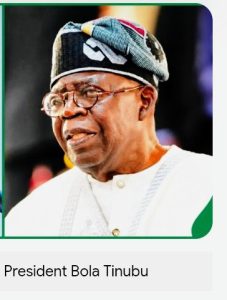
The Council described as shocking the President’s failure to condemn the growing wave of political violence, noting that, through his spokesman, Mr. Bayo Onanuga, the Presidency had instead chosen to caution opposition parties while shielding those allegedly responsible for violence within the ruling APC.
“President Tinubu cannot claim to desire peace when his own words provide cover for violence.
“‘All Is Fair in Politics’ is not the language of a Head of State. It is the language of political desperation and an open licence for thuggery, ballot snatching, intimidation and bloodshed.
“From Edo to Cross River, Gombe to Lagos, and Kebbi to Kaduna, Nigerians have witnessed attacks on opposition gatherings, destruction of campaign materials and the brutalisation of innocent supporters, allegedly by APC-sponsored thugs.
“Yet, Mr. President has not considered it necessary to call his governors and party members to order.
“Instead, the Presidency has resorted to diversionary tactics, blaming victims and preaching restraint to the opposition while members of the ruling party are accused of unleashing violence across the country,” the statement said.
The ADC-PCC challenged President Tinubu to explain why his condemnation of political violence appears directed at the opposition rather than members of his own party.
It asked: “Why has Mr. President refused to condemn APC governors who openly threaten opposition supporters? Why has he remained silent over public incitement by officials of his party? Why is his anger always directed at the opposition and never at those within his own political fold?”
The Council maintained that the ADC remains committed to peaceful, issue-based political engagement, insisting that its campaign is focused on addressing the country’s pressing challenges, including hunger, insecurity, unemployment, corruption and what it described as the failures of the Tinubu administration.
It accused the APC of resorting to violence because it had little to offer Nigerians in terms of credible solutions to the country’s problems.
Consequently, the ADC-PCC demanded that President Tinubu immediately and publicly withdraw his “All Is Fair in Politics” remark, condemn and call to order APC governors and party officials accused of inciting violence, and direct security agencies to protect all Nigerians impartially rather than allow them to become instruments of intimidation and oppression against opposition parties.
” Nigeria belongs to all of us. No political ambition is worth the blood of any Nigerian.
“If former President Goodluck Jonathan could make that profound declaration in 2015, President Tinubu has no excuse not to say so and demonstrate the sincerity of his commitment to peace in 2026.
“The ADC will not be intimidated. We will continue to campaign peacefully, and in 2027, Nigerians will have the opportunity to vote for competence, integrity and a new beginning,” the statement added.




-
News5 days ago
IGP Disu decorates 29 senior police officers with new ranks….charges them on professionalism, integrity,others
-
News4 days ago
Airstrikes kill 40 ISWAP terrorists in Borno
-
News4 days ago
We finally received CTC Of Lifu’s Judgement, without Atiku, Other Candidates Names Mentioned—Senator Melaye
-
News4 days ago
2026 U-17 WWC: Tinubu rewards each Flamingos player with ₦100m
-
News5 days ago
How Federal High Court Chief judge is beign blackmailed with EFCC, CCB- ADC Campaign Council
-
News2 days ago
Crowd Shouts ‘Bamayi’ at Tinubu, pelt convoy in Abuja
-
News5 days ago
Oil slump opens door to cheaper petrol for Nigerians …as Brent hits lowest since August
-
News5 days ago
Oil price fall: We ‘ll take appropriate action against marketers, petrol stations over unfair practices- FCCPC