

News
OF BPP AND NATIONAL DEVELOPMENT – BY GILBERT BWANSHAK


No doubt, the role of public procurement is very critical to economic growth and national development. In many ways, it is the veritable nexus between pricing, risk, sustainability, and geo-politics of a nation. Globally, it is a compass for gauging, regulating, and preventing public corruption towards emplacing good governance and meaningful development.
A school of thought believes that an effective and efficient public procurement system is the antidote towards achieving growth in any economy. It further argues that, through open, credible, and competitive bidding in public procurement, financial leakages are blocked. Another school of thought is even more direct, frank, and blunt.
It concludes that robust technical processes for public procurement; anchored on due diligence, transparency would curtail, if not eradicate issues of slush funds, kickbacks, and exploitative filtering of national wealth.
Before returning to democracy in May 1999, proper public procurement was largely non-existent. With successive military governments, the rules, regulations, procedures, and practices were largely regimental, limited, and constrained.
There were no codified processes, and uniformity of operations. Some other pitfalls were limited competition, absence of value for money, lack of access to information, and discriminatory actions.
This glaring lack of proper regulations and coordination led to serial mismanagement of public funds. Poor development planning and atrocious delivery of public services became regular fixtures. Many people believe that the concomitant effect of these incidences led to stymied growth in the country.
Between 2003 and 2007, with the return to democracy, the Federal Government emplaced institutional, legal and regulatory reforms in different sectors. One of these led to the enactment of the Public Procurement Act, (PPA) in 2007; which gave birth to the Bureau of Public Procurement, (BPP).
The major planks of the PPA are: regulation of procurement through the BPP; establishment of standards in procurement; giving access to information for participants and the general public; fighting corruption. The BPP, as the agency legally charged with the implementation and regulations of public procurement carries out these functions: policy formulation, management, and oversight; enforcement of public procurement standards; information management and dissemination; capacity building; research and publication.
The BPP powers include implementation and enforcement of the provisions of the PPA; inspection and reviews; information management; prevention of fraudulent, biased, and unfair procurement services.
For many years, not many people knew about the BPP. Perhaps, for others, it only existed in names. More disturbingly, many people were oblivious of its strategic position in the realization of realistic national growth and development. For a few others, their perceptions about the BPP was not positive.
Though previous administrations did their respective best but stakeholders believe it was not good enough. Some professionals reeled out incidents of alleged misconducts, malfeasance, and arbitraniness. There were alleged instances of under-the-table dealings, circumvention of procurement processes, MDAs and BPP connivance with different entities, and the creation of leakages in government’s finances. Some other stakeholders alluded to the cases of undue favouritism, nepotism, and wrong, deliberate mis-postings; which contributed largely to its non-performances in the past few years.
Sadly, the previous administrations did not realize the importance of public procurement as the platform through which the implementation of programmes and policies are done. It is the BPP that breakdown; into concrete terms all the ideas, intentions, and desire of government. Every plan and policies for national socio-economic development, which comes in budgets and appropriations are given life by the BPP through public procurement. The performances of government in providing health, infrastructure, roads, education, and other sector to the citizens are dependent on well-planned, and executed procurement processes by the BPP. Many stakeholders argue that since responsive and responsible governance thrives on the delivery of goods and services to the people, public procurement remains essential and necessary.
For this group of professionals, and some other people, the government cannot shove aside the relevance of the BPP in any of its policy, programmes, and initiative.When President Bola Tinubu was sworn into office in May 2023, he took an unfamiliar, different route in the appointment of chief executive officers to some key agencies. In doing this, he identified government organizations that are key to the delivery of goods and services to the people. Also, their respective roles in the realization of his agenda may have necessitated the actions. Further, given his decades-long expertise in public financing, risk management, corporate governance, and other related disciplines, Tinubu’s decisions may have been deliberate and intentional. Not minding scheming, manoeuvre, lobbying, and public comments, he was focussed, resolute, and determined. His eyes were on the ball; thoughts on the bigger picture. He envisaged the milestones these agencies would achieve with the right persons in charge.
With the passage of time, some stakeholders believed that the BPP may be one of the agencies identified to play strategic roles in the Tinubu administration. In November last year, after about 20 months into office as the 5th President in the 4th Republic, Tinubu appointed Dr. Adebowale Adedokun as the Director-General of the BPP. With over two decades experience in public procurement, both within and outside the country, Adedokun, who rose through the rungs to become the agency’s Director of Research, Training, and Strategic Planning was described as the best for the job by the majority of stakeholders. For many, his appointment signposts the understanding of procurement issues as it relates to national development by Tinubu. Some others eulogize him for recognizing the profession, and ensuring that one of its members oversees the agency. Many others commended Tinubu for considering competence, character, expertise, and capacity in the choice of Adedokun.
True to expectations, Adedokun literally hit the ground running barely hours after resumption of office. Convinced that procurement connects the citizenry with the government towards delivering values, and meeting the satisfaction of end-users, he anchored his vision on reforms in public procurement. These are monetary thresholds implementation guidelines; national procurement strategy; food procurement initiative; the return of mobility of procurement officers to the Bureau. He identified community and affirmative procurement; institutional collaborations and partnerships; Nigerian E-Market; and revised standard bidding documentations as the enablers of the reforms. The reforms are geared towards transparency; efficiency; accountability; and ensuring that public funds achieve value for money through quality, competitive, and life-cycle costing in procurement decisions. They are expected to ensure effective use of public utilities; reduce corruption; strengthen governance; guarantee service delivery; align with global best practices.
At the inception, though many people did not doubt his passion for hard work, and commitment to excellence, there were worries and doubts about the numerous landmines of bureaucracy and subterfuge. Somehow, Adedokun has continually surmounted obstacles, and moved forward in the discharge of his duties. This has been made possible with the endorsement, and approvals of Tinubu to the BPP’s policies that has direct impacts on the people, and positive effects on the country. The unwavering support of other top government officials and colleagues across the MDAs are pivotal. Alliances, partnerships, and collaborations forged with local and foreign associations have contributed to the success-rating of BPP. Unlike the past, public perceptions, believability, and responsiveness of the Bureau are very encouraging.
One year of his leadership at BPP, has led to remarkable achievements. Some of these includes the establishment of price intelligence and benchmarking unit for real-time market data; increased monetary thresholds for public procurements; enforcement of due process, regular reviews, and tackling of identified leakages in the procurement processes. Others are saving Nigeria over 173 billion naira, and huge sums of money in other foreign currencies from contract frauds; establishment and recognition of the Procurement Officers Management System to enhance professionalism, and tracking career progression; continuous capacity building for procurement officers. It also include the introduction of the debarment policy, and some other outdated clauses and practices that are inconsistent with global procurement practices; the adoption of BPP’s reform policies by a few African countries. That these and more notable landmarks were achieved in a year, is a worthy testament of political will, visionary leadership, fervour for excellence, and unity of purpose.
As Adedokun and his team remains determined in re-positioning the BPP towards achieving its goals, they should be mindful of certain potential booby-traps. Fight backs by a few stakeholders who are aversed to change, and improvement of processes; other entities and people who are resistant to dynamism; capacity gaps of procurement professionals in the MDAs; undue political pressures. Given the volume of its activities, and the urgency of timely delivery, it has become imperative for the Federal Government to provide, and increase tools necessary for enhanced services. Better funding, employment of more staff members, befitting office space, provision of vehicles, and other relevant equipment will no doubt energize the BPP to do more.
Citizen Gilbert Bwanshak, a Leadership & Governance Strategist writes from Jos.

The United States government has insisted that Nigeria should retain its Country of Particular Concern, CPC, designation, saying the country has not done enough to protect Christians from attacks.
Assistant Secretary of State for African Affairs, Frank Garcia, made this statement on Thursday during a congressional hearing on violence in Nigeria.
Garcia was responding to questions from US Congressman Riley Moore, who asked about the government’s efforts to dismantle militia strongholds and kidnapping camps in the Middle Belt, particularly in Benue and Plateau states.
Moore also raised concerns over the exclusion of the states from the forest guard initiative and delays in deploying 1,000 approved guards to Plateau.
“Before you answer that, we cannot take this CPC designation off of this country. They have not done enough,” Moore said.
Garcia acknowledged the lack of progress, but said Nigeria was taking steps to address the concerns, although they had yet to produce results.
He said the country’s security capacity was still being developed and that deployments were not happening fast enough.
“Unfortunately, the violence has not stopped,” Garcia added, citing continued attacks in Kaduna and Plateau states.
He said the US had provided police training and equipment, expanded intelligence sharing and worked with Nigerian financial institutions to disrupt terrorist financing.
Garcia added that Washington would continue diplomatic engagements and security cooperation to protect vulnerable communities and ensure accountability.
However, the Nigerian government has consistently rejected claims of a “Christian genocide” or targeted religious persecution, maintaining that insecurity affects Nigerians of all faiths.


Liquefied Petroleum Gas, commonly known as cooking gas, has risen significantly, forcing Nigerians to spend more to purchase the product.
The increase comes as depot owners and retailers raised their prices over the past two days.
StockGap increased its depot price by N25 to N1,440 per kilogram. Nigerian Independent Petroleum Company Limited, NIPCO, Mobil (now 11 Plc) and Ardova, on the other hand, sold the product at N1,400 and N1,390 per kilogram, respectively.
Similarly, LPG retail outlets, including Raniol, Juda Oil and Nigerian National Petroleum Company Limited, NNPC, outlets in Abuja and its environs, now dispense cooking gas at between N1,550 and N1,600 per kilogram, up from N1,400 and N1,500.
Micro-LPG dealers sell the product for between N1,700 and N1,800 per kilogram, depending on the location in Abuja.
Earlier, NIPCO’s spokesperson, Taofeek Lawal, had exclusively told DAILY POST that LPG prices could increase further between November and January next year.
The latest price increase means that Nigerians who previously spent N17,500 to refill a 12.5kg cylinder at N1,400 per kilogram will now pay N20,000 at the new rate of N1,600 per kilogram, representing an additional N2,500.
News
2027: Tinubu Must Withdraw ‘All Is Fair in Politics’ Remark, Embrace Peaceful Coexistence — ADC-PCC
The African Democratic Congress Presidential Campaign Council (ADC-PCC) has called on President Bola Ahmed Tinubu to publicly retract his controversial “All Is Fair in Politics” remark, warning that such rhetoric fuels political division, emboldens thugs and poses a grave threat to the nation’s peace and stability.
The ADC-PCC also expressed concern over what it described as the President’s disturbing silence on the conduct of some APC governors and party chieftains who have openly made inflammatory statements and allegedly encouraged political violence.
In a statement signed by its Director of Media and Publicity, Kola Ologbondiyan, the ADC-PCC urged President Tinubu to rise above partisan interests and demonstrate the statesmanship expected of a national leader, citing former President Goodluck Jonathan’s unequivocal declaration that no presidential ambition was worth the blood of any Nigerian.
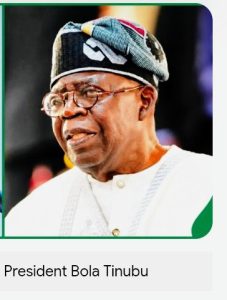
The Council described as shocking the President’s failure to condemn the growing wave of political violence, noting that, through his spokesman, Mr. Bayo Onanuga, the Presidency had instead chosen to caution opposition parties while shielding those allegedly responsible for violence within the ruling APC.
“President Tinubu cannot claim to desire peace when his own words provide cover for violence.
“‘All Is Fair in Politics’ is not the language of a Head of State. It is the language of political desperation and an open licence for thuggery, ballot snatching, intimidation and bloodshed.
“From Edo to Cross River, Gombe to Lagos, and Kebbi to Kaduna, Nigerians have witnessed attacks on opposition gatherings, destruction of campaign materials and the brutalisation of innocent supporters, allegedly by APC-sponsored thugs.
“Yet, Mr. President has not considered it necessary to call his governors and party members to order.
“Instead, the Presidency has resorted to diversionary tactics, blaming victims and preaching restraint to the opposition while members of the ruling party are accused of unleashing violence across the country,” the statement said.
The ADC-PCC challenged President Tinubu to explain why his condemnation of political violence appears directed at the opposition rather than members of his own party.
It asked: “Why has Mr. President refused to condemn APC governors who openly threaten opposition supporters? Why has he remained silent over public incitement by officials of his party? Why is his anger always directed at the opposition and never at those within his own political fold?”
The Council maintained that the ADC remains committed to peaceful, issue-based political engagement, insisting that its campaign is focused on addressing the country’s pressing challenges, including hunger, insecurity, unemployment, corruption and what it described as the failures of the Tinubu administration.
It accused the APC of resorting to violence because it had little to offer Nigerians in terms of credible solutions to the country’s problems.
Consequently, the ADC-PCC demanded that President Tinubu immediately and publicly withdraw his “All Is Fair in Politics” remark, condemn and call to order APC governors and party officials accused of inciting violence, and direct security agencies to protect all Nigerians impartially rather than allow them to become instruments of intimidation and oppression against opposition parties.
” Nigeria belongs to all of us. No political ambition is worth the blood of any Nigerian.
“If former President Goodluck Jonathan could make that profound declaration in 2015, President Tinubu has no excuse not to say so and demonstrate the sincerity of his commitment to peace in 2026.
“The ADC will not be intimidated. We will continue to campaign peacefully, and in 2027, Nigerians will have the opportunity to vote for competence, integrity and a new beginning,” the statement added.




-
News5 days ago
IGP Disu decorates 29 senior police officers with new ranks….charges them on professionalism, integrity,others
-
News4 days ago
Airstrikes kill 40 ISWAP terrorists in Borno
-
News4 days ago
We finally received CTC Of Lifu’s Judgement, without Atiku, Other Candidates Names Mentioned—Senator Melaye
-
News4 days ago
2026 U-17 WWC: Tinubu rewards each Flamingos player with ₦100m
-
News5 days ago
How Federal High Court Chief judge is beign blackmailed with EFCC, CCB- ADC Campaign Council
-
News2 days ago
Crowd Shouts ‘Bamayi’ at Tinubu, pelt convoy in Abuja
-
News5 days ago
Oil slump opens door to cheaper petrol for Nigerians …as Brent hits lowest since August
-
News5 days ago
2027: ADC accuses Federal High Court of withholding David Mark sack judgment