

News
Senator Mohammed Sani Musa: A Statesman Mending the Fabric of Niger East and Beyond

By Adamu Adamu
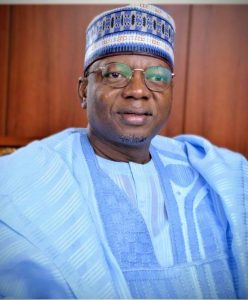
Senator Mohammed Sani Musa, fondly called “Senator 313” in many quarters, is one of the few public servants whose names are spoken with casual familiarity and mentioned as one of the rare statesmen whose footprints on the soil of their constituency read like a map of care, competence, and custodianship. His political persona is not a mere parade of campaign rhetoric but an architecture of visible interventions: boreholes that bring water to the thirsty, vocational centres that resurrect hope for young people, rehabilitated clinics that restore dignity to the sick, and targeted empowerment programmes that seed economic agency in households.
To know Senator Sani Musa is to see how a legislator can transpose empathy into policy and philanthropy into long-term community transformation. Born on 11 May 1965 in Minna, Niger State, Musa’s formative years traversed local schools before he entered the portals of advanced management training and public-leadership programmes.
He studied Business Administration, Banking and Finance at Ahmadu Bello University and subsequently sharpened his strategic and leadership repertoire at prestigious international institutions—a trajectory that later coloured his public-sector finesse when he served as Special Adviser on Investment and Infrastructure to the Niger State Governor. That professional past is not ornamental; it explains why his interventions are invariably well-targeted and sustainable rather than performative.
From the vantage point of Niger East, and at the very heart of the senatorial district he represents, Musa’s style of governance is a deliberate service-delivery template. The architecture of that template is unmistakably woven into infrastructure for daily life, healthcare bolstering, education investments, targeted youth empowerment, and decisive legislative stewardship at the national level.
Consider the priority areas of his work: he facilitated the construction of two 50-bed hospitals—one in Sarkin Pawa, Munya LGA, and the other in Kuta, Shiroro LGA. In fulfilling his promises to his constituency, he launched an inclusive empowerment programme from which 500 women and youths benefited.
The programme provided 21 tricycles for transportation and small-scale business, 130 motorcycles for commercial use, 80 grinding machines for food processing, 80 deep freezers for preserving perishable goods, 30 generators for reliable power supply, and 95 sewing machines for tailoring and fashion design. He also distributed 4,050 bags of fertiliser—1,000 urea and 3,050 NPK—across the nine local government areas to boost agricultural productivity.
Moreover, in a remarkable show of generosity, Senator Musa disbursed ₦143 million to 2,868 constituents, with each receiving ₦50,000. Additionally, he launched a fully funded international scholarship programme, enabling 100 academically gifted students to study medicine in India and another 100 to pursue engineering, artificial intelligence, and robotics in China.
The Senator has also made multiple interventions in education: settling registration fees for undergraduate students, paying NECO and JAMB fees, and extending educational assistance to 1,000 higher-institution students across his constituency.
What distinguishes Musa’s political philanthropy is the philosophy behind it: the conviction that government ought to repair the everyday ruptures in citizens’ lives. Water, power, health, and livelihoods—these are not glamorous headlines but the quiet scaffolds of human flourishing.
In villages across the nine local government areas of Niger East, his team has installed solar-powered boreholes and rehabilitated rural roads; they have worked to electrify clinics with solar power and supplied transformers and streetlights to market centres. Children who once missed evening studies because of darkness can now read under solar streetlights; clinics that could not store vaccines because of frequent outages now maintain unbroken cold chains thanks to solar installations.
The cumulative effect of such measures is a subtle yet decisive reweaving of social normalcy. As a member of the Senate in Nigeria’s 10th National Assembly, and having at various points held leadership roles on financial and budget-oversight committees, Senator Sani Musa writes legislation with a practitioner’s sensibility.
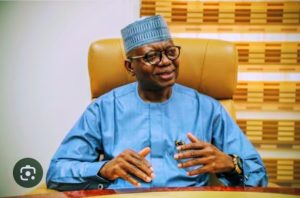
His parliamentary focus mirrors his ground-level priorities: appropriations that favour infrastructural renewal, oversight that insists on functionality rather than box-ticking, and sponsorship of bills that aim to institutionalise development gains for his constituency and the nation.
The cultural essence of Musa’s philanthropy is both deeply local and forward-looking. On one hand, he understands the rhythms of Nigerien communal life—how a repaired market road reverberates across livelihoods, how a vocational training centre can arrest the slide of young men and women from hope into crime.
On the other, Senator Musa’s political narrative is remarkable for its resilience. He is a man who has faced multiple electoral contestations, yet his re-election and continued public presence have positioned him as a politician whose legitimacy is grounded in visible delivery rather than mere rhetoric.
At the national level, Musa’s posture is that of a reconciler—a senator who understands the centrifugal forces pulling at Nigeria’s polity and who argues for the centripetal glue of competence-driven governance. In the Senate, where posturing can too easily eclipse policy, he is known as a lawmaker who prefers the painstaking work of committee deliberations, budget scrutiny, and legislative sponsorship. His tenure in financial-oversight roles proves his practical commitment to accountability, ensuring public resources are accounted for and budgets aligned to human needs rather than vanity projects. This posture is not merely technocratic; it is profoundly moral.
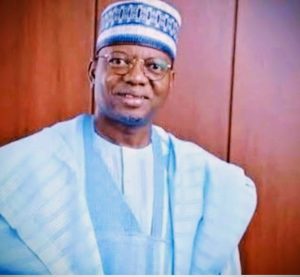
True, infrastructural deficits remain, and there is always more to be done to address the systemic causes of underdevelopment in parts of Niger and across Nigeria. Yet what distinguishes the senator from many of his peers is a demonstrable pattern: when problems are identified, he mobilises resources and follows through; when crises arrive, he responds; and when people are marginalised, he finds ways to extend assistance.
That pattern matters because politics is an ensemble of patterns, not singular events. Indeed, Musa’s blend of philanthropic disposition and institutional engagement is a template other lawmakers could emulate—not merely for Niger East but for a Nigeria hungry for leaders who can pragmatically transform the quotidian realities of millions.
To call Senator Mohammed Sani Musa a “philanthropic politician” is both accurate and insufficient. The better description is statesman-philanthropist: one who combines the soft virtues of care and proximity with the hard virtues of systems thinking and institutional stewardship. He is tender where politics demands tenderness—in healthcare corridors and market squares—and rigorous where governance demands rigour—in committee rooms and budget halls.
For the people of Niger East, he has been more than an occasional benefactor; he has been a consistent advocate of possibility. For Nigerians seeking a politics that returns to the essentials of service, Senator Musa is a voice and a record worth listening to—and learning from.
*Adamu, a Teacher, writes from FUT, Minna, can be reached via adamudouble2000gmail.com*

The United States government has insisted that Nigeria should retain its Country of Particular Concern, CPC, designation, saying the country has not done enough to protect Christians from attacks.
Assistant Secretary of State for African Affairs, Frank Garcia, made this statement on Thursday during a congressional hearing on violence in Nigeria.
Garcia was responding to questions from US Congressman Riley Moore, who asked about the government’s efforts to dismantle militia strongholds and kidnapping camps in the Middle Belt, particularly in Benue and Plateau states.
Moore also raised concerns over the exclusion of the states from the forest guard initiative and delays in deploying 1,000 approved guards to Plateau.
“Before you answer that, we cannot take this CPC designation off of this country. They have not done enough,” Moore said.
Garcia acknowledged the lack of progress, but said Nigeria was taking steps to address the concerns, although they had yet to produce results.
He said the country’s security capacity was still being developed and that deployments were not happening fast enough.
“Unfortunately, the violence has not stopped,” Garcia added, citing continued attacks in Kaduna and Plateau states.
He said the US had provided police training and equipment, expanded intelligence sharing and worked with Nigerian financial institutions to disrupt terrorist financing.
Garcia added that Washington would continue diplomatic engagements and security cooperation to protect vulnerable communities and ensure accountability.
However, the Nigerian government has consistently rejected claims of a “Christian genocide” or targeted religious persecution, maintaining that insecurity affects Nigerians of all faiths.


Liquefied Petroleum Gas, commonly known as cooking gas, has risen significantly, forcing Nigerians to spend more to purchase the product.
The increase comes as depot owners and retailers raised their prices over the past two days.
StockGap increased its depot price by N25 to N1,440 per kilogram. Nigerian Independent Petroleum Company Limited, NIPCO, Mobil (now 11 Plc) and Ardova, on the other hand, sold the product at N1,400 and N1,390 per kilogram, respectively.
Similarly, LPG retail outlets, including Raniol, Juda Oil and Nigerian National Petroleum Company Limited, NNPC, outlets in Abuja and its environs, now dispense cooking gas at between N1,550 and N1,600 per kilogram, up from N1,400 and N1,500.
Micro-LPG dealers sell the product for between N1,700 and N1,800 per kilogram, depending on the location in Abuja.
Earlier, NIPCO’s spokesperson, Taofeek Lawal, had exclusively told DAILY POST that LPG prices could increase further between November and January next year.
The latest price increase means that Nigerians who previously spent N17,500 to refill a 12.5kg cylinder at N1,400 per kilogram will now pay N20,000 at the new rate of N1,600 per kilogram, representing an additional N2,500.
News
2027: Tinubu Must Withdraw ‘All Is Fair in Politics’ Remark, Embrace Peaceful Coexistence — ADC-PCC
The African Democratic Congress Presidential Campaign Council (ADC-PCC) has called on President Bola Ahmed Tinubu to publicly retract his controversial “All Is Fair in Politics” remark, warning that such rhetoric fuels political division, emboldens thugs and poses a grave threat to the nation’s peace and stability.
The ADC-PCC also expressed concern over what it described as the President’s disturbing silence on the conduct of some APC governors and party chieftains who have openly made inflammatory statements and allegedly encouraged political violence.
In a statement signed by its Director of Media and Publicity, Kola Ologbondiyan, the ADC-PCC urged President Tinubu to rise above partisan interests and demonstrate the statesmanship expected of a national leader, citing former President Goodluck Jonathan’s unequivocal declaration that no presidential ambition was worth the blood of any Nigerian.
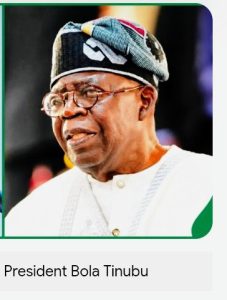
The Council described as shocking the President’s failure to condemn the growing wave of political violence, noting that, through his spokesman, Mr. Bayo Onanuga, the Presidency had instead chosen to caution opposition parties while shielding those allegedly responsible for violence within the ruling APC.
“President Tinubu cannot claim to desire peace when his own words provide cover for violence.
“‘All Is Fair in Politics’ is not the language of a Head of State. It is the language of political desperation and an open licence for thuggery, ballot snatching, intimidation and bloodshed.
“From Edo to Cross River, Gombe to Lagos, and Kebbi to Kaduna, Nigerians have witnessed attacks on opposition gatherings, destruction of campaign materials and the brutalisation of innocent supporters, allegedly by APC-sponsored thugs.
“Yet, Mr. President has not considered it necessary to call his governors and party members to order.
“Instead, the Presidency has resorted to diversionary tactics, blaming victims and preaching restraint to the opposition while members of the ruling party are accused of unleashing violence across the country,” the statement said.
The ADC-PCC challenged President Tinubu to explain why his condemnation of political violence appears directed at the opposition rather than members of his own party.
It asked: “Why has Mr. President refused to condemn APC governors who openly threaten opposition supporters? Why has he remained silent over public incitement by officials of his party? Why is his anger always directed at the opposition and never at those within his own political fold?”
The Council maintained that the ADC remains committed to peaceful, issue-based political engagement, insisting that its campaign is focused on addressing the country’s pressing challenges, including hunger, insecurity, unemployment, corruption and what it described as the failures of the Tinubu administration.
It accused the APC of resorting to violence because it had little to offer Nigerians in terms of credible solutions to the country’s problems.
Consequently, the ADC-PCC demanded that President Tinubu immediately and publicly withdraw his “All Is Fair in Politics” remark, condemn and call to order APC governors and party officials accused of inciting violence, and direct security agencies to protect all Nigerians impartially rather than allow them to become instruments of intimidation and oppression against opposition parties.
” Nigeria belongs to all of us. No political ambition is worth the blood of any Nigerian.
“If former President Goodluck Jonathan could make that profound declaration in 2015, President Tinubu has no excuse not to say so and demonstrate the sincerity of his commitment to peace in 2026.
“The ADC will not be intimidated. We will continue to campaign peacefully, and in 2027, Nigerians will have the opportunity to vote for competence, integrity and a new beginning,” the statement added.




-
News5 days ago
IGP Disu decorates 29 senior police officers with new ranks….charges them on professionalism, integrity,others
-
News4 days ago
Airstrikes kill 40 ISWAP terrorists in Borno
-
News4 days ago
We finally received CTC Of Lifu’s Judgement, without Atiku, Other Candidates Names Mentioned—Senator Melaye
-
News4 days ago
2026 U-17 WWC: Tinubu rewards each Flamingos player with ₦100m
-
News5 days ago
How Federal High Court Chief judge is beign blackmailed with EFCC, CCB- ADC Campaign Council
-
News2 days ago
Crowd Shouts ‘Bamayi’ at Tinubu, pelt convoy in Abuja
-
News5 days ago
Oil slump opens door to cheaper petrol for Nigerians …as Brent hits lowest since August
-
News4 days ago
2027: APC sacks kindergarteen Campaign Spokespersons…..Yari, Alake, Idris, now to speak for council