
News
NUPRC AT 4 AND TRIBUTES TO MODEL OF EXCELLENCE

By Nnoli Okojie
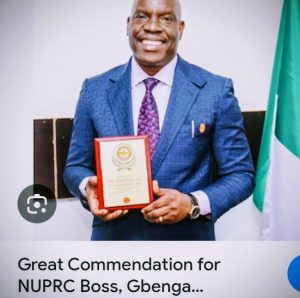
Four years ago, a quiet ceremony in Abuja marked the birth of a new institution. The Nigerian Upstream Petroleum Regulatory Commission (NUPRC) was not launched with fanfare or fireworks—just a signed document, a handshake, and a promise to fix what had long been broken.
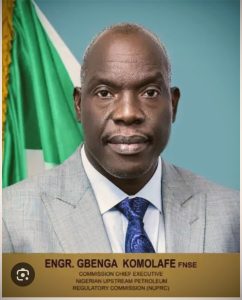
From that modest beginning, under the steady hand of Engr. Gbenga Komolafe, appointed Chief Executive in October 2021, a regulator once seen as a mere successor to legacy bodies has emerged as the architect of Nigeria’s upstream renaissance. This is not a tale of slogans, but of systems rebuilt, revenues reclaimed, and a nation’s energy future reclaimed—one bold decision at a time.
The Nigerian Upstream Petroleum Regulatory Commission (NUPRC) stands as the apex regulatory agency established to oversee and supervise upstream petroleum operations in Nigeria, ensuring compliance, efficiency, and sustainable growth.
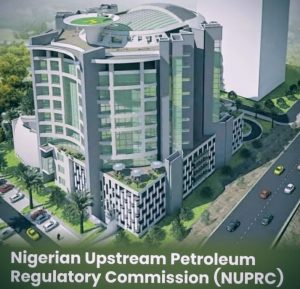
Its broad Regulatory Action Plan (RAP) is meticulously focused on enhancing regulatory certainty and predictability, advancing future licensing rounds through robust policy and seamless implementation, optimizing the unit cost of production for greater competitiveness, automating processes and improving business workflows for heightened operational efficiency, promoting ease of entry and retention of investments, vacating burdensome entry barriers such as exorbitant asset acquisition fees, deepening transparency, accountability, and the elimination of discriminatory regulatory practices, implementing a comprehensive carbon credit earnings framework for upstream operations, accelerating the execution of oil and gas development and production projects, and enforcing the Drill or Drop provisions of the Petroleum Industry Act (2021).
It also emphasizes the optimization of federation revenues, decarbonization and greenhouse gas (GHG) emissions management in production environments, incorporating green sustainability narratives into Field Development Plans (FDPs), diligent monitoring and implementation of the Nigerian Gas Flare Commercialization Programme (NGFCP) awarded sites for optimal flare-out monetization, Host Community Trust Fund implementation and guiding trust fund activities to minimize agitations in operational areas, achieving 100% hydrocarbon accounting, implementing the new production curtailment regime and domestic crude supply obligations, conducting annual asset performance assessments and reviews, enforcing Domestic Crude Supply Obligation (DCSO) and Domestic Gas Distribution Obligation (DGDO) to bolster domestic refining capacity, maintaining zero tolerance for defaults in royalty payments, creating value through rigorous approval of annual work programmes/budgets and monitoring financial viability, addressing crude oil and gas pricing in contemporary terms, and pursuing revenue generation with a zero-default strategy on royalty payments.
These are by no means exhaustive, as the mandate of the Commission encompasses its general objectives and functions as outlined in the PIA and, by extension, all other laws governing upstream petroleum operations in Nigeria. This includes rapidly actualizing the transformative vision of the PIA (2021) and elevating the efficiency and performance of the sector, with a strategic agenda tailored for Nigeria, Africa, and other resource-rich developing economies. This agenda navigates the evolving energy dynamics, calibrated against geography, history, and politics, while advocating for energy justice, equity, inclusivity, and long-term sustainability.
Today, the commission marks its fourth anniversary, birthed as a child of necessity to reclaim and restore our nation’s lost glory in the global energy arena. Instructively, a major challenge with such special purpose vehicles is the critical question of leadership, which can make or break their effectiveness.
It is against this backdrop that Engr. Gbenga Komolafe was appointed the Commission Chief Executive in October 2021, armed with a clear vision and mandate to drive systemic change. In this role, the mission was known and clearly defined from the outset by the leadership.
Since then, he has been instrumental in shaping the direction of the Nigerian Upstream Petroleum Regulatory Commission (NUPRC) through proactive, visionary, and significant leadership, transforming Nigeria’s oil and gas industry into a model of excellence in Africa’s energy sector. This has significantly boosted revenue generation, with the commission consistently surpassing its budgeted revenue target by 84%, demonstrating its unparalleled effectiveness in managing the nation’s hydrocarbon resources.
Engr. Gbenga’s institutionalization of positive reforms that promote transparency and accountability in the industry has led to enhanced oil production, with Nigeria’s output increasing to 1.7 million barrels per day, a significant reduction in oil theft from 200,000 barrels per day to 5,000 barrels per day, and driving Nigeria’s gas development agenda through initiatives like the National Gas Policy and the Gas Flare Commercialization Program. Additionally, the development of 25 priority regulations, with 17 already gazetted, provides a clear, structured framework for the industry, earning several awards and nominations, including the SERVICOM Outstanding Leadership Award and the Africa Energy Sector Regulator of the Year award.
Indeed, Engr. Gbenga has convincingly demonstrated his commitment to excellence, transparency, and sustainability in regulating Nigeria’s oil and gas industry through various frameworks that aid the autonomization of NUPRC’s operations, allowing it to make balanced decisions that foster investor confidence while safeguarding national interests. He has showcased competence and expertise in regulating the upstream petroleum industry, with reforms that promote transparency, efficiency, and professionalism, coupled with a data transparency model that publishes clearer data on production, investment flows, and environmental performance, ensuring accountability and informed decision-making.
He has also implemented the most ambitious Host Communities Development Trust (HCDT), an innovation that grants oil-producing communities a direct voice in project planning and environmental management, and introduced automated regulatory processes which have positively reduced inefficiencies, time wastages, and improved data accuracy and reliability in monitoring upstream activities.
Engr. Gbenga’s pursuit of excellence and verifiable results has led to the promotion of sustainable value creation from Nigeria’s petroleum resources for shared prosperity. With his various intentionally driven efforts to increase transparency and accountability in the oil and gas sector, he has favourably aligned the Commission with the provisions of the Petroleum Industry Act (PIA), leading to the development of 25 priority high-impact regulations, with 17 gazetted, to provide clarity and structure to the industry. This regulatory framework is expected to boost investor confidence and promote sustainable development in the upstream petroleum sector, while the automated regulatory processes have greatly reduced inefficiencies, time wastage, and improved precision and data accuracy in monitoring upstream activities, substantially improving oil production and increasing it to over 1.6 million barrels per day, with efforts to reach 1.8 million barrels per day and beyond.
Engr. Gbenga’s enhanced positive efforts to reduce emissions and promote sustainable energy development have aligned the Commission with global best practices. The several reforms introduced by him are taking shape, increasing Nigeria’s oil production to over 1.6 million barrels per day, with efforts to reach 1.8 million barrels per day and beyond.
The commission aims to retain existing investments, encourage additional investments, and attract fresh investments by eliminating identified barriers. Presently, Engr. Gbenga is driving Nigeria’s gas development agenda through initiatives like the National Gas Policy and the Gas Flare Commercialization Program.
Through this pragmatic problem-solving approach, the commission has also approved 28 new Field Development Plans, which are expected to unlock an additional 600,000 barrels of oil per day and more than 2 billion standard cubic feet of gas daily. His prioritization of transparency and accountability in the operations of the Commission, with a focus on regulatory compliance and stakeholder engagement, has led to the implementation of measures to deepen transparency, accountability, and eliminate discriminatory regulatory practices.
These actions amplify his commitment to forging strategies aimed at reducing emissions and promoting sustainable energy development, driving efforts towards reducing greenhouse gas emissions and promoting the use of cleaner energy sources, while aggressively working to promote investment in the upstream petroleum sector by providing a conducive business environment and streamlining regulatory processes that position Nigeria as a prime destination for foreign direct investment in the sector.
Already, NUPRC has developed a comprehensive strategic plan that outlines its goals, strategies, and actions for the next decade. This plan focuses on optimizing value creation, diversifying revenue resources, enhancing stakeholder relationships, ensuring regulatory compliance, attracting investors, and improving operational efficiency in the nearest future, and is anchored on the dynamic and people-oriented leadership of Engr. Gbenga Komolafe. The plan is to implement its Regulatory Action Plan, which focuses on regulatory certainty and predictability, future licensing rounds policy and implementation, unit cost of production optimization, and automation and business process improvements for operational efficiency.
This will surely attract fresh investments in the upstream petroleum sector by providing a conducive business environment and streamlining regulatory processes, and increase revenue generation for the government through increased oil and gas production, improved regulatory compliance, and effective management of the nation’s petroleum resources, while also promoting sustainable development in the upstream petroleum sector by ensuring that operations are carried out in an environmentally friendly and socially responsible manner.
The Commission will also evolve plans for the actualization of the Project 1 Million Barrels of Oil Per Day, an initiative which aims to ramp up oil production and create solutions for production growth, coupled with driving a stronger commitment to reducing emissions and promoting sustainable energy development while holistically digitizing regulatory processes to enhance efficiency and service delivery.
Today, four candles burn bright on NUPRC’s anniversary cake—not just symbols of survival, but emblems of transformation. What began as a regulatory reset has become a national success story, powered by a leader who turned policy into progress and potential into performance.
Engr. Gbenga Komolafe didn’t just inherit a mandate; he redefined it. And in doing so, he has given Nigeria more than oil—he has given it ownership of its future.
As the next chapter unfolds, one thing is certain: with Komolafe at the helm, NUPRC is not just keeping pace with global energy shifts—it is setting the rhythm. From the Niger Delta to the world stage, the message is clear: Nigeria’s upstream sector is open, accountable, and unstoppable. The journey of excellence continues—and the best, without question, is yet to come.
Okojie is an oil and gas expert writing from Abu Dhabi, UAE.
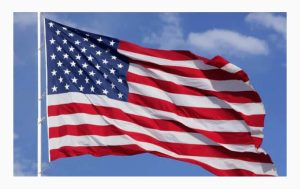
The United States government has insisted that Nigeria should retain its Country of Particular Concern, CPC, designation, saying the country has not done enough to protect Christians from attacks.
Assistant Secretary of State for African Affairs, Frank Garcia, made this statement on Thursday during a congressional hearing on violence in Nigeria.
Garcia was responding to questions from US Congressman Riley Moore, who asked about the government’s efforts to dismantle militia strongholds and kidnapping camps in the Middle Belt, particularly in Benue and Plateau states.
Moore also raised concerns over the exclusion of the states from the forest guard initiative and delays in deploying 1,000 approved guards to Plateau.
“Before you answer that, we cannot take this CPC designation off of this country. They have not done enough,” Moore said.
Garcia acknowledged the lack of progress, but said Nigeria was taking steps to address the concerns, although they had yet to produce results.
He said the country’s security capacity was still being developed and that deployments were not happening fast enough.
“Unfortunately, the violence has not stopped,” Garcia added, citing continued attacks in Kaduna and Plateau states.
He said the US had provided police training and equipment, expanded intelligence sharing and worked with Nigerian financial institutions to disrupt terrorist financing.
Garcia added that Washington would continue diplomatic engagements and security cooperation to protect vulnerable communities and ensure accountability.
However, the Nigerian government has consistently rejected claims of a “Christian genocide” or targeted religious persecution, maintaining that insecurity affects Nigerians of all faiths.

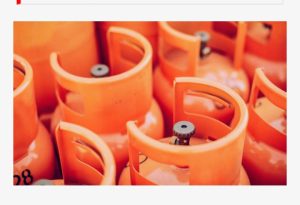
Liquefied Petroleum Gas, commonly known as cooking gas, has risen significantly, forcing Nigerians to spend more to purchase the product.
The increase comes as depot owners and retailers raised their prices over the past two days.
StockGap increased its depot price by N25 to N1,440 per kilogram. Nigerian Independent Petroleum Company Limited, NIPCO, Mobil (now 11 Plc) and Ardova, on the other hand, sold the product at N1,400 and N1,390 per kilogram, respectively.
Similarly, LPG retail outlets, including Raniol, Juda Oil and Nigerian National Petroleum Company Limited, NNPC, outlets in Abuja and its environs, now dispense cooking gas at between N1,550 and N1,600 per kilogram, up from N1,400 and N1,500.
Micro-LPG dealers sell the product for between N1,700 and N1,800 per kilogram, depending on the location in Abuja.
Earlier, NIPCO’s spokesperson, Taofeek Lawal, had exclusively told DAILY POST that LPG prices could increase further between November and January next year.
The latest price increase means that Nigerians who previously spent N17,500 to refill a 12.5kg cylinder at N1,400 per kilogram will now pay N20,000 at the new rate of N1,600 per kilogram, representing an additional N2,500.
News
2027: Tinubu Must Withdraw ‘All Is Fair in Politics’ Remark, Embrace Peaceful Coexistence — ADC-PCC
The African Democratic Congress Presidential Campaign Council (ADC-PCC) has called on President Bola Ahmed Tinubu to publicly retract his controversial “All Is Fair in Politics” remark, warning that such rhetoric fuels political division, emboldens thugs and poses a grave threat to the nation’s peace and stability.
The ADC-PCC also expressed concern over what it described as the President’s disturbing silence on the conduct of some APC governors and party chieftains who have openly made inflammatory statements and allegedly encouraged political violence.
In a statement signed by its Director of Media and Publicity, Kola Ologbondiyan, the ADC-PCC urged President Tinubu to rise above partisan interests and demonstrate the statesmanship expected of a national leader, citing former President Goodluck Jonathan’s unequivocal declaration that no presidential ambition was worth the blood of any Nigerian.
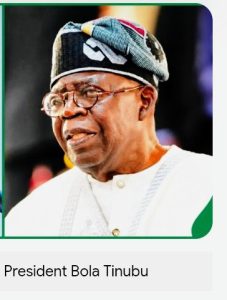
The Council described as shocking the President’s failure to condemn the growing wave of political violence, noting that, through his spokesman, Mr. Bayo Onanuga, the Presidency had instead chosen to caution opposition parties while shielding those allegedly responsible for violence within the ruling APC.
“President Tinubu cannot claim to desire peace when his own words provide cover for violence.
“‘All Is Fair in Politics’ is not the language of a Head of State. It is the language of political desperation and an open licence for thuggery, ballot snatching, intimidation and bloodshed.
“From Edo to Cross River, Gombe to Lagos, and Kebbi to Kaduna, Nigerians have witnessed attacks on opposition gatherings, destruction of campaign materials and the brutalisation of innocent supporters, allegedly by APC-sponsored thugs.
“Yet, Mr. President has not considered it necessary to call his governors and party members to order.
“Instead, the Presidency has resorted to diversionary tactics, blaming victims and preaching restraint to the opposition while members of the ruling party are accused of unleashing violence across the country,” the statement said.
The ADC-PCC challenged President Tinubu to explain why his condemnation of political violence appears directed at the opposition rather than members of his own party.
It asked: “Why has Mr. President refused to condemn APC governors who openly threaten opposition supporters? Why has he remained silent over public incitement by officials of his party? Why is his anger always directed at the opposition and never at those within his own political fold?”
The Council maintained that the ADC remains committed to peaceful, issue-based political engagement, insisting that its campaign is focused on addressing the country’s pressing challenges, including hunger, insecurity, unemployment, corruption and what it described as the failures of the Tinubu administration.
It accused the APC of resorting to violence because it had little to offer Nigerians in terms of credible solutions to the country’s problems.
Consequently, the ADC-PCC demanded that President Tinubu immediately and publicly withdraw his “All Is Fair in Politics” remark, condemn and call to order APC governors and party officials accused of inciting violence, and direct security agencies to protect all Nigerians impartially rather than allow them to become instruments of intimidation and oppression against opposition parties.
” Nigeria belongs to all of us. No political ambition is worth the blood of any Nigerian.
“If former President Goodluck Jonathan could make that profound declaration in 2015, President Tinubu has no excuse not to say so and demonstrate the sincerity of his commitment to peace in 2026.
“The ADC will not be intimidated. We will continue to campaign peacefully, and in 2027, Nigerians will have the opportunity to vote for competence, integrity and a new beginning,” the statement added.




-
News5 days ago
IGP Disu decorates 29 senior police officers with new ranks….charges them on professionalism, integrity,others
-
News4 days ago
Airstrikes kill 40 ISWAP terrorists in Borno
-
News4 days ago
We finally received CTC Of Lifu’s Judgement, without Atiku, Other Candidates Names Mentioned—Senator Melaye
-
News4 days ago
2026 U-17 WWC: Tinubu rewards each Flamingos player with ₦100m
-
News5 days ago
How Federal High Court Chief judge is beign blackmailed with EFCC, CCB- ADC Campaign Council
-
News5 days ago
Oil slump opens door to cheaper petrol for Nigerians …as Brent hits lowest since August
-
News2 days ago
Crowd Shouts ‘Bamayi’ at Tinubu, pelt convoy in Abuja
-
News5 days ago
Oil price fall: We ‘ll take appropriate action against marketers, petrol stations over unfair practices- FCCPC