

News
Dauda Lawal: Between Leadership Award and Zamfara Reality

By Silas Ajogwu
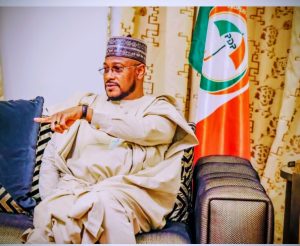
There are moments when public honours become mirrors that doesn’t reflect virtue but to magnify dissonance. Governor Dauda Lawal’s recent acclamation as “Governor of the Year” by Leadership newspapers should, in a sane political economy, invite sober celebration only if the facts on the ground corroborate the plaudits. But in Zamfara, where villages are sacked, whole communities flee in fear, educational system keep declining in the wake of violence, and mass abductions have become grim headlines, the award reads less like recognition than a rhetorical conjuring trick. The editorial board that printed the accolade owes Nigerians an apology for easily being misled: how did the red ink miss the echoes of wailings and the river of bloods that flow through Zamfara today?
Let us begin with the unassailable facts. Over the past months, and indeed years, Zamfara has been one of the epicentres of Nigeria’s northwestern security catastrophe. Evidently, reports from reputable international media and rights groups have documented catastrophic violence like brutal mass killings in mining towns, the abduction of scores of villagers in single operations, and the sacking of hundreds of communities that have produced waves of internally displaced persons. Amnesty International and Reuters, among others, have catalogued attacks that leave behind corpses, razed homes, and scarred families. These are not the figments of partisan reportage; they are verifiable tragedies with names, dates, and grieving families.

If an award is to have any moral weight, it must answer this simple ledger: have lives been preserved under your watch, or have they been squandered? Has the governor provided a credible roadmap toward safety, or has he delivered platitudes and photo-opportunities while bandits seize towns and terrorize children? The empirical answer, as chronicled by independent observers is damning. Recent attacks in Zamfara have included mass abductions. One reported incident alone saw over 100 people taken, and repeated massacres in villages where citizens were slaughtered as they laboured. An outbreak of cholera in Bukkuyum and the deaths recorded there are not incidental; they are symptomatic of collapsed access to health, water, and security which are the very public goods that should mark competent stewardship of a state. Unfortunately, the massive federal allocation are only seen in the frivolous spending and luxurious purchase made by the governor and his cabinets, but not reflective in the lives of Zamfarans.
And yet, on glossy pages and curated websites, a different narrative is being sold: that a governor whose tenure coincides with such human carnage deserves a laurel. This is not merely a question of taste; it is an ethical indictment of how awards are dispensed and of what our public culture has become. When honour is decoupled from measurable public welfare and instead telescoped into ceremony, we impoverish language itself. Words like “leadership” and “transformational” warp into euphemisms for impunity. If an editorial board is prepared to bless a record marred by abandoned communities, the public is entitled to ask whether the accolade Is commensurate with performance or contaminated by other influences. Indeed, social scepticism is not cynicism; it is a civic alarm that sounds when lived reality diverges dramatically from celebratory headlines.
It Is tempting and rhetorically effective to leap to causation: Yes! awards are being bought; editorial independence is for sale; governors are laundering reputations with chequebooks. But responsible criticism requires discipline. In the absence of a smoking gun that proves pay-for-play in this specific case, the argument must rest on demonstrable incongruity and pattern. Across Nigeria, there have been recurring controversies where awards and honours were criticized for being influenced by patronage, and commentators have warned that some prizes have become transactional. What we can say with confidence is this: where public life is ravaged by banditry and humanitarian collapse, the optics of bestowing “Governor of the Year” warrants interrogation, not because the act of awarding is per se illegitimate, but because the moral calculus of governance demands that survival and dignity must come before plaudits.
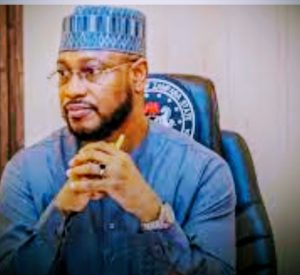
The human cost of misgovernance is not an abstraction. Mothers in Zamfara and cradle children who have lost fathers to kidnappers; entire marketplaces lie empty because people fear to travel; mothers with infants cannot reach clinics because roads are controlled by armed men on motorcycles. These daily indignities corrode social trust and exact stealthy, intergenerational harm. When an editorial desk fails to look these mothers in the face and instead crowns their governor, the message sent is corrosive: that rhetoric can substitute for remedy, and that spectacle can displace sorrow. The moral outrage that follows is neither theatrical nor petty; it is a legitimate expression of popular grief and righteous indignation of personal experience.
However, it is important to consider the broader data of how human-rights organizations and investigative outlets have documented thousands killed, villages burnt down, and how hundreds of thousands were displaced across Zamfara State. These can only be a result of structural failures; failures of intelligence, of community protection, of preventive policing, and of governance allocation. If a governor’s tenure coincides with such systemic collapse, editorial boards should, at minimum, scrutinize if the state apparatus has been deployed, how it has been deployed to protect citizens. Obviously, Dauda Lawal’s administration has not strengthened local security architecture, ensured functioning clinics and safe water points, and has not exercised fiscal courage to fund durable counter-insurgency measures.
When the governor and his apologists insist on celebrating awards, they must be asked to explain, with documents and demonstrable outcomes, why the lives of their citizens were not the primary metric considered. What specific policies, funded projects, or security innovations justify a Governor of the Year title? Are there transparent records showing reductions in incidents, successful rescue operations, improved infrastructure, rehabilitated health centres, or secure corridors that allow commerce to resume? Or is the award a prophylactic meant to sanitize a political brand while the rot continues underneath? The difference between governance and marketing is precisely this: the former is accountable to the ledger of life; the latter is answerable only to visibility.
We must also confront the rhetorical posture that seeks to delegitimise popular critique by branding it as mere “political attacks.” When mothers cries for their missing children, when communities cannot till fields for fear of ambush, when clinics close because health workers cannot commute, the critiques that arise are not partisan truculence; they are the anguished responses of citizens demanding protection. To dismiss these legitimate cries as envy or opposition theatre is to perpetrate a moral inversion: those who ask for security are branded as troublemakers while those who preside over their vulnerability are lauded. If the editorial pages are to retain moral authority, they must resist becoming instruments for image laundering.
What, then, should be the civic response? First, Newspapers must demand transparency before publication. Newspapers that confer high honours must publish their criteria, and the evidentiary basis for their choices. If “Governor of the Year” is to mean anything beyond a headline, it must be backed by transparent metrics: measurable improvements in healthcare access, documented reductions in violence, convincingly audited security spending, and demonstrable community rehabilitation. Second, insist on investigative curiosity: it is important for civil society and independent media to probe the governance ledger, which are budgets, procurement processes, and security strategies. Third, let the people of Zamfara judge for themselves: community hearings, testimony from survivors, and on-the-ground reportage should be the sources that shape public memory, not paid-for adverts or celebratory galas.
Finally, there is a moral plea. Awards are supposed to confer encouragement on those who have alleviated suffering, not camouflage those who have presided over it. If Governors wish to be celebrated, let them first clear a simple threshold: make their states safer, make clinics work, make schools open, restore markets, and stop the nightly toll of abductions and killings. Let them invite independent monitors to verify progress. Let their citizens sleep without fear. Only then will a “Governor of the Year” title be more than a headline: it will be a justly earned tribute.
To the editorial board that printed the accolade, and to every Nigerian watching: do not let ceremony smother scrutiny. To the shameless governor who accepted it: Honor must be tethered to the dignity of life. In Zamfara today, that dignity is endangered; mothers weep while trumpets sound. If honour is to mean anything at all, let it begin by answering the children’s cries and the empty chairs at family tables. Let the paychecks of Civil servants bring smiles to their faces. Until then, a paper’s gold foil Is a poor balm for the blood and the silence.
Ajogwu is a security expert writing from Kaduna.

The United States government has insisted that Nigeria should retain its Country of Particular Concern, CPC, designation, saying the country has not done enough to protect Christians from attacks.
Assistant Secretary of State for African Affairs, Frank Garcia, made this statement on Thursday during a congressional hearing on violence in Nigeria.
Garcia was responding to questions from US Congressman Riley Moore, who asked about the government’s efforts to dismantle militia strongholds and kidnapping camps in the Middle Belt, particularly in Benue and Plateau states.
Moore also raised concerns over the exclusion of the states from the forest guard initiative and delays in deploying 1,000 approved guards to Plateau.
“Before you answer that, we cannot take this CPC designation off of this country. They have not done enough,” Moore said.
Garcia acknowledged the lack of progress, but said Nigeria was taking steps to address the concerns, although they had yet to produce results.
He said the country’s security capacity was still being developed and that deployments were not happening fast enough.
“Unfortunately, the violence has not stopped,” Garcia added, citing continued attacks in Kaduna and Plateau states.
He said the US had provided police training and equipment, expanded intelligence sharing and worked with Nigerian financial institutions to disrupt terrorist financing.
Garcia added that Washington would continue diplomatic engagements and security cooperation to protect vulnerable communities and ensure accountability.
However, the Nigerian government has consistently rejected claims of a “Christian genocide” or targeted religious persecution, maintaining that insecurity affects Nigerians of all faiths.


Liquefied Petroleum Gas, commonly known as cooking gas, has risen significantly, forcing Nigerians to spend more to purchase the product.
The increase comes as depot owners and retailers raised their prices over the past two days.
StockGap increased its depot price by N25 to N1,440 per kilogram. Nigerian Independent Petroleum Company Limited, NIPCO, Mobil (now 11 Plc) and Ardova, on the other hand, sold the product at N1,400 and N1,390 per kilogram, respectively.
Similarly, LPG retail outlets, including Raniol, Juda Oil and Nigerian National Petroleum Company Limited, NNPC, outlets in Abuja and its environs, now dispense cooking gas at between N1,550 and N1,600 per kilogram, up from N1,400 and N1,500.
Micro-LPG dealers sell the product for between N1,700 and N1,800 per kilogram, depending on the location in Abuja.
Earlier, NIPCO’s spokesperson, Taofeek Lawal, had exclusively told DAILY POST that LPG prices could increase further between November and January next year.
The latest price increase means that Nigerians who previously spent N17,500 to refill a 12.5kg cylinder at N1,400 per kilogram will now pay N20,000 at the new rate of N1,600 per kilogram, representing an additional N2,500.
News
2027: Tinubu Must Withdraw ‘All Is Fair in Politics’ Remark, Embrace Peaceful Coexistence — ADC-PCC
The African Democratic Congress Presidential Campaign Council (ADC-PCC) has called on President Bola Ahmed Tinubu to publicly retract his controversial “All Is Fair in Politics” remark, warning that such rhetoric fuels political division, emboldens thugs and poses a grave threat to the nation’s peace and stability.
The ADC-PCC also expressed concern over what it described as the President’s disturbing silence on the conduct of some APC governors and party chieftains who have openly made inflammatory statements and allegedly encouraged political violence.
In a statement signed by its Director of Media and Publicity, Kola Ologbondiyan, the ADC-PCC urged President Tinubu to rise above partisan interests and demonstrate the statesmanship expected of a national leader, citing former President Goodluck Jonathan’s unequivocal declaration that no presidential ambition was worth the blood of any Nigerian.
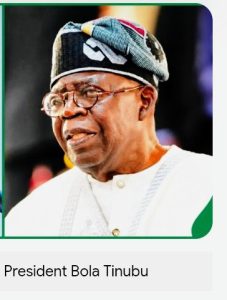
The Council described as shocking the President’s failure to condemn the growing wave of political violence, noting that, through his spokesman, Mr. Bayo Onanuga, the Presidency had instead chosen to caution opposition parties while shielding those allegedly responsible for violence within the ruling APC.
“President Tinubu cannot claim to desire peace when his own words provide cover for violence.
“‘All Is Fair in Politics’ is not the language of a Head of State. It is the language of political desperation and an open licence for thuggery, ballot snatching, intimidation and bloodshed.
“From Edo to Cross River, Gombe to Lagos, and Kebbi to Kaduna, Nigerians have witnessed attacks on opposition gatherings, destruction of campaign materials and the brutalisation of innocent supporters, allegedly by APC-sponsored thugs.
“Yet, Mr. President has not considered it necessary to call his governors and party members to order.
“Instead, the Presidency has resorted to diversionary tactics, blaming victims and preaching restraint to the opposition while members of the ruling party are accused of unleashing violence across the country,” the statement said.
The ADC-PCC challenged President Tinubu to explain why his condemnation of political violence appears directed at the opposition rather than members of his own party.
It asked: “Why has Mr. President refused to condemn APC governors who openly threaten opposition supporters? Why has he remained silent over public incitement by officials of his party? Why is his anger always directed at the opposition and never at those within his own political fold?”
The Council maintained that the ADC remains committed to peaceful, issue-based political engagement, insisting that its campaign is focused on addressing the country’s pressing challenges, including hunger, insecurity, unemployment, corruption and what it described as the failures of the Tinubu administration.
It accused the APC of resorting to violence because it had little to offer Nigerians in terms of credible solutions to the country’s problems.
Consequently, the ADC-PCC demanded that President Tinubu immediately and publicly withdraw his “All Is Fair in Politics” remark, condemn and call to order APC governors and party officials accused of inciting violence, and direct security agencies to protect all Nigerians impartially rather than allow them to become instruments of intimidation and oppression against opposition parties.
” Nigeria belongs to all of us. No political ambition is worth the blood of any Nigerian.
“If former President Goodluck Jonathan could make that profound declaration in 2015, President Tinubu has no excuse not to say so and demonstrate the sincerity of his commitment to peace in 2026.
“The ADC will not be intimidated. We will continue to campaign peacefully, and in 2027, Nigerians will have the opportunity to vote for competence, integrity and a new beginning,” the statement added.





-
News5 days ago
IGP Disu decorates 29 senior police officers with new ranks….charges them on professionalism, integrity,others
-
News4 days ago
Airstrikes kill 40 ISWAP terrorists in Borno
-
News4 days ago
We finally received CTC Of Lifu’s Judgement, without Atiku, Other Candidates Names Mentioned—Senator Melaye
-
News4 days ago
2026 U-17 WWC: Tinubu rewards each Flamingos player with ₦100m
-
News5 days ago
How Federal High Court Chief judge is beign blackmailed with EFCC, CCB- ADC Campaign Council
-
News2 days ago
Crowd Shouts ‘Bamayi’ at Tinubu, pelt convoy in Abuja
-
News5 days ago
Oil slump opens door to cheaper petrol for Nigerians …as Brent hits lowest since August
-
News5 days ago
Oil price fall: We ‘ll take appropriate action against marketers, petrol stations over unfair practices- FCCPC