
News
How Will History Remember INEC Chair Yakubu?

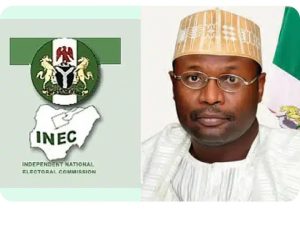
To many Nigerians, particularly voters, he is a patriotic, transparent and impartial umpire; a reformist, visionary, innovator, pacesetter and sanitiser; a courageous, dynamic and diligent worker, a principled referee and perceptive scholar, and a disciplined public servant who has defended the ballot box and upheld democracy and the rule of law in national interest.
To a section of the opposition, particularly desperate politicians, serial losers who lack the internal locus of control, and subjective critics and collaborators in the “pull him down scheme,” there is no pass mark.
But in the final analysis, history is the ultimate judge -the final arbiter – and its verdict will be incontrovertible.
As Yakubu bows out of office after 10 years in the saddle, the challenge is getting another man or woman of exemplary character who can build on his imperishable legacy.
From independence to date, Nigeria has produced 13 chief electoral officers – Sir Kofo Abayomi (1959-1964), Eyo Esua (1964-1966), Chief Michael Ani (1976-1979), Justice Victor Ovie-Whiskey (1980-1983), Prof. Eme Awa (1987-1989), Prof. Hum ohrey Nwosu (1989-1993), Prof. Okon Uya (1993), Summer Dagogo-Jack (1994-1998), Justice Ephraim Akpata (1998-2000), Dr. Abel Guobadia (2000-2005), Prof. Maurice Iwu (2005-2010), Prof. Attahiru Jegs (2010-2015 and Yakubu (2015-3025).
To date, Yakubu is the longest serving INEC chairman, and to that extent, the most experienced. Also, the challenges that have confronted his predecessors paled into insignificance in the face of increasing political consciousness, renewed agitations for the sanctity of the electoral process, sabotage by few unethical staff, inclination towards manipulation by the political class, and global clamour for best electoral practices.
According to analysts, election has been a nightmare in Nigeria from the First Republic. Rigging, irregularity, subversion of procedure, manipulation by candidates and political parties, logistic problems and lack of technology created a deep hollow in the score card of the electoral agency.
Avoidable mistakes, including missing voter register, late coming for electoral duty, incompetent staffing, late announcement of results that led to suspence, doctoring or fslsification of figures, and violence have led to result disputation or outright rejection. Thus, the contest often shifted from the polling booths to courts.
When he assumed the reins, Yakubu promised to make a difference. There were puzzles: Will the past mistakes be corrected? Will card readers work? Will INEC staff report for duty promptly? Will the electoral agency conduct a credible poll?
Yakubu is not a friend of politicians. Bold and brave, he also resisted undue political influence, always bent on discharging his duties without fear or favour. His goal is the integrity of the electoral process, being guided by the constitution and the electoral act. When it is required, Yakubu has been sensitive to public mood. He has been swift to cancel and postpone polls when disaster loomed. On those few occasions, he owned up to certain flaws and apologised to the nation.
Never willing to allow the commission to operate from the armpit any power-loaded President, he is privileged not to be at the helm of affairs in those days of do-or-die, reminiscent of Obasanjo era, when losers were declared winner by Returning Officers. No favouritism. No preferential treatment. No higher or lower bidder. INEC regulation under Yakubu became a leveller.
Stiff resistance to undue influence by the ruling and opposition parties have marked him out as an unbiased referee. Thus, when he issues commands, parties can only ignore the guidelines to their peril.
The greatest mark of INEC under the leadership of Yakubu is its respect for the rule of law. The electoral body is never at a cross road. At critical moments, the commission escaped inter-party cross-fires by taking solace in legal compass. Through its consistent obedience to court orders, INEC has demonstrated the quality of a democratic institution worthy of pride and emulation.
Two incidents have attested to Yakubu’s firmness as the boss. Due to internal squabbles, the All Progressives Congress (APC) mismanaged its governorship primary in Zamfara State. The troubled chapter failed to submit the name of its candidate and running mate before the deadline. The two ‘factions’ led by Governor Abdulazeez Yari and Senator Kabiru Marafa were working at cross purpose. They also underrated INEC. But, following the expiration of the deadline for submission of candidates’ list, INEC wielded the big stick. Yakubu told Nigerians that the chapter has forfeited the chance to participate in the poll. In its view, the Zamfara APC did not hold primary for the selection of a flag bearer.
Reflecting on the verdict, the former national chairman, Comrade Adams Oshiomhole, said although the agency was unfair to APC, the party has decided to abode by its decision.
The Rivers State chapter of the APC also failed to learn from the Zamfara mistake. The two camps, led by Transport Minister Rotimi Amaechi and Senator Magnus Abe, failed to put their house in order. The genesis of the imbroglio was the party’s rancorous parallel congresses for the election of party officers. Two parallel leadership emerged in the state. During the parallel primaries, two candidates – Abe and Tonye Cole – also emerged. Both headed for the court. Following the chapter’s inability to meet the deadline, INEC applied the hammer, denying the two factional candidates due recognition. Yakubu explained that, following the breach of the guidelines on deadline, the chapter will not field candidate for the governorship election.
However, the chairman clarified that, since the two factional contenders for the ticket have gone to the court, he would wait for the outcome. INEC was vindicated by the position it had taken. The Supreme Court verdict implied that Rivers APC conducted its primaries in error, having violated the previous order of the lower court barring it from conducting the exercise.
The lessons are twofold. Since the consequence of violation of internal democracy by parties is known, their leadership have to take precautions. Also, INEC’s firm and principled position on primaries restored discipline.
A ‘no-nonsense’ chairman, Yakubu has also tried to maintain discipline in INEC. He told reporters in Lagos that the bad eggs who had dented the name of the commission would be sent packing. To demonstrate its commitment to rid the commission of bad elements, some unscrupulous INEC workers were tried and convicted for aiding and abetting rigging. It was a signal that an agency that can surrender its staff for trial will not spare any politician or Nigerian who perpetuate electoral fraud.
*Leadership and institutional stability*
Yakubu was twice appointed, becoming the first INEC Chairman in history to serve two consecutive terms, thereby embodying continuity and stability. He supervised the largest number of elections ever conducted in Nigeria, including two general election of 2019 and 2023), 19 governorship polls, hundreds of by-elections, and three FCT Council polls Yakubu has built an enduring institutional memory, commissioning policy papers, reviews, and initiating Nigeria’s first election museum to preserve the nation’s democratic history.
*Strengthening electoral administration*
INEC under his tenure has regularised election dates, thereby creating certainty and predictability for citizens, parties, and observers. He has also expanded polling units for the first time in 25 years — from 119,974 to 176,846 —, widening voter access and reducing congestion.
The commision has modernised election infrastructure, built state Collation Centres across the federation and initiated a new INEC Headquarters in Abuja. It has introduced the Election Monitoring and Support Centre (EMSC) — a sophisticated hub tracking more than 1,000 indicators to ensure timely planning and coordination.
*Technological breakthroughs*
INEC under the outgoing chairman has delivered the Bimodal Voter Accreditation System (BVAS) and replaced the flawed manual processes with fingerprint and facial recognition. He has unveiled the INEC Result Viewing Portal (IReV), which now enables Nigerians to view polling unit results live. The move, according to ovservers, has strengthened transparency and rekindled public confidence in the commission.
The voter registration has been revolutionalised through IVED and ABIS. This has eliminated 2.7 million fraudulent registrations. INEC has also launched digital portals for candidate nomination, party agent registration, observer accreditation, and media access. Of importance also is the fact that Yakuku ensured that INEC became the first election body in Africa to establish an Artificial Intelligence Division, in preparation for the future of election management.
*Expanding the Voter Roll*
The chairman institutionalised the Continuous Voter Registration (CVR) from 2017, giving Nigerians year-round opportunities to register. Now, over 23 million new voters have been added across two general election. Apart from introducing online pre-registration portals which empowers voters to transfer, update, or replace their voter cards with ease, INEC has published detailed voter demographics by age, gender, occupation, and disability. This is setting a new standard for transparency.
*Legal and regulatory reforms*
INEC had partnered with the National Assembly to birth the landmark Electoral Act 2022, heralding electronic transmission of results and stricter party regulations. The commission produced comprehensive guidelines and manuals, giving consistency to the conduct of elections. It also deregistered 74 under-performing political parties, thereby streamlining the political space from 92 to 18 active platforms.
*Inclusivity*
Under Yakubu, the electoral agency stablished the Department of Gender and Inclusivity to give structure and voice to representation. It reserved quota slots for women in senior management, breaking long-standing barriers.The commission also introduced voting devices — from Braille ballots to magnifying lenses — ensuring no Nigerian is left behind, and created and implemented legal frameworks for Internally Displaced Persons (IDPs) to vote, which safeguards human rights even in times of crisis. In fact, INEC also employed persons with disabilities, underscoring its belief in inclusivity.
*Stakeholder engagement*
Yakubu has institutionalised quarterly consultations with political parties, civil society, security agencies, and the media. He introduced a Code of Conduct for security personnel on election duty, which ensures professionalism on the field. He has also strengthened partnerships with traditional rulers, faith leaders, and the National Peace Committee, embedding peace into the electoral process. The chairman has facilitated an enhanced communication through INEC News Online, daily press briefings, and far-reaching voter education campaigns.
*Electoral diplomacy and regional leadership*
Yakubu has taken Nigeria to the world electoral map. He revived and presided over the ECOWAS Network of Electoral Commissions (ECONEC), a move that has positioned Nigeria as a hub of electoral thought leadership.
Besides, he has led solidarity and peer-learning missions across West Africa, providing technical, material, and moral support to sister commissions.
In recognition of his modelling leadership, he was honoured by Liberia’s National Electoral Commission (2023) for his outstanding contribution to electoral development. Yakubu also represented Nigeria at global forums from Washington to Berlin, London to Nairobi. These activities have amplified Nigeria’s democratic profile worldwide.
*Staff development and welfare*
The chairman Introduced merit-based promotions and gender quotas for directors, thus rewarding excellence. Under him, five INEC staff were elevated to Senior Advocate of Nigeria (SAN), a landmark recognition of internal talent. It means that they were very productive because of the conducive atmosphere he provided.
Yakubu rolled out welfare packages, including hazard allowances, bonuses, medical aid, and funeral grants. He built an INEC Creche last year for nursing mothers. It was a declaration of support for staff with young families. To boost morale, he also instituted Long Service Awards and Staff Recognition Nights, honouring the backbone of INEC’s success — its people.
Lasting legacy
Yakubu has positioned INEC as a technology-driven, reform-oriented, and people-focused institution. He has deepened public trust in the integrity of elections, elevated Nigeria’s status as a regional leader in electoral governance and diplomacy, and cemented reforms that will endure, ensuring future generations inherit a freer, fairer, and more credible democracy.
As a commentator said: “Yakubu’s decade-long leadership was not just about elections, but about transformation.
He leaves behind an INEC that is stronger, smarter, and closer to the people than ever before.”
At a conference in Abuja, Yakubu was inundated with complaints about vote buying that had characterised recent elections. INEC lacks the ability, skill and competence to stop it.
The factors that encourage the menace are impunity and poverty. Acknowledging the complaints, the chairman said some politicians are fond of inducing voters with money tucked in slices of bread on election days, urging the country to break the chain of voters’ inducement through legislation.
Security agencies, at the instance of INEC, are now more vigilant during the electioneering to fish out those who may be involved in voting commercialisation.
Decrying vote buying, Yakubu said it denies the people of credible representation and exposes the country to ridicule before the international community. “Vote buying is not acceptable. It must never be allowed to define our elections. It is illegal and morally wrong,” he added.
Yakubu has been at the forefront of the struggle for the passage of the ‘Electoral Offences Tribunal Bill’ into law, as recommended by the electoral reforms committee headed by Justice Mohamed Uwais, Lemu and Senator Ken Nnamani. His argument is that the trial of electoral offenders in regular courts may take time as the courts are also busy with other cases.
Courtesy The nation
The United States government has insisted that Nigeria should retain its Country of Particular Concern, CPC, designation, saying the country has not done enough to protect Christians from attacks.
Assistant Secretary of State for African Affairs, Frank Garcia, made this statement on Thursday during a congressional hearing on violence in Nigeria.
Garcia was responding to questions from US Congressman Riley Moore, who asked about the government’s efforts to dismantle militia strongholds and kidnapping camps in the Middle Belt, particularly in Benue and Plateau states.
Moore also raised concerns over the exclusion of the states from the forest guard initiative and delays in deploying 1,000 approved guards to Plateau.
“Before you answer that, we cannot take this CPC designation off of this country. They have not done enough,” Moore said.
Garcia acknowledged the lack of progress, but said Nigeria was taking steps to address the concerns, although they had yet to produce results.
He said the country’s security capacity was still being developed and that deployments were not happening fast enough.
“Unfortunately, the violence has not stopped,” Garcia added, citing continued attacks in Kaduna and Plateau states.
He said the US had provided police training and equipment, expanded intelligence sharing and worked with Nigerian financial institutions to disrupt terrorist financing.
Garcia added that Washington would continue diplomatic engagements and security cooperation to protect vulnerable communities and ensure accountability.
However, the Nigerian government has consistently rejected claims of a “Christian genocide” or targeted religious persecution, maintaining that insecurity affects Nigerians of all faiths.


Liquefied Petroleum Gas, commonly known as cooking gas, has risen significantly, forcing Nigerians to spend more to purchase the product.
The increase comes as depot owners and retailers raised their prices over the past two days.
StockGap increased its depot price by N25 to N1,440 per kilogram. Nigerian Independent Petroleum Company Limited, NIPCO, Mobil (now 11 Plc) and Ardova, on the other hand, sold the product at N1,400 and N1,390 per kilogram, respectively.
Similarly, LPG retail outlets, including Raniol, Juda Oil and Nigerian National Petroleum Company Limited, NNPC, outlets in Abuja and its environs, now dispense cooking gas at between N1,550 and N1,600 per kilogram, up from N1,400 and N1,500.
Micro-LPG dealers sell the product for between N1,700 and N1,800 per kilogram, depending on the location in Abuja.
Earlier, NIPCO’s spokesperson, Taofeek Lawal, had exclusively told DAILY POST that LPG prices could increase further between November and January next year.
The latest price increase means that Nigerians who previously spent N17,500 to refill a 12.5kg cylinder at N1,400 per kilogram will now pay N20,000 at the new rate of N1,600 per kilogram, representing an additional N2,500.
News
2027: Tinubu Must Withdraw ‘All Is Fair in Politics’ Remark, Embrace Peaceful Coexistence — ADC-PCC
The African Democratic Congress Presidential Campaign Council (ADC-PCC) has called on President Bola Ahmed Tinubu to publicly retract his controversial “All Is Fair in Politics” remark, warning that such rhetoric fuels political division, emboldens thugs and poses a grave threat to the nation’s peace and stability.
The ADC-PCC also expressed concern over what it described as the President’s disturbing silence on the conduct of some APC governors and party chieftains who have openly made inflammatory statements and allegedly encouraged political violence.
In a statement signed by its Director of Media and Publicity, Kola Ologbondiyan, the ADC-PCC urged President Tinubu to rise above partisan interests and demonstrate the statesmanship expected of a national leader, citing former President Goodluck Jonathan’s unequivocal declaration that no presidential ambition was worth the blood of any Nigerian.
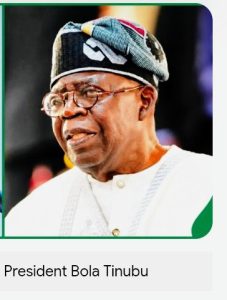
The Council described as shocking the President’s failure to condemn the growing wave of political violence, noting that, through his spokesman, Mr. Bayo Onanuga, the Presidency had instead chosen to caution opposition parties while shielding those allegedly responsible for violence within the ruling APC.
“President Tinubu cannot claim to desire peace when his own words provide cover for violence.
“‘All Is Fair in Politics’ is not the language of a Head of State. It is the language of political desperation and an open licence for thuggery, ballot snatching, intimidation and bloodshed.
“From Edo to Cross River, Gombe to Lagos, and Kebbi to Kaduna, Nigerians have witnessed attacks on opposition gatherings, destruction of campaign materials and the brutalisation of innocent supporters, allegedly by APC-sponsored thugs.
“Yet, Mr. President has not considered it necessary to call his governors and party members to order.
“Instead, the Presidency has resorted to diversionary tactics, blaming victims and preaching restraint to the opposition while members of the ruling party are accused of unleashing violence across the country,” the statement said.
The ADC-PCC challenged President Tinubu to explain why his condemnation of political violence appears directed at the opposition rather than members of his own party.
It asked: “Why has Mr. President refused to condemn APC governors who openly threaten opposition supporters? Why has he remained silent over public incitement by officials of his party? Why is his anger always directed at the opposition and never at those within his own political fold?”
The Council maintained that the ADC remains committed to peaceful, issue-based political engagement, insisting that its campaign is focused on addressing the country’s pressing challenges, including hunger, insecurity, unemployment, corruption and what it described as the failures of the Tinubu administration.
It accused the APC of resorting to violence because it had little to offer Nigerians in terms of credible solutions to the country’s problems.
Consequently, the ADC-PCC demanded that President Tinubu immediately and publicly withdraw his “All Is Fair in Politics” remark, condemn and call to order APC governors and party officials accused of inciting violence, and direct security agencies to protect all Nigerians impartially rather than allow them to become instruments of intimidation and oppression against opposition parties.
” Nigeria belongs to all of us. No political ambition is worth the blood of any Nigerian.
“If former President Goodluck Jonathan could make that profound declaration in 2015, President Tinubu has no excuse not to say so and demonstrate the sincerity of his commitment to peace in 2026.
“The ADC will not be intimidated. We will continue to campaign peacefully, and in 2027, Nigerians will have the opportunity to vote for competence, integrity and a new beginning,” the statement added.




-
News5 days ago
IGP Disu decorates 29 senior police officers with new ranks….charges them on professionalism, integrity,others
-
News4 days ago
Airstrikes kill 40 ISWAP terrorists in Borno
-
News4 days ago
We finally received CTC Of Lifu’s Judgement, without Atiku, Other Candidates Names Mentioned—Senator Melaye
-
News4 days ago
2026 U-17 WWC: Tinubu rewards each Flamingos player with ₦100m
-
News5 days ago
How Federal High Court Chief judge is beign blackmailed with EFCC, CCB- ADC Campaign Council
-
News2 days ago
Crowd Shouts ‘Bamayi’ at Tinubu, pelt convoy in Abuja
-
News5 days ago
Oil slump opens door to cheaper petrol for Nigerians …as Brent hits lowest since August
-
News4 days ago
ADC Crisis: Court Rejects Nafiu Bala’s Resignation Letter, Says It’s Fake