

News
Why We Approve Loans For President Tinubu, Speaker Abbas Reveals

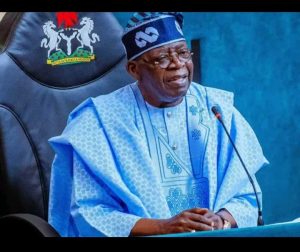
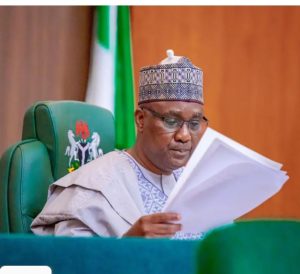
The Speaker of the House of Representatives Rt. Hon. Abbas Tajudeen, Ph.D., GCON, has revealed that the National Assembly approved loans for the President Bola Ahmed Tinubu’s administration because the President assured them of transparency in deploying the loans for sustainable development of the country under his administration
The Speaker stated that the National Assembly supports the President on the prudent use of public resources, emphasising that if public debt is prudently managed, it can drive growth and development of any country.
Abbas stressed that strategic and responsible borrowing is an essential fiscal tool for addressing pressing developmental needs, highlighting in his keynote address at the 8th Annual African Network of Parliamentary Budget Offices (AN-PBO) Conference in Abuja on Monday, where he was also confered the Patron of the AN-PBO title, key challenges in fiscal oversight
He noted while declaring the event open ,that effective fiscal oversight faces significant challenges “grounded in hard realities that we must confront with equally hard data.”
He said: “One major challenge is public debt. When managed prudently, it can serve as a catalyst for development. The 10th House and indeed the National Assembly have consistently affirmed that, in the face of pressing developmental needs, strategic and responsible borrowing is an essential fiscal tool.
“Like every modern economy, Nigeria must sometimes leverage credit to finance critical infrastructure, stimulate growth, and protect vulnerable populations. What is important and what the President has assured is that all borrowing remains targeted, transparent, and sustainable, consistent with Nigeria’s Medium-Term Debt Strategy and guided by global best practices.”
He added: “Under President Tinubu’s leadership, borrowed funds are being channelled towards transformative projects that will expand revenue-generating capacity, such as power, transport, and agriculture, rather than for consumption.
“The House stands firmly behind the President’s vision of using judicious borrowing as a catalyst for growth and poverty reduction, while simultaneously strengthening oversight mechanisms.”
Speaker Abbas noted that his vision for the AN-PBO is that it serves as a dynamic platform that enhances the ability of African parliaments to conduct transparent, evidence-based budgeting and maintain rigorous fiscal oversight.
Noting that the theme of the conference – ‘The Role of PBOs in African Parliaments’ Fiscal Oversight: Contribution to the African 2063 Development Agenda’ – is timely and significant, the Speaker stressed the importance of robust parliamentary fiscal oversight, backed by independent and capable Parliamentary Budget Offices (PBOs), for achieving sustainable development in Nigeria and across Africa.
Speaker Abbas pointed out that people across Africa “demand and deserve economic policies that result in food on the table, jobs for the youth, and better public services.”
He also stated that it is crucial that development strategies in the various countries, including national and continental development plans, are adequately reflected in government budgets and supported by robust oversight.
“People look to their parliaments to carefully align public spending with broader development objectives and thoughtfully consider the voices of their constituents in fiscal decision-making,” he noted.
The Speaker listed revenue leakage through corruption, illicit financial flows, and inefficiency as part of the factors hindering fiscal growth.
While noting that African countries collectively lose staggering sums “that never find their way into development programmes,” Speaker Abbas said “this is money that should be used to build roads in Lagos, equip hospitals in Nairobi, or improve schools in Accra, but instead it vanishes.”
He stated: “Nigeria presents a cautionary example of both the challenge and urgency of oversight. In our public procurement processes, which make up a significant part of government spending, Nigeria loses an estimated $18 billion each year to financial crimes, roughly 3.8 per cent of our GDP. These leaks could fund numerous social programmes many times over.
“There is a need to stop such leakages so that budgets can lead to better outcomes for citizens. That is why we have been increasing oversight hearings, audit inquiries, and strengthening anti-corruption laws. Oversight is vital to ensure that limited resources are used for the public good.”
Apart from institutional capacity constraints that also pose a challenge, the Speaker posited that many African parliaments have historically lacked independent analytical resources to effectively scrutinise budgets and expenditures.
“Without access to high-quality fiscal data and economic analysis, legislators may struggle to hold the executive to account on complex issues of macroeconomic policy, debt sustainability, or public investment efficiency. This gap is exactly what Parliamentary Budget Offices are meant to fill,” he said.
Speaker Abbas noted that one of the most significant advancements in Nigeria is the effort to establish the National Assembly Budget and Research Office (NABRO) as an independent, non-partisan budget office for our legislature.
“I am pleased to note that the House of Representatives passed the NABRO Bill on December 21, 2023, and it is currently awaiting concurrence by the Senate. This initiative, once it becomes law, will establish a dedicated institution to provide expert budget analysis, economic forecasts, and policy impact assessments for the National Assembly,” he said.
The Speaker explained that NABRO would be empowered to serve as a catalyst for evidence-based budgeting, comparable to the renowned U.S. Congressional Budget Office (CBO). He said while the CBO is often cited as the gold standard, providing non-partisan analysis to support the U.S. Congress, it is the aspiration of the House for NABRO to, in time, rival or even exceed the CBO in analytical capacity and credibility.
He declared: “We will insist on statutory provisions to safeguard NABRO’s autonomy, ensuring it has access to all necessary fiscal data, and insulating its reports from political interference. The NABRO legislation has been crafted with these principles in mind.”
Beyond NABRO, Speaker Abbas also noted that the Nigerian legislature is advancing a broader fiscal governance agenda.
“We are revising our Fiscal Responsibility and finance laws to enhance budgetary discipline and transparency. We are empowering our Public Accounts Committees to take decisive action on audit findings. Additionally, we recognise that institutions are only as strong as their people.
“Therefore, we are investing in developing the technical skills of our lawmakers and staff by training them in budget analysis, economics, and accounting so they can more effectively scrutinise government finances,” he said.
Furthermore, the Speaker said the parliament is strengthening Nigeria’s procurement laws, particularly through the ongoing reforms of the Public Procurement Act, “to close loopholes, improve competitive bidding, and increase value for money in public spending.”
Alongside these reforms, he said anti-graft agencies are being empowered to plug leakages, tackling losses that cost Nigeria an estimated 4 per cent of its GDP each year.
To confront these fiscal and governance challenges effectively, Speaker Abbas recommended that African parliaments embrace cutting-edge technology and artificial intelligence (AI) as critical tools of reform.
He noted that around the world, parliaments are already demonstrating how data analytics, machine learning, and digital platforms can transform budget scrutiny and anti-corruption efforts.
He said: “I wish to conclude by saying that our pursuit of economic accountability and development in Africa will be challenging, but it is possible through determined action and collective effort. The commitment of parliamentarians must be steadfast.
“However, parliaments alone cannot accomplish this on their own. We need the support and cooperation of our executive counterparts, civil society, media, and international partners.”

The United States government has insisted that Nigeria should retain its Country of Particular Concern, CPC, designation, saying the country has not done enough to protect Christians from attacks.
Assistant Secretary of State for African Affairs, Frank Garcia, made this statement on Thursday during a congressional hearing on violence in Nigeria.
Garcia was responding to questions from US Congressman Riley Moore, who asked about the government’s efforts to dismantle militia strongholds and kidnapping camps in the Middle Belt, particularly in Benue and Plateau states.
Moore also raised concerns over the exclusion of the states from the forest guard initiative and delays in deploying 1,000 approved guards to Plateau.
“Before you answer that, we cannot take this CPC designation off of this country. They have not done enough,” Moore said.
Garcia acknowledged the lack of progress, but said Nigeria was taking steps to address the concerns, although they had yet to produce results.
He said the country’s security capacity was still being developed and that deployments were not happening fast enough.
“Unfortunately, the violence has not stopped,” Garcia added, citing continued attacks in Kaduna and Plateau states.
He said the US had provided police training and equipment, expanded intelligence sharing and worked with Nigerian financial institutions to disrupt terrorist financing.
Garcia added that Washington would continue diplomatic engagements and security cooperation to protect vulnerable communities and ensure accountability.
However, the Nigerian government has consistently rejected claims of a “Christian genocide” or targeted religious persecution, maintaining that insecurity affects Nigerians of all faiths.


Liquefied Petroleum Gas, commonly known as cooking gas, has risen significantly, forcing Nigerians to spend more to purchase the product.
The increase comes as depot owners and retailers raised their prices over the past two days.
StockGap increased its depot price by N25 to N1,440 per kilogram. Nigerian Independent Petroleum Company Limited, NIPCO, Mobil (now 11 Plc) and Ardova, on the other hand, sold the product at N1,400 and N1,390 per kilogram, respectively.
Similarly, LPG retail outlets, including Raniol, Juda Oil and Nigerian National Petroleum Company Limited, NNPC, outlets in Abuja and its environs, now dispense cooking gas at between N1,550 and N1,600 per kilogram, up from N1,400 and N1,500.
Micro-LPG dealers sell the product for between N1,700 and N1,800 per kilogram, depending on the location in Abuja.
Earlier, NIPCO’s spokesperson, Taofeek Lawal, had exclusively told DAILY POST that LPG prices could increase further between November and January next year.
The latest price increase means that Nigerians who previously spent N17,500 to refill a 12.5kg cylinder at N1,400 per kilogram will now pay N20,000 at the new rate of N1,600 per kilogram, representing an additional N2,500.
News
2027: Tinubu Must Withdraw ‘All Is Fair in Politics’ Remark, Embrace Peaceful Coexistence — ADC-PCC
The African Democratic Congress Presidential Campaign Council (ADC-PCC) has called on President Bola Ahmed Tinubu to publicly retract his controversial “All Is Fair in Politics” remark, warning that such rhetoric fuels political division, emboldens thugs and poses a grave threat to the nation’s peace and stability.
The ADC-PCC also expressed concern over what it described as the President’s disturbing silence on the conduct of some APC governors and party chieftains who have openly made inflammatory statements and allegedly encouraged political violence.
In a statement signed by its Director of Media and Publicity, Kola Ologbondiyan, the ADC-PCC urged President Tinubu to rise above partisan interests and demonstrate the statesmanship expected of a national leader, citing former President Goodluck Jonathan’s unequivocal declaration that no presidential ambition was worth the blood of any Nigerian.
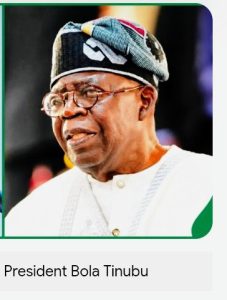
The Council described as shocking the President’s failure to condemn the growing wave of political violence, noting that, through his spokesman, Mr. Bayo Onanuga, the Presidency had instead chosen to caution opposition parties while shielding those allegedly responsible for violence within the ruling APC.
“President Tinubu cannot claim to desire peace when his own words provide cover for violence.
“‘All Is Fair in Politics’ is not the language of a Head of State. It is the language of political desperation and an open licence for thuggery, ballot snatching, intimidation and bloodshed.
“From Edo to Cross River, Gombe to Lagos, and Kebbi to Kaduna, Nigerians have witnessed attacks on opposition gatherings, destruction of campaign materials and the brutalisation of innocent supporters, allegedly by APC-sponsored thugs.
“Yet, Mr. President has not considered it necessary to call his governors and party members to order.
“Instead, the Presidency has resorted to diversionary tactics, blaming victims and preaching restraint to the opposition while members of the ruling party are accused of unleashing violence across the country,” the statement said.
The ADC-PCC challenged President Tinubu to explain why his condemnation of political violence appears directed at the opposition rather than members of his own party.
It asked: “Why has Mr. President refused to condemn APC governors who openly threaten opposition supporters? Why has he remained silent over public incitement by officials of his party? Why is his anger always directed at the opposition and never at those within his own political fold?”
The Council maintained that the ADC remains committed to peaceful, issue-based political engagement, insisting that its campaign is focused on addressing the country’s pressing challenges, including hunger, insecurity, unemployment, corruption and what it described as the failures of the Tinubu administration.
It accused the APC of resorting to violence because it had little to offer Nigerians in terms of credible solutions to the country’s problems.
Consequently, the ADC-PCC demanded that President Tinubu immediately and publicly withdraw his “All Is Fair in Politics” remark, condemn and call to order APC governors and party officials accused of inciting violence, and direct security agencies to protect all Nigerians impartially rather than allow them to become instruments of intimidation and oppression against opposition parties.
” Nigeria belongs to all of us. No political ambition is worth the blood of any Nigerian.
“If former President Goodluck Jonathan could make that profound declaration in 2015, President Tinubu has no excuse not to say so and demonstrate the sincerity of his commitment to peace in 2026.
“The ADC will not be intimidated. We will continue to campaign peacefully, and in 2027, Nigerians will have the opportunity to vote for competence, integrity and a new beginning,” the statement added.





-
News5 days ago
IGP Disu decorates 29 senior police officers with new ranks….charges them on professionalism, integrity,others
-
News4 days ago
Airstrikes kill 40 ISWAP terrorists in Borno
-
News4 days ago
We finally received CTC Of Lifu’s Judgement, without Atiku, Other Candidates Names Mentioned—Senator Melaye
-
News4 days ago
2026 U-17 WWC: Tinubu rewards each Flamingos player with ₦100m
-
News5 days ago
How Federal High Court Chief judge is beign blackmailed with EFCC, CCB- ADC Campaign Council
-
News2 days ago
Crowd Shouts ‘Bamayi’ at Tinubu, pelt convoy in Abuja
-
News5 days ago
Oil slump opens door to cheaper petrol for Nigerians …as Brent hits lowest since August
-
News4 days ago
2027: APC sacks kindergarteen Campaign Spokespersons…..Yari, Alake, Idris, now to speak for council