

News
QUO VADIS: NATASHA V. THE SENATE: INDIVIDUAL V. INSTITUTION


BY PROF. MIKE OZEKHOME ,SAN, CON, OFR, LL.D
Introduction
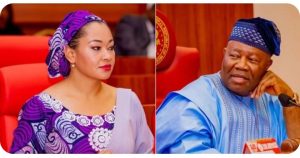
The ongoing drama in Nigeria concerning the Senate and Senator Natasha Akpoti-Uduaghan has once again spotlighted the uneasy intersection of law, politics, and institutional power. At its centre stands Senator Natasha Akpoti-Uduaghan, the outspoken lawmaker representing Kogi Central, whose suspension has since become more than an internal disciplinary matter. Yes, it has become a test case for the limits of legislative authority, the sanctity of judicial process, and the huge price of dissent in a chamber often accused of jealously guarding its own with unflinching zeal. How come it now strips one of its own naked in the public domain? What are the issues?
Discipline or Oppression?
What began in March as a disciplinary sanction for alleged insubordination has now spiraled into a serious constitutional standoff. Six months on, the lawmaker had expected to reclaim her seat with the effluxion of her suspension period only to be met with an official communication from the Acting Clerk of the National Assembly reminding her that her fate hangs not in the will of her suffering constituents, nor even in the resolutions of her colleagues, but in the hands of the appellate court to which both parties had submitted their grievances. The letter effectively extends her political exile and underscores the Senate’s insistence that its authority remains unbent, even in the face of legal challenge and public outcry.
She believes the Senate Institution is being deployed for personal aggrandisement by the Senate President, Senator Godswill Akpabio.
However, beneath the procedural veneer lies a deeper contest: a narrative of alleged political victimization; a clash of huge egos at the highest level of the legislature; and a senator’s insistent claim that her punishment is nothing but a retaliation for daring to accuse the Senate President of misconduct.
More so, her suspension, initially framed as punishment for “insubordination,” has evolved far beyond an internal disciplinary quarrel. It has since graduated into the theatre of a broader conflict. It has become one that pits the autonomy of a legislator to act on behalf of her constituents against the authority of the legislative red chamber. By extension, this involves the rights of an elected representative and her constituents against the collective power of the institution that claims to regulate her.
The case is Sub judice, yes, but is that all?
Natasha’s suspension is being challenged in court both in appeals and cross-appeals. This makes it sub judice. The doctrine of sub judice is one of those subtle rules that sits quietly in the background of the law until a controversy erupts, and suddenly it takes centre stage.
Literally meaning “under a judge,” the rule simply insists that when a matter is before a competent court, the parties (and indeed the public) must exercise restraint. No parallel tribunal should decide the same issue. No authority should prejudice the outcome. No commentary should undermine the court’s ability to do justice. It is a rule of deference, born of the recognition that the courtroom must remain the final and undisturbed arena for resolving disputes.
In Nigeria, the courts have applied this doctrine in two principal ways. See Governor of Lagos v. Ojukwu (1986) 1 NWLR (Pt 18) 621First, by discouraging the multiplicity of suits; i.e the tendency to file the same matter in different courts in search of a favourable judgment. The Supreme Court, as far back as in the case of Okorodudu v. Okoromadu (1977) LPELR-2495(SC), frowned upon this abuse, declaring it an affront to judicial integrity.
Second, the doctrine of sub judice has been used to curb prejudicial commentary. In Bello v. Attorney-General of Lagos State (2006) LPELR-7585(CA), the intermediate court stressed that comments capable of influencing or pre-empting a court’s decision could amount to contempt. Thus, the rule is meant to preserve fairness, protect litigants, and uphold the dignity of the bench. It was never meant to overreach or punish a citizen unduly.
Yet, like every principle of law, sub judice can be and appears in the Natasha case to have been stretched beyond its natural contours. And when that happens, it morphs from a shield of justice into a sword of suppression. This is what looms large in the case of Senator Natasha Akpoti-Uduaghan. The Senate insists that because her case is pending at the Court of Appeal, she must remain suspended until judgment is delivered, notwithstanding that even its own suspension time of six months has expired. In other words, the pendency of her suit is not treated as a shield and reason for restraint on their part, but as a weapon and justification to extend her punishment. What was designed as a fence to keep justice safe is now being used as a whip to keep a legislator silent and at bay.
The problem with this posture is that it profoundly challenges decency and morality. An example: Imagine a tenant who challenges his landlord’s eviction notice in court. While the matter is being heard, the landlord bolts the house and imperiously declares: “Because this case is in court, you must stay outside; you cannot re-enter until the judge decides.” Though the man has not yet been adjudged guilty of insubordination or trespass, he is already dispossessed, punished, not by law, but by an oppressive process. He is made to suffer the very penalty he is contesting, long before the court can speak. This is precisely the danger when sub judice is invoked not to protect the legal process, but to prolong exclusion.
Where lies the fate of the innocent Kogi constituents?
At the very heart of this controversy lies not simply the fate of one senator, but the voice of an entire constituency, Kogi Central (one-third of Kogi State). Natasha Akpoti-Uduaghan was not self-appointed to the Red Chamber; she was chosen and voted for by the people of Kogi Central through the instrumentality of the ballot, the most sacred covenant between citizen and state in a democracy. The ballot represents the will of the people. The Constitution of the Federal Republic of Nigeria, 1999 (as amended), (the 1999 Constitution) vests legislative power in the National Assembly (NASS); and that power is exercised through representatives elected by constituencies across the federation. To suspend a senator is, in effect, to suspend the constitutional voice of her people.
But herein lies the paradox: the Senate insists that the matter is sub judice, that until the Court of Appeal rules, Natasha must remain in political limbo. But what of the people whose collective will she embodies? Does litigation strip them of their right to be represented in the national discourse? Can the judicial pendency of one woman’s grievance become the silencing of hundreds of thousands of constituents? If democracy is truly government of the people, by the people, and for the people, (as Abraham Lincoln: once enthused at his Gettysburg speech on November 18, 1863), then the punishment of Natasha is not hers alone. It is the disenfranchisement of a whole Kogi Central, the people who invested their hope in her.
The courts have often reminded us that representation is not ornamental but substantive. In INEC v. Musa (2003) 3 NWLR (Pt. 806) 72, the Supreme Court underscored that political rights flow directly from the Constitution and cannot be lightly abridged. Likewise, in Amaechi v. INEC (2008) 5 NWLR (Pt. 1080) 227, the court went further, declaring that the electorate’s mandate is paramount, and even political parties must bow before it. If the judiciary itself recognizes that the will of the people is superior to procedural technicalities of political parties, why then should the Senate, an institution that exists only because constituencies exist, act as though it can silence a district with the stroke of a gavel?
The mandate belongs not to Natasha as an individual, but to her people. In the case of THE SPEAKER BAUCHI HOUSE OF ASSEMBLY v. Hon. RIFKATU SAMSON DANNA (2017) 49 WRN 52, the Court of Appeal dismissed an appeal filed against the judgement of a Bauchi State High Court in respect of the illegal suspension of Honourable Rifkatu Danna. The intermediate court held that the suspension of the legislator constituted a breach of the right of the Bogoro Constituency to be represented by her in the state House of Assembly. The court equally held that the decision of the House to withhold the salaries and allowances of the legislator was illegal as she was not an employee but an elected member of the Bauchi State of Assembly. By extrapolation, Natasha is not an employee of the Senate, but one of the 109 Senators.
Senator Natasha is nothing but a vessel, a custodian and a courier of their collective voice and will. Her exclusion from plenary sessions, committees, motions and votes translates to the silencing of that constituency in every matter of her State and national importance. Whether the subject is the budget, constitutional amendments, or motions affecting infrastructure, security and welfare, Kogi Central is conspicuously absent; not by choice, but by institutional fiat. This is not discipline; it is disenfranchisement. This is building strong men; not strong institutions.
It must also be remembered that suspension, as a tool of internal discipline, cannot override the express provisions of the 1999 Constitution. Section 14(2)(a) declares that “sovereignty belongs to the people of Nigeria from whom government through this Constitution derives all its powers and authority.” Section 68 further details the circumstances under which a legislator may lose his or her seat, viz: defection, conviction, resignation, or recall by constituents. Nowhere does the Constitution contemplate indefinite suspension as a legitimate means of punishing an erring Legislator. That amounts to complete removal from her seat.
To allow this is to create a new unknown ground for disqualification outside the clear provisions of the supreme law of the land. That, in itself, is unconstitutional. The Senate may argue that internal discipline is necessary to preserve order and decorum. True. But discipline that frontally attacks the Constitution (fons et origo) and silences an entire constituency crosses from order into chaos and usurpation. The Senate institution is not greater than the Constitution that birthed it. A tail cannot wag the dog, its owner. And while Natasha may be one senator, she embodies a district. She is the alter ego of a people, a mandate that cannot be muted under the guise of procedure.
*Conclusion*
In the final analysis, Natasha v. The Senate is not merely a skirmish over parliamentary decorum; it is more a referendum on the very heart and soul of democratic representation. The Senate may insist on its authority to discipline; but then authority without restraint becomes tyranny. Senator Natasha may appear as one woman locked in combat with a towering institution, yet behind her stands the invisible multitude whose mandate she bears. To gag and muzzle her is to censor them; to suspend her indefinitely is to suspend their sovereignty indefinitely.
The doctrine of sub judice may counsel caution, but it cannot annul the clear provisions of the Constitution. The doctrine may preserve the status quo, but it cannot legitimise disenfranchisement. Between the rights of one senator and the prerogatives of the Senate lies a higher truth: sovereignty belongs to the people, and no institution is licensed to mute their voice.
Thus, the question is not whether Natasha has erred in conduct, but whether an institution sworn to protect democracy can justify punishing an entire constituency in the name of procedure. History’s verdict on such struggles is always the same: the individual may falter, but the people’s will endures forever. It is therefore imperative to state that the institution that forgets its source of legitimacy courts its own decay if not extinction.
In this contest of one against many, an individual versus an institution the brilliance of democracy shines in the reminder that no chamber, however august, is greater than the people whose breath gives it life. The crucial question: what does the Senate lose by recalling Natasha whose six months suspension it imposed has elapsed? The answer to this question unlocks the truth. The answer is NOTHING. It is a matter of conscience – “an open wound; only truth can heal” (Utman Dan Fodio).

The United States government has insisted that Nigeria should retain its Country of Particular Concern, CPC, designation, saying the country has not done enough to protect Christians from attacks.
Assistant Secretary of State for African Affairs, Frank Garcia, made this statement on Thursday during a congressional hearing on violence in Nigeria.
Garcia was responding to questions from US Congressman Riley Moore, who asked about the government’s efforts to dismantle militia strongholds and kidnapping camps in the Middle Belt, particularly in Benue and Plateau states.
Moore also raised concerns over the exclusion of the states from the forest guard initiative and delays in deploying 1,000 approved guards to Plateau.
“Before you answer that, we cannot take this CPC designation off of this country. They have not done enough,” Moore said.
Garcia acknowledged the lack of progress, but said Nigeria was taking steps to address the concerns, although they had yet to produce results.
He said the country’s security capacity was still being developed and that deployments were not happening fast enough.
“Unfortunately, the violence has not stopped,” Garcia added, citing continued attacks in Kaduna and Plateau states.
He said the US had provided police training and equipment, expanded intelligence sharing and worked with Nigerian financial institutions to disrupt terrorist financing.
Garcia added that Washington would continue diplomatic engagements and security cooperation to protect vulnerable communities and ensure accountability.
However, the Nigerian government has consistently rejected claims of a “Christian genocide” or targeted religious persecution, maintaining that insecurity affects Nigerians of all faiths.


Liquefied Petroleum Gas, commonly known as cooking gas, has risen significantly, forcing Nigerians to spend more to purchase the product.
The increase comes as depot owners and retailers raised their prices over the past two days.
StockGap increased its depot price by N25 to N1,440 per kilogram. Nigerian Independent Petroleum Company Limited, NIPCO, Mobil (now 11 Plc) and Ardova, on the other hand, sold the product at N1,400 and N1,390 per kilogram, respectively.
Similarly, LPG retail outlets, including Raniol, Juda Oil and Nigerian National Petroleum Company Limited, NNPC, outlets in Abuja and its environs, now dispense cooking gas at between N1,550 and N1,600 per kilogram, up from N1,400 and N1,500.
Micro-LPG dealers sell the product for between N1,700 and N1,800 per kilogram, depending on the location in Abuja.
Earlier, NIPCO’s spokesperson, Taofeek Lawal, had exclusively told DAILY POST that LPG prices could increase further between November and January next year.
The latest price increase means that Nigerians who previously spent N17,500 to refill a 12.5kg cylinder at N1,400 per kilogram will now pay N20,000 at the new rate of N1,600 per kilogram, representing an additional N2,500.
News
2027: Tinubu Must Withdraw ‘All Is Fair in Politics’ Remark, Embrace Peaceful Coexistence — ADC-PCC
The African Democratic Congress Presidential Campaign Council (ADC-PCC) has called on President Bola Ahmed Tinubu to publicly retract his controversial “All Is Fair in Politics” remark, warning that such rhetoric fuels political division, emboldens thugs and poses a grave threat to the nation’s peace and stability.
The ADC-PCC also expressed concern over what it described as the President’s disturbing silence on the conduct of some APC governors and party chieftains who have openly made inflammatory statements and allegedly encouraged political violence.
In a statement signed by its Director of Media and Publicity, Kola Ologbondiyan, the ADC-PCC urged President Tinubu to rise above partisan interests and demonstrate the statesmanship expected of a national leader, citing former President Goodluck Jonathan’s unequivocal declaration that no presidential ambition was worth the blood of any Nigerian.

The Council described as shocking the President’s failure to condemn the growing wave of political violence, noting that, through his spokesman, Mr. Bayo Onanuga, the Presidency had instead chosen to caution opposition parties while shielding those allegedly responsible for violence within the ruling APC.
“President Tinubu cannot claim to desire peace when his own words provide cover for violence.
“‘All Is Fair in Politics’ is not the language of a Head of State. It is the language of political desperation and an open licence for thuggery, ballot snatching, intimidation and bloodshed.
“From Edo to Cross River, Gombe to Lagos, and Kebbi to Kaduna, Nigerians have witnessed attacks on opposition gatherings, destruction of campaign materials and the brutalisation of innocent supporters, allegedly by APC-sponsored thugs.
“Yet, Mr. President has not considered it necessary to call his governors and party members to order.
“Instead, the Presidency has resorted to diversionary tactics, blaming victims and preaching restraint to the opposition while members of the ruling party are accused of unleashing violence across the country,” the statement said.
The ADC-PCC challenged President Tinubu to explain why his condemnation of political violence appears directed at the opposition rather than members of his own party.
It asked: “Why has Mr. President refused to condemn APC governors who openly threaten opposition supporters? Why has he remained silent over public incitement by officials of his party? Why is his anger always directed at the opposition and never at those within his own political fold?”
The Council maintained that the ADC remains committed to peaceful, issue-based political engagement, insisting that its campaign is focused on addressing the country’s pressing challenges, including hunger, insecurity, unemployment, corruption and what it described as the failures of the Tinubu administration.
It accused the APC of resorting to violence because it had little to offer Nigerians in terms of credible solutions to the country’s problems.
Consequently, the ADC-PCC demanded that President Tinubu immediately and publicly withdraw his “All Is Fair in Politics” remark, condemn and call to order APC governors and party officials accused of inciting violence, and direct security agencies to protect all Nigerians impartially rather than allow them to become instruments of intimidation and oppression against opposition parties.
” Nigeria belongs to all of us. No political ambition is worth the blood of any Nigerian.
“If former President Goodluck Jonathan could make that profound declaration in 2015, President Tinubu has no excuse not to say so and demonstrate the sincerity of his commitment to peace in 2026.
“The ADC will not be intimidated. We will continue to campaign peacefully, and in 2027, Nigerians will have the opportunity to vote for competence, integrity and a new beginning,” the statement added.





-
News5 days ago
IGP Disu decorates 29 senior police officers with new ranks….charges them on professionalism, integrity,others
-
News4 days ago
Airstrikes kill 40 ISWAP terrorists in Borno
-
News4 days ago
We finally received CTC Of Lifu’s Judgement, without Atiku, Other Candidates Names Mentioned—Senator Melaye
-
News4 days ago
2026 U-17 WWC: Tinubu rewards each Flamingos player with ₦100m
-
News5 days ago
How Federal High Court Chief judge is beign blackmailed with EFCC, CCB- ADC Campaign Council
-
News2 days ago
Crowd Shouts ‘Bamayi’ at Tinubu, pelt convoy in Abuja
-
News5 days ago
Oil slump opens door to cheaper petrol for Nigerians …as Brent hits lowest since August
-
News5 days ago
Oil price fall: We ‘ll take appropriate action against marketers, petrol stations over unfair practices- FCCPC