

News
Dismantling the false Narrative of a “Coup” in Rivers State


By Jones Onyereri
The assertions that President Tinubu’s intervention in Rivers State constitutes an unconstitutional power grab or a “military coup in civilian disguise” fundamentally misrepresent the legal, political, and security realities that necessitated federal action. Far from being a partisan maneuver, the declaration of a state of emergency and subsequent measures were lawful, proportionate, and grounded in the imperative to prevent a total collapse of governance and public order. Below is a thorough rebuttal to the allegations:
The Nigerian Constitution explicitly empowers the President to declare a state of emergency under Section 305 when there is a clear threat to public safety or a breakdown of governance. The escalation of pipeline vandalism by militants—which crippled economic activity, endangered lives, and exacerbated environmental degradation—coupled with the Supreme Court’s February 18 judgment highlighting governance failures in Rivers State, provided incontrovertible justification for federal intervention. The claim that “no emergency existed” ignores the state government’s demonstrable inaction in addressing these threats, which risked spiraling into wider violence. Emergency powers are, by design, temporary and exceptional, aimed at restoring stability, not undermining democracy.
The appointment of Admiral Ibok-Ete Ibas as Sole Administrator aligns with constitutional provisions for federal intervention during crises. Section 11 of the Constitution permits the National Assembly to legislate for a state in extraordinary circumstances, and the President’s action enjoys implicit legislative backing as a stopgap to avert anarchy. Admiral Ibas, a retired military officer with no overt political ties, was selected for his administrative expertise, not as a proxy for any faction. His mandate is strictly limited to stabilizing the state, facilitating the return to democratic governance, and ensuring the security forces can operate without partisan interference. To equate this with a “military coup” is hyperbolic and disregards the transparent, legal framework guiding his role.
Critics allege defiance of Supreme Court orders regarding state funds, but this misinterprets the interplay between judicial mandates and emergency executive authority. While the Court initially restricted financial flows to Rivers State due to governance disputes, the escalation of the crisis necessitated federal release of funds under the “doctrine of necessity” to sustain critical services like healthcare, education, and infrastructure. The Constitution prioritizes the security and welfare of citizens (Section 14(2)(b)), and the President’s duty to uphold this principle supersedes rigid adherence to procedural norms during emergencies.
The Sole Administrator’s actions, including the formulation of regulations and restructuring of local government administrations, operate within the bounds of his provisional mandate. These regulations require approval by the Federal Executive Council (FEC), ensuring oversight and accountability. The replacement of local government officials was not a “power grab” but a necessary step to dismantle networks complicit in revenue diversion or inefficiency. The Supreme Court’s insistence on democratically elected local governments remains sacrosanct, but interim appointments during emergencies are globally recognized mechanisms to restore functionality before elections can be organized.
Claims that the Administrator has overstepped by preparing a budget or appointing a Secretary to the State Government (SSG) ignore the practical realities of governance. In the absence of a functional State Assembly, provisional budgets based on existing frameworks ensure continuity of public services. Similarly, the appointment of an SSG—a routine administrative role—falls within the Administrator’s authority to maintain bureaucratic operations. These measures are neither permanent nor unconstitutional; they are transitional tools to prevent total institutional paralysis.
The narrative that this intervention serves Minister Wike’s political interests is speculative and distracts from its stated purpose. Restructuring boards and commissions, including the Rivers State Electoral Commission, aims to depoliticize institutions vital to free and fair elections. The focus on “Wike loyalists” assumes nefarious intent without evidence, whereas the Administrator’s appointments could equally reflect efforts to engage experienced personnel familiar with the state’s administrative landscape. The assertion that federal actions target Governor Fubara’s allies conflates routine accountability with persecution; in crises, restructuring is inevitable to eliminate inefficiency or bias.
Regarding the House of Assembly reconstruction, federal involvement ensures the project adheres to timelines and standards, avoiding further delays that could destabilize legislative functions. The Governor’s progress, while commendable, does not negate the need for independent oversight in a volatile environment.
President Tinubu’s intervention is neither indefinite nor authoritarian. Emergency measures will lapse once security is restored, and democratic structures are reinstated. The National Assembly retains the authority to review and curtail these actions under Section 11, ensuring checks and balances. To frame this as a “2027 political takeover” is a cynical distortion of a lawful, necessary intervention to prevent Rivers State from descending into chaos.
In conclusion, the allegations of a “civilian coup” or unconstitutional power grab disregard the constitutional safeguards and urgent pragmatic considerations guiding federal actions. The President’s duty to protect lives and livelihoods in Rivers State transcends political expediency. While vigilance against overreach is prudent, dismissing all stabilization efforts as partisan machinations undermines the legitimate pursuit of peace and order. The people of Rivers State deserve functional governance, not perpetual crisis—and federal intervention, however imperfect, is a constitutional means to that end.
Rt Hon Sir Jones Onyereri PhD, KSP, FCIPAN
April 12, 2025

The United States government has insisted that Nigeria should retain its Country of Particular Concern, CPC, designation, saying the country has not done enough to protect Christians from attacks.
Assistant Secretary of State for African Affairs, Frank Garcia, made this statement on Thursday during a congressional hearing on violence in Nigeria.
Garcia was responding to questions from US Congressman Riley Moore, who asked about the government’s efforts to dismantle militia strongholds and kidnapping camps in the Middle Belt, particularly in Benue and Plateau states.
Moore also raised concerns over the exclusion of the states from the forest guard initiative and delays in deploying 1,000 approved guards to Plateau.
“Before you answer that, we cannot take this CPC designation off of this country. They have not done enough,” Moore said.
Garcia acknowledged the lack of progress, but said Nigeria was taking steps to address the concerns, although they had yet to produce results.
He said the country’s security capacity was still being developed and that deployments were not happening fast enough.
“Unfortunately, the violence has not stopped,” Garcia added, citing continued attacks in Kaduna and Plateau states.
He said the US had provided police training and equipment, expanded intelligence sharing and worked with Nigerian financial institutions to disrupt terrorist financing.
Garcia added that Washington would continue diplomatic engagements and security cooperation to protect vulnerable communities and ensure accountability.
However, the Nigerian government has consistently rejected claims of a “Christian genocide” or targeted religious persecution, maintaining that insecurity affects Nigerians of all faiths.


Liquefied Petroleum Gas, commonly known as cooking gas, has risen significantly, forcing Nigerians to spend more to purchase the product.
The increase comes as depot owners and retailers raised their prices over the past two days.
StockGap increased its depot price by N25 to N1,440 per kilogram. Nigerian Independent Petroleum Company Limited, NIPCO, Mobil (now 11 Plc) and Ardova, on the other hand, sold the product at N1,400 and N1,390 per kilogram, respectively.
Similarly, LPG retail outlets, including Raniol, Juda Oil and Nigerian National Petroleum Company Limited, NNPC, outlets in Abuja and its environs, now dispense cooking gas at between N1,550 and N1,600 per kilogram, up from N1,400 and N1,500.
Micro-LPG dealers sell the product for between N1,700 and N1,800 per kilogram, depending on the location in Abuja.
Earlier, NIPCO’s spokesperson, Taofeek Lawal, had exclusively told DAILY POST that LPG prices could increase further between November and January next year.
The latest price increase means that Nigerians who previously spent N17,500 to refill a 12.5kg cylinder at N1,400 per kilogram will now pay N20,000 at the new rate of N1,600 per kilogram, representing an additional N2,500.
News
2027: Tinubu Must Withdraw ‘All Is Fair in Politics’ Remark, Embrace Peaceful Coexistence — ADC-PCC
The African Democratic Congress Presidential Campaign Council (ADC-PCC) has called on President Bola Ahmed Tinubu to publicly retract his controversial “All Is Fair in Politics” remark, warning that such rhetoric fuels political division, emboldens thugs and poses a grave threat to the nation’s peace and stability.
The ADC-PCC also expressed concern over what it described as the President’s disturbing silence on the conduct of some APC governors and party chieftains who have openly made inflammatory statements and allegedly encouraged political violence.
In a statement signed by its Director of Media and Publicity, Kola Ologbondiyan, the ADC-PCC urged President Tinubu to rise above partisan interests and demonstrate the statesmanship expected of a national leader, citing former President Goodluck Jonathan’s unequivocal declaration that no presidential ambition was worth the blood of any Nigerian.
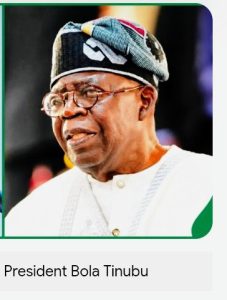
The Council described as shocking the President’s failure to condemn the growing wave of political violence, noting that, through his spokesman, Mr. Bayo Onanuga, the Presidency had instead chosen to caution opposition parties while shielding those allegedly responsible for violence within the ruling APC.
“President Tinubu cannot claim to desire peace when his own words provide cover for violence.
“‘All Is Fair in Politics’ is not the language of a Head of State. It is the language of political desperation and an open licence for thuggery, ballot snatching, intimidation and bloodshed.
“From Edo to Cross River, Gombe to Lagos, and Kebbi to Kaduna, Nigerians have witnessed attacks on opposition gatherings, destruction of campaign materials and the brutalisation of innocent supporters, allegedly by APC-sponsored thugs.
“Yet, Mr. President has not considered it necessary to call his governors and party members to order.
“Instead, the Presidency has resorted to diversionary tactics, blaming victims and preaching restraint to the opposition while members of the ruling party are accused of unleashing violence across the country,” the statement said.
The ADC-PCC challenged President Tinubu to explain why his condemnation of political violence appears directed at the opposition rather than members of his own party.
It asked: “Why has Mr. President refused to condemn APC governors who openly threaten opposition supporters? Why has he remained silent over public incitement by officials of his party? Why is his anger always directed at the opposition and never at those within his own political fold?”
The Council maintained that the ADC remains committed to peaceful, issue-based political engagement, insisting that its campaign is focused on addressing the country’s pressing challenges, including hunger, insecurity, unemployment, corruption and what it described as the failures of the Tinubu administration.
It accused the APC of resorting to violence because it had little to offer Nigerians in terms of credible solutions to the country’s problems.
Consequently, the ADC-PCC demanded that President Tinubu immediately and publicly withdraw his “All Is Fair in Politics” remark, condemn and call to order APC governors and party officials accused of inciting violence, and direct security agencies to protect all Nigerians impartially rather than allow them to become instruments of intimidation and oppression against opposition parties.
” Nigeria belongs to all of us. No political ambition is worth the blood of any Nigerian.
“If former President Goodluck Jonathan could make that profound declaration in 2015, President Tinubu has no excuse not to say so and demonstrate the sincerity of his commitment to peace in 2026.
“The ADC will not be intimidated. We will continue to campaign peacefully, and in 2027, Nigerians will have the opportunity to vote for competence, integrity and a new beginning,” the statement added.





-
News5 days ago
IGP Disu decorates 29 senior police officers with new ranks….charges them on professionalism, integrity,others
-
News4 days ago
Airstrikes kill 40 ISWAP terrorists in Borno
-
News4 days ago
We finally received CTC Of Lifu’s Judgement, without Atiku, Other Candidates Names Mentioned—Senator Melaye
-
News4 days ago
2026 U-17 WWC: Tinubu rewards each Flamingos player with ₦100m
-
News5 days ago
How Federal High Court Chief judge is beign blackmailed with EFCC, CCB- ADC Campaign Council
-
News2 days ago
Crowd Shouts ‘Bamayi’ at Tinubu, pelt convoy in Abuja
-
News5 days ago
Oil slump opens door to cheaper petrol for Nigerians …as Brent hits lowest since August
-
News5 days ago
Nigerian Businessman Hands IGP Disu 7 Days Tọ Probe Police Officers Over Alleged Release Of Recovered N600m Rolls-Royce To Suspects