

News
PRESIDENT TINUBU CANNOT LEGALLY REMOVE AN ELECTED GOVERNOR OF A STATE : BY PROF MIKE A. A. OZEKHOME, SAN, CON, OFR, LL.D




INTRODUCTION
In an era where democracy is supposed to reign supreme giving democracy dividends to beleaguered Nigerians, the nation has once again found itself at crossroads, a sober moment of reckoning where constitutional order is being tested in the most brazen of ways. President Bola Ahmed Tinubu, the president of the Federal Republic of Nigeria, sworn to uphold the Constitution, has taken a most unprecedented and unlawful step: the suspension of a democratically elected Governor, Deputy Governor and an entire State House of Assembly under the thin guise of emergency rule. What emergency? Nigerians and Rivers people did not see or feel any such emergency.
Let me be very firm most categorically and unequivocally that no constitutional provision,statute or any known convention grants the President the imperial and dictatorial authority to single-handedly dissolve the structures of an elected state government.That may probably have been in the locust days of military juntas; but Nigeria is today not under the firm grip of a military dictatorship. The last time I checked, she is supposed to governed under a constitutional democracy that operates a presidential and republican form of government. The emergency provisions under Section 305 of the 1999 Constitution exist to restore order only in times of grave national crisis; certainly not to topple duly elected state officials. Lois X1V of France as an absolute dictator could not have done better and would therefore green with envy from his cold grave,having on 13th April, 1655, stood in front of parliament and imperiously exuded,” L’Etat C’est Moi” (“I am the State” ).A state of emergency does not and cannot translate to a civilian coup d’état, executed by executive fiat through a national broadcast which torpedoed elected structures and whimsically imposed a sole Administrator who would now illegally receive Rivers State allocations from the Federation account under section 162 of the Constitution contrary to the very judgement of the Supreme Court which President Bola Ahmed Tinubu pretended to be executing.We have seen this script play out before during the infamous 2004 Plateau State emergency, where former President Obasanjo suspended Governor Dariye in what was widely condemned as a travesty of constitutional governance. Then, as now, the excuse was “exceptional circumstances”; but the reality was nothing short of executive lawlessness and overreach masked as national interest.I had criticized it in the same way I also criticized those of former Presidents Olusegun Obasanjo and Goodluck Ebele Jonathan
And now, as Rivers State stands at the centre of this unfolding simulated constitutional debacle, one must ask: Is this the signal of a dangerous precedent for and kite-flying to Nigeria, of a looming maximum dictatorship in the offing in a one-party State? Will other “erring” Governors who refuse to align with the central government be next in line? Are we witnessing the return of a
dangerous era of impunity where emergency rule becomes the bludgeon of political control rather than a tool for stability?
Let me be very clear about this for historical purposes: President Tinubu clearly lacks the power,authority and vires to suspend democratic structures, especially the removal of Governor Sim Fubara and the Rivers State House of Assembly members. His act constitutes nothing but a gross constitutional aberration and a most illegal, unlawful, wrongful and unconscionable step that has the potential of imploding Nigeria at large and Rivers State in particular.The Constitution must stand hallowed, unassaulted,or democracy will fall and perish. Although time shall tell,but time is certainly not on our side.
THE CONSTITUTIONAL FRAMEWORK FOR A STATE OF EMERGENCY
The Oxford Advanced Learner’s Dictionary, at page 379, defines “Declaration” as an official or formal statement, especially about the plans of a Government or an organization; the act of making such a statement.
Declaration or proclamation of a state of emergency therefore means proclaiming or making known a situation of emergency. What does “emergency” itself mean?
Emergency Doctrine is variously referred to as “emergency”, “imminent peril” or “sudden peril” Doctrine [Black’s Law Dictionary, 6th Edition, Page 523)
A “state of emergency” is defined in Longman Dictionary of Contemporary English (P.1620) as
“when a government gives itself special powers in order to try to control an unusually difficult or dangerous situation, especially when this involves limiting people’s freedom”
“Emergency powers” are such powers as are conferred on a Government during such an unusual situation to hold the state together.
The Constitution in Section 305, of the Federal Republic of Nigeria as altered (the organic law and grund norm of the land) embraces three adjuncts of a declaration of a state of emergency: (1) Reasons for proclaiming it; (2) How it is proclaimed; (3) How it can be halted both before and after its proclamation. It also envisages two types of State of Emergency: (i) By Mr. President under Section 305 (3) (a) and (b), when the Federation is at War; or the Federation is in imminent danger of invasion or involvement in a state of war. (ii) The scenario where it is the Governor of a State who personally calls for the state of emergency under situations envisaged in Section 305 (3) (c), (d) and (e). This occurs where the threat does not extend beyond the boundaries of the State.
Section 305 of the 199 Constitution, as altered, provides:
1) “Subject to the provisions of this Constitution, the President may by instrument published in the Official Gazette of the Government of the Federation issue a Proclamation of a state of emergency in the Federation or any part thereof.
2) The President shall immediately after the publication, transmit copies of the Official Gazette of the Government of the Federation containing the proclamation including the details of the emergency to the President of the Senate and the Speaker of the House of Representatives, each of whom shall forthwith convene or arrange for a meeting of the House of which he is President or Speaker, as the case may be, to consider the situation and decide whether or not to pass a resolution approving the Proclamation.”
None of the factors envisaged in Section 305 of the Constitution has occurred at all to warrant the steps taken by the president. In present scenario the bi-camera National Assembly had not even first met,discussed and approved the president’s emergency proposals before he acted. He did it in advance ( in futuro) in expectation of rubber-stamping by a pliable and malleable NASS.I hereby call on the NASS to show class for once by roundlly rejecting the President’s unconstitutional act of first declaring a state of emergency before its approval and also for acting altra vires by accompanying it with the suspension of elected democratic structures. This will place them on the right path of history.Otherwise,they should be prepared to be damnified by history.
I must emphasize that the declaration of a state of emergency does not translate into a dissolution of governance structures within the affected state. Under a state of emergency, the Governor, as the chief executive of the state, remains in office,whilst the institutions of government at the state level continue to function,unless expressly provided otherwise by law.There is no such law in Rivers State or at the national level.
The framers of the 1999 Constitution were deliberate in ensuring that the power to declare a state of emergency is not an avenue for executive overreach or imperious excursion into the realm of narcissm or ego trip. While the President may take extraordinary measures to maintain peace and order, those measures must align with the provisions of the Constitution. There is no provision howsoever, express or implied, that allowed President Tinubu to remove a sitting Governor and state House of Assembly legislators under the thin guise of emergency powers. There is no war in Nigeria. There is no threat of external aggression or invasion either across the country or in Rivers State. All that we have seen have been tussle for power between the Governor and the House of Assembly and the courts had already waded in with the Governor declaring he would comply with the Supreme Court’s judgement.A mere blow up of oil pipes in two communities by unidentified persons certainly does not constitute a war or external invasion situation.
THE PRINCIPLE OF SEPARATION of POWERS AND FEDERALISM
Nigeria operates a federal system of government, which means that power is divided and shared between the federal, state and Local Government Areas.governments. This structure is designed to prevent excessive concentration of power in any one level of government,for as Lord Acton once explained, “power tends to corrups and absolute power corrupts absolutely”. The President’s authority over the states is limited, just as a Governor cannot interfere with presidential functions at the federal level.
Furthermore, the principle of separation of powers, a cornerstone of constitutional democracy as ablly propounded in 1748 by a great French philosopher, Baron de Montesquieu,ensures that no single branch of government has unchecked authority. The removal of a Governor is a matter strictly within the purview of the State House of Assembly, as stipulated under Section 188 of the Constitution. The process is quite detailed, lengthy and rigorous; and requires a legislative super majority to accomplish. It is not a power and prerogative the President can usurp and exercise as did President Tinubu, regardless of the circumstances.
CAN THE PRESIDENT SUSPEND OR REMOVE A SITTING GOVERNOR, DEPUTY GOVERNOR, OR HOUSE OF ASSEMBLY EVEN UNDER A STATE OF EMERGENCY?
Nigeria stands at a critical juncture in its democratic evolution. Recent developments in Rivers State, where President Bola Ahmed Tinubu purportedly suspended Governor Siminalayi Fubara, his Deputy, and the entire House of Assembly, call for a meticulous constitutional examination and analysis. At the heart of this matter lies an age-old question: Can the President, under the guise of emergency rule, lawfully suspend or remove a democratically elected Governor, Deputy Governor, or Legislature?
The answer, based on constitutional provisions, legal precedents and the very principles of federalism which we operate, is an unequivocal NO. The 1999 Nigerian Constitution (as amended) does not, under any circumstance, empower the President to remove, suspend, or torpedo duly elected state officials even under Section 305, which governs the declaration of a state of emergency.
THE CONSTITUTIONAL LIMITS OF EMERGENCY POWERS
In no place does Section 305 of the 1999 Constitution grant the President the power to suspend a Governor, Deputy Governor, or the State House of Assembly. This reality is backed by constitutional jurisprudence and was reaffirmed in Attorney-General of Abia State v. Attorney-General of the Federation (2002) 6 NWLR (Pt. 763) 265, where the Supreme Court clarified that the Constitution is supreme and that no authority including the President can act outside its provisions.
Yet, this is not the first time that Nigeria has witnessed an outright abuse of emergency powers. Former President Olusegun Obasanjo’s 2004 suspension of Plateau State’s Governor Joshua Dariye and the House of Assembly remains a painful reminder of how emergency provisions have been misused to subvert democratic structures.
That unconstitutional precedent, which many Nigerians condemned then as executive overreach reminiscent of military juntas, appears to have resurfaced in Rivers State where President Tinubu’s action has eerily followed that same better-forgotten pattern, with the Judiciary left untouched as a token concession to constitutionalism. But can democracy survive when two out of the three arms of government are arbitrarily dissolved? I believe not.
FEDERALISM, SEPARATION OF POWERS, AND THE ROLE OF STATE GOVERNMENTS
Nigeria operates a federal system, meaning that power is distributed between the central and state governments, as explicitly outlined in Sections 4, 5, and 11 of the 1999 Constitution. Under this system, a Governor is not an apron string of or mere extension of the Presidency. He is an independently elected authority answerable to no one but only the people of his state who elected him.
The Constitution does not permit a President to unilaterally whimsically and arbitrarily remove a Governor—not by fiat; not by emergency decree; and certainly not by mere executive pronouncement. The doctrine of separation of powers, a fundamental pillar of democracy, dictates that such removals must be carried out strictly in accordance with constitutional provisions.
This principle was reinforced in Attorney-General of Ogun State & Ors v. Attorney-General of the Federation & Ors (1982) 3 NCLR 583, where the Supreme Court ruled that the Federal Government cannot unilaterally impose duties or restrictions on state officials. This means that even if a state of emergency is lawfully declared, the Governor remains in office unless impeached through due process.
The Constitution provides only one legal pathway for the removal of a state Governor, and that is through impeachment, as stipulated in Section 188 of the Constitution. The process is legislative, not executive, requiring a State House of Assembly to initiate and conduct impeachment proceedings as dictated by the Constitution. In any event, the Rivers State House of Assembly ( whether rightly or wrongly) had already commenced one against the Governor. Why truncate the constitutional process through an unconstitutional executive fiat? Why? Why?? Why???
THE PUBLIC ORDER ACT AND THE LIMITS OF FEDERAL CONTROL
Some have sought,in most illogical and unscholarly manner, to justify the President’s emergency intervention in Rivers State under the masquerade and facade of maintaining public safety. They cite the Public Order Act, which grants state Governors powers over public assemblies, meetings, and processions. However, even this statute does not authorize the suspension of an entire government structure.
The irony, of course, is that while Governors are designated as the Chief Security Officers of their states, they lack actual control over security forces. Section 215 of the Constitution subordinates a State Commissioner of Police to the Inspector General of Police and the President, meaning that even if Rivers State were experiencing insecurity, it was ultimately to the same traducing Federal Governmen it would have turned to.
The absurdity of this power imbalance,even though Rivers State had not gotten there, was noted in Attorney-General of Abia State v. Attorney-General of the Federation (2002) 6 NWLR (Pt. 763) 264, where the Court observed that the Federal Government cannot pass the blame for state security failures to a Governor who lacks the constitutional means to deploy security personnel.
THE ROLE OF THE NATIONAL ASSEMBLY: A CONSTITUTIONAL FIREWALL?
Even if the National Assembly, sought to legislate on emergency rule, section 11(4) of the 1999 Constitution explicitly prohibits it from removing a Governor or Deputy Governor. This means that not only does the President lack the power, but even the National Assembly itself is equally barred from such unconstitutional act.
Prof. Ben Nwabueze, one of Nigeria’s foremost constitutional scholars, had long warned that allowing a President to wield unchecked emergency powers would erode democracy and lead to an authoritarian system where Governors served as vassals at the pleasure of the President rather than the electorate.
In line with this reasoning, Chief F.R.A. Williams had condemned the Plateau State emergency declaration as “a contradiction of all known principles of true federation operating in a democratic society.” Are we not now witnessing history repeat itself in Rivers State?
THE PRINCIPLE OF EXPRESSIO UNIUS EST EXCLUSIO ALTERIUS
One of the most fundamental principles of statutory interpretation is expressio unius est exclusio alterius, meaning that the explicit mention of one thing implies the exclusion of all others. Sections 4 and 5 of the 1999 Constitution donate specific executive and legislative powers; but nowhere do they mention any inherent powers allowing the President to remove Governors undemocratically.
This principle was applied in Attorney-General of Bendel State v. Aideyan (1989) 4 NWLR (Pt. 118) 187, where the Supreme Court held that powers not expressly granted by the Constitution cannot be assumed. Thus, any claim that the President possesses inherent emergency powers to remove a supposedly erring Governor is legally baseless.The President can not dorn the garb of a Primary School headmaster who has absolute control over and supervises his pupils
HOW A GOVERNOR MAY BE REMOVED FROM OFFICE
If Not the President, then who can remove a Governor under emergency rule? The answer remains the State House of Assembly as the only body constitutionally empowered to initiate impeachment proceedings against an erring Governor.
Under Section 188, impeachment is a rigorous and multi-step process, requiring:
a.. A written notice signed by at least one-third of Assembly members;
b. A two-thirds majority vote to proceed further;
c. The formation of an investigative panel by the state Chief Judge;
d. A full blown hearing granting the Governor a right to defence either by himself or through a counsel of his choice;
e. A final two-thirds majority vote for removal after thorough hearing, recommendations, etc.
If a Governor remains in office, it is because the State House of Assembly has not found legal grounds for removal. The President’s personal opinions, political considerations, or security concerns do not change this constitutional scenario.
ANY HISTORICAL PRECEDENT FOR RIVERS STATE?
The declaration of a state of emergency in Rivers State and the subsequent suspension of Governor Siminalayi Fubara, his Deputy, and the State House of Assembly by President Bola Ahmed Tinubu brings Nigeria into another moment of constitutional crisis and democratic reckoning. While this may appear to be a novel occurrence, history reminds us that this is not the first time a Nigerian President had wielded emergency powers in a manner that undermined the very very essence of democracy.
Emergency rule in Nigeria has precedents, but each instance had always been marred by legal controversy, constitutional breaches and political opportunism. The most striking parallel to Tinubu’s action in Rivers State can be drawn from the 2004 Plateau State emergency declared by former President Olusegun Obasanjo. In that case, Obasanjo had suspended the Governor and the State House of Assembly, replacing them with a Sole Administrator, Major-General Chris Alli (Rtd.). That action was roundly criticized as an overreach of executive power, much like what is unfolding today in Rivers State. I was one of the critics.
However, even further back in Nigeria’s history, the Western Region crisis of 1962 under the First Republic presents another instructive example. Under the 1960 Independence Constitution, the then Governor-General, Dr. Nnamdi Azikiwe, acting on the advice of Prime Minister Tafawa Balewa, had declared a state of emergency in the Western Region due to political turmoil. Balewa had removed the Premier, the Governor, all Ministers, and members of the Regional Assembly, installing Dr. Moses Majekodunmi as Sole Administrator.
The striking difference, however, is that this took place under a Westminster parliamentary system, where Parliament held sovereignty. In contrast, Nigeria’s current presidential system operates under constitutional supremacy, not parliamentary supremacy. The framers of the 1999 Constitution deliberately excluded any provision that would allow such sweeping executive powers, particularly those that could enable a President to remove a sitting Governor or dissolve a State House of Assembly under emergency rule.
WHY TINUBU ’S EMERGENCY RULE IN RIVERS STATE IS UNPRECEDENTED
Even within the history of emergency rule declarations, Tinubu’s action in Rivers State is particularly alarming. While previous Presidents who declared emergency rule (Balewa in 1962 and Obasanjo in 2004) did so under questionable legal interpretations, they at least had some statutory backing, however flimsy.
Tinubu, on the other hand, has no legal foundation whatsoever to suspend an elected Governor, Deputy Governor, or the State House of Assembly. There is no enabling law, no precedent under the 1999 Constitution, and no Supreme Court ruling that grants the President such sweeping powers.
The 1999 Constitution, as amended, is as clear as a whistle that section 305 which grants the President powers to declare a state of emergency does not provide for the removal or suspension of an elected Governor.
Section 11(4) explicitly denies even the National Assembly the power to remove a Governor under emergency rule; meaning it certainly cannot authorize the President to do so.
The principle of federalism, which underpins Nigeria’s governance structure, dictates that Governors derive their mandate directly from the people and not from the President.
WHAT COULD HAPPEN IF THIS PRECEDENT IS ALLOWED TO STAND?
One of the most dangerous aspects of President Tinubu’s action is the precedent it sets for the future of democracy in Nigeria. If a President can wake up one morning and, under the guise of an emergency, remove a Governor and dissolve the State Legislature, what prevents the same President or future Presidents from doing the same in other states?
In fact, if the logic of this unconstitutional action is stretched further, it raises an even more disturbing possibility:
What if a President wakes up tomorrow and declares an emergency in the Federal Capital Territory (FCT)? The Constitution recognizes the FCT as a state.
Could the President then suspend the Senate and the House of Representatives that supervise the FCT and appoint himself as Sole Administrator of the FCT and Federal Republic of Nigeria?
These hypothetical scenarios, once dismissed as absurd,l in my earlier research have now become real threats when constitutional violations are left unchallenged and unchecked.
PRESIDENT TINUBU ’S ATTEMPT TO RELY ON NONEXISTENT EMERGENCY LAWS
To compound the legal crisis, Tinubu’s government seeks to justify its actions by invoking emergency regulations that do not exist in Nigeria’s current legal framework. The 1961 Emergency Powers Act, which was made pursuant to Section 65(1) of the 1960 Constitution, is no longer in force. That law had allowed the Governor-General to make sweeping regulations, including appointing an Administrator, restricting fundamental rights, and even suspending state governments.
However, this law ceased to have effect long ago. When Nigeria transitioned from the Westminster system to the presidential system in 1979, the framers of the Constitution deliberately omitted any provision that could allow such broad emergency powers.
The Laws of the Federation of Nigeria, 1990,provide a clear confirmation: the 1961 Emergency Powers Act is described as “omitted; spent”. This means that it has since been consigned to the vehicle of historical oblivion and cannot be resurrected to justify Tinubu’s current unconstitutional acts.
A CLOSING CAVEAT: THE PERILOUS PRECEDENT OF TINUBU’S EMERGENCY RULE IN RIVERS STATE
Not a few Nigerians have argued quite plausibly, too, that President Bola Ahmed Tinubu’s recent declaration of emergency rule in Rivers State and the suspension of Governor Siminalayi Fubara, his Deputy, and the State House of Assembly was not purely a matter of law and order, but an act driven by political expediency and personal indignation.
The President finds himself presiding over a nation teetering on the brink economic hardship, rising insecurity, public angst,and deep-seated political fractures. Yet, rather than confront these crises headlong with statesmanship, his administration appears to be flexing emergency powers in a manner that raises more questions than it answers. If Rivers State warranted emergency rule, why then have states like Zamfara and Niger where armed bandits and insurgents have reduced governance to an afterthought not received the same treatment?
Even the most ardent defenders of Tinubu’s emergency Decree ( for a Decree it is in reality) must pause and ask: Is Rivers State the greatest threat to national stability, or is it merely the most convenient political battleground? If emergency rule in Rivers was truly about law and order, why was a hand-picked Administrator imposed while duly elected officials were unceremoniously suspended from office? Is this about democratic governance, or is it about power and control?
If Nigeria remains a constitutional democracy, then the same Constitution must apply to all, irrespective of political affiliation or convenience. If Tinubu’s draconian action in Rivers State is allowed to stand, it sets a dangerous precedent where emergency powers become a tool for political suppression and repression rather than a last resort for genuine intractable crises.
So, the question remains: Is this the Nigeria we want or deserve? Or shall we, in our studied silence, watch democracy dismantled piecemeal with onevemergency declaration at a time? History will surely judge us all.

The United States government has insisted that Nigeria should retain its Country of Particular Concern, CPC, designation, saying the country has not done enough to protect Christians from attacks.
Assistant Secretary of State for African Affairs, Frank Garcia, made this statement on Thursday during a congressional hearing on violence in Nigeria.
Garcia was responding to questions from US Congressman Riley Moore, who asked about the government’s efforts to dismantle militia strongholds and kidnapping camps in the Middle Belt, particularly in Benue and Plateau states.
Moore also raised concerns over the exclusion of the states from the forest guard initiative and delays in deploying 1,000 approved guards to Plateau.
“Before you answer that, we cannot take this CPC designation off of this country. They have not done enough,” Moore said.
Garcia acknowledged the lack of progress, but said Nigeria was taking steps to address the concerns, although they had yet to produce results.
He said the country’s security capacity was still being developed and that deployments were not happening fast enough.
“Unfortunately, the violence has not stopped,” Garcia added, citing continued attacks in Kaduna and Plateau states.
He said the US had provided police training and equipment, expanded intelligence sharing and worked with Nigerian financial institutions to disrupt terrorist financing.
Garcia added that Washington would continue diplomatic engagements and security cooperation to protect vulnerable communities and ensure accountability.
However, the Nigerian government has consistently rejected claims of a “Christian genocide” or targeted religious persecution, maintaining that insecurity affects Nigerians of all faiths.


Liquefied Petroleum Gas, commonly known as cooking gas, has risen significantly, forcing Nigerians to spend more to purchase the product.
The increase comes as depot owners and retailers raised their prices over the past two days.
StockGap increased its depot price by N25 to N1,440 per kilogram. Nigerian Independent Petroleum Company Limited, NIPCO, Mobil (now 11 Plc) and Ardova, on the other hand, sold the product at N1,400 and N1,390 per kilogram, respectively.
Similarly, LPG retail outlets, including Raniol, Juda Oil and Nigerian National Petroleum Company Limited, NNPC, outlets in Abuja and its environs, now dispense cooking gas at between N1,550 and N1,600 per kilogram, up from N1,400 and N1,500.
Micro-LPG dealers sell the product for between N1,700 and N1,800 per kilogram, depending on the location in Abuja.
Earlier, NIPCO’s spokesperson, Taofeek Lawal, had exclusively told DAILY POST that LPG prices could increase further between November and January next year.
The latest price increase means that Nigerians who previously spent N17,500 to refill a 12.5kg cylinder at N1,400 per kilogram will now pay N20,000 at the new rate of N1,600 per kilogram, representing an additional N2,500.
News
2027: Tinubu Must Withdraw ‘All Is Fair in Politics’ Remark, Embrace Peaceful Coexistence — ADC-PCC
The African Democratic Congress Presidential Campaign Council (ADC-PCC) has called on President Bola Ahmed Tinubu to publicly retract his controversial “All Is Fair in Politics” remark, warning that such rhetoric fuels political division, emboldens thugs and poses a grave threat to the nation’s peace and stability.
The ADC-PCC also expressed concern over what it described as the President’s disturbing silence on the conduct of some APC governors and party chieftains who have openly made inflammatory statements and allegedly encouraged political violence.
In a statement signed by its Director of Media and Publicity, Kola Ologbondiyan, the ADC-PCC urged President Tinubu to rise above partisan interests and demonstrate the statesmanship expected of a national leader, citing former President Goodluck Jonathan’s unequivocal declaration that no presidential ambition was worth the blood of any Nigerian.
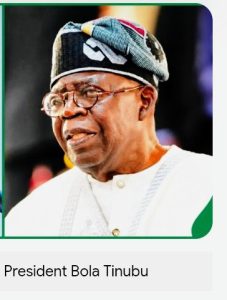
The Council described as shocking the President’s failure to condemn the growing wave of political violence, noting that, through his spokesman, Mr. Bayo Onanuga, the Presidency had instead chosen to caution opposition parties while shielding those allegedly responsible for violence within the ruling APC.
“President Tinubu cannot claim to desire peace when his own words provide cover for violence.
“‘All Is Fair in Politics’ is not the language of a Head of State. It is the language of political desperation and an open licence for thuggery, ballot snatching, intimidation and bloodshed.
“From Edo to Cross River, Gombe to Lagos, and Kebbi to Kaduna, Nigerians have witnessed attacks on opposition gatherings, destruction of campaign materials and the brutalisation of innocent supporters, allegedly by APC-sponsored thugs.
“Yet, Mr. President has not considered it necessary to call his governors and party members to order.
“Instead, the Presidency has resorted to diversionary tactics, blaming victims and preaching restraint to the opposition while members of the ruling party are accused of unleashing violence across the country,” the statement said.
The ADC-PCC challenged President Tinubu to explain why his condemnation of political violence appears directed at the opposition rather than members of his own party.
It asked: “Why has Mr. President refused to condemn APC governors who openly threaten opposition supporters? Why has he remained silent over public incitement by officials of his party? Why is his anger always directed at the opposition and never at those within his own political fold?”
The Council maintained that the ADC remains committed to peaceful, issue-based political engagement, insisting that its campaign is focused on addressing the country’s pressing challenges, including hunger, insecurity, unemployment, corruption and what it described as the failures of the Tinubu administration.
It accused the APC of resorting to violence because it had little to offer Nigerians in terms of credible solutions to the country’s problems.
Consequently, the ADC-PCC demanded that President Tinubu immediately and publicly withdraw his “All Is Fair in Politics” remark, condemn and call to order APC governors and party officials accused of inciting violence, and direct security agencies to protect all Nigerians impartially rather than allow them to become instruments of intimidation and oppression against opposition parties.
” Nigeria belongs to all of us. No political ambition is worth the blood of any Nigerian.
“If former President Goodluck Jonathan could make that profound declaration in 2015, President Tinubu has no excuse not to say so and demonstrate the sincerity of his commitment to peace in 2026.
“The ADC will not be intimidated. We will continue to campaign peacefully, and in 2027, Nigerians will have the opportunity to vote for competence, integrity and a new beginning,” the statement added.





-
News5 days ago
IGP Disu decorates 29 senior police officers with new ranks….charges them on professionalism, integrity,others
-
News4 days ago
Airstrikes kill 40 ISWAP terrorists in Borno
-
News4 days ago
We finally received CTC Of Lifu’s Judgement, without Atiku, Other Candidates Names Mentioned—Senator Melaye
-
News4 days ago
2026 U-17 WWC: Tinubu rewards each Flamingos player with ₦100m
-
News5 days ago
How Federal High Court Chief judge is beign blackmailed with EFCC, CCB- ADC Campaign Council
-
News5 days ago
Oil slump opens door to cheaper petrol for Nigerians …as Brent hits lowest since August
-
News2 days ago
Crowd Shouts ‘Bamayi’ at Tinubu, pelt convoy in Abuja
-
News5 days ago
Oil price fall: We ‘ll take appropriate action against marketers, petrol stations over unfair practices- FCCPC