

News
Diversification From Oil, Urgent Economic Necessity – Speaker Abbas

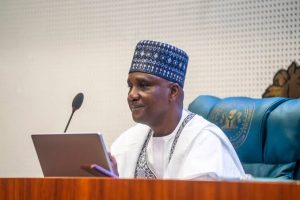
…as Speaker charges stakeholders at 14th Al-Hikmah varsity convocation lecture
The Speaker of the House of Representatives, Rt. Hon. Abbas Tajudeen, Ph.D, has stressed the urgent need for Nigeria to diversify the oil-dependent economy, warning that a further delay poses more challenges ahead for the country.
Speaker Abbas called for deliberate and collective efforts by all stakeholders in the public and private sectors to chart a strategic way forward for the country economically.
The Speaker made the call during the 14th Convocation Lecture of the Al-Hikmah University, Ilorin, on Monday.
Titled, ‘Beyond Oil: Exploring Alternative Revenue Potentials for Economic Growth and Sustainable Development in Nigeria,’ it was the first convocation lecture the Speaker personally delivered since his emergence in June 2023.
The Speaker, who expressed his delight for being the convocation lecturer at the first Islamic-based private University in Nigeria, noted that the topic was apt, as he considered it “a great challenge to the consciousness of our political leaders, policymakers, technocrats, and academicians on the need for strategic thinking and urgent collective action.”
While stating that the topic “speaks to one of the most pressing challenges confronting our nation,” Speaker Abbas stressed that “it becomes evident that our over-reliance on oil revenue has left us vulnerable to global market fluctuations, environmental degradation, and economic instability.”
Speaker Abbas listed the potential sectors for diversification in Nigeria as including agriculture, mining, manufacturing/industrialisation, ICT/digital economy, creative industries/tourism.
Speaker Abbas also noted that oil dependency has led to several economic, environmental, and strategic challenges. Economically, he said Nigeria faces significant volatility due to fluctuations in global oil prices.
The Speaker equally identified the challenges impeding diversification as including institutional weaknesses, infrastructural deficits, and global economic pressures.
The Speaker noted that the urgency of the discussion cannot be overstated, especially with dwindling oil revenues, global shifts toward renewable energy, and the increasing need for job creation.
“It is imperative that we chart a new course for economic transformation. This requires deliberate efforts to unlock the potential of other sectors, such as agriculture, solid minerals, technology, and the creative industries. Achieving this transformation will secure Nigeria’s economic future and address poverty, inequality, and unemployment—critical barriers to sustainable development,” he said.
Apart from that, he said oil dependency has contributed to severe environmental degradation, especially in the Niger Delta region, where most of Nigeria’s oil production occurs.
Furthermore, the Speaker said Nigeria faces the strategic challenge of adapting to the global transition towards renewable energy sources.
“As the world moves to reduce carbon emissions and adopt cleaner energy technologies, the demand for fossil fuels is expected to decline. This transition poses a long-term risk to Nigeria’s oil revenues and economic stability.
“Without a robust strategy for economic diversification, Nigeria may struggle to remain competitive in a changing global energy market. Addressing these challenges requires coordinated efforts to enhance economic resilience, protect the environment, and position Nigeria for sustainable growth in a low-carbon future,” he stated.
Recognising these challenges, Speaker Abbas equally noted that Nigeria has pursued economic diversification for over 30 years to reduce its dependence on oil revenues.
“Despite these efforts, Nigeria’s economy remains highly reliant on oil,” the Speaker, however, stated.
Speaker Abbas pointed out that economic diversification is vital for stability, job creation, and achieving the Sustainable Development Goals (SDGs). “Nigeria’s debt-to-GDP ratio of 34.6 percent necessitates prudent resource management. Investing in non-oil sectors can stimulate economic resilience and reduce dependence on volatile oil markets,” he stated.
The Speaker noted that President Bola Ahmed Tinubu’s administration has prioritised economic diversification through bold reforms, including removing fuel subsidies and implementing the Presidential Initiative on Compressed Natural Gas (CNG).
He said: “The administration’s tax reform programme aims to improve Nigeria’s tax-to-GDP ratio, currently at 10.9%, by streamlining administration and broadening the tax base (Nigeria Economic Data, 2024).
“Investments in infrastructure and human capital development, including a proposed N16 trillion allocation to infrastructure and N6 trillion for education, further demonstrate the government’s commitment to sustainable growth.”
The Speaker stated that embracing economic diversification is critical for Nigeria to navigate global energy transitions, meet climate commitments, address demographic pressures, and achieve economic stability.
He said: “Strategic investments in agriculture, manufacturing, solid minerals, tourism, and renewable energy will reduce dependence on oil, create jobs, and foster sustainable development. With visionary leadership and targeted policies, Nigeria can unlock its vast economic potential and secure a prosperous future.”
Speaker Abbas told the audience that the 10th House of Representatives, tagged the ‘People’s House,’ has demonstrated a strong commitment to addressing economic challenges through its Legislative Agenda. “This agenda prioritises unlocking economic growth and developing Nigeria’s vast human and natural resources, emphasising legislative reforms and strategic oversight to support diversification,” he noted.
Acknowledging the need for economic restructuring, Speaker Abbas disclosed that the House has supported legislation to reduce dependence on oil revenues, enhance agricultural productivity, and promote industrialisation.
“Constituency projects, including road construction, school renovations, and water supply schemes, have also contributed to job creation and economic empowerment at the grassroots level,” he said.
Speaker Abbas concluded by saying: “This lecture has laid bare the vulnerabilities inherent in Nigeria’s over-reliance on oil revenues, highlighting the economic, environmental, and structural challenges this dependence has created.
“We examined Nigeria’s historical trajectory as an oil-dependent nation and drew lessons from the successes and failures of other resource-rich countries.
“Notable examples such as Saudi Arabia, Malaysia, and the United Arab Emirates demonstrate that economic transformation is achievable through deliberate diversification strategies anchored on policy reforms, infrastructure investments, and human capital development.”
He added that the lecture has underscored “the urgency of harnessing Nigeria’s abundant natural resources, fertile agricultural lands, burgeoning creative industries, and vibrant technology sector to build a resilient economy.”
Speaker Abbas stressed: “Nigeria’s economic transformation demands collective responsibility. The government must lead with visionary policies, transparent governance, and strategic investments in infrastructure and education. Parliament should continue to enact enabling legislation and ensure rigorous oversight of policies and programmes aimed at diversification.
“Academia has a vital role in conducting research, generating data-driven insights, and developing skills essential for the new economy. Universities should strengthen collaborations with industries to drive innovation and entrepreneurship.
“The private sector must embrace investments in emerging industries, support small and medium enterprises, and leverage technology to boost productivity.
“As the backbone of Nigeria’s workforce, youths, including all of you in this hall, must seize opportunities in entrepreneurship, agriculture, digital technology, and creative industries to redefine Nigeria’s economic

The United States government has insisted that Nigeria should retain its Country of Particular Concern, CPC, designation, saying the country has not done enough to protect Christians from attacks.
Assistant Secretary of State for African Affairs, Frank Garcia, made this statement on Thursday during a congressional hearing on violence in Nigeria.
Garcia was responding to questions from US Congressman Riley Moore, who asked about the government’s efforts to dismantle militia strongholds and kidnapping camps in the Middle Belt, particularly in Benue and Plateau states.
Moore also raised concerns over the exclusion of the states from the forest guard initiative and delays in deploying 1,000 approved guards to Plateau.
“Before you answer that, we cannot take this CPC designation off of this country. They have not done enough,” Moore said.
Garcia acknowledged the lack of progress, but said Nigeria was taking steps to address the concerns, although they had yet to produce results.
He said the country’s security capacity was still being developed and that deployments were not happening fast enough.
“Unfortunately, the violence has not stopped,” Garcia added, citing continued attacks in Kaduna and Plateau states.
He said the US had provided police training and equipment, expanded intelligence sharing and worked with Nigerian financial institutions to disrupt terrorist financing.
Garcia added that Washington would continue diplomatic engagements and security cooperation to protect vulnerable communities and ensure accountability.
However, the Nigerian government has consistently rejected claims of a “Christian genocide” or targeted religious persecution, maintaining that insecurity affects Nigerians of all faiths.


Liquefied Petroleum Gas, commonly known as cooking gas, has risen significantly, forcing Nigerians to spend more to purchase the product.
The increase comes as depot owners and retailers raised their prices over the past two days.
StockGap increased its depot price by N25 to N1,440 per kilogram. Nigerian Independent Petroleum Company Limited, NIPCO, Mobil (now 11 Plc) and Ardova, on the other hand, sold the product at N1,400 and N1,390 per kilogram, respectively.
Similarly, LPG retail outlets, including Raniol, Juda Oil and Nigerian National Petroleum Company Limited, NNPC, outlets in Abuja and its environs, now dispense cooking gas at between N1,550 and N1,600 per kilogram, up from N1,400 and N1,500.
Micro-LPG dealers sell the product for between N1,700 and N1,800 per kilogram, depending on the location in Abuja.
Earlier, NIPCO’s spokesperson, Taofeek Lawal, had exclusively told DAILY POST that LPG prices could increase further between November and January next year.
The latest price increase means that Nigerians who previously spent N17,500 to refill a 12.5kg cylinder at N1,400 per kilogram will now pay N20,000 at the new rate of N1,600 per kilogram, representing an additional N2,500.
News
2027: Tinubu Must Withdraw ‘All Is Fair in Politics’ Remark, Embrace Peaceful Coexistence — ADC-PCC
The African Democratic Congress Presidential Campaign Council (ADC-PCC) has called on President Bola Ahmed Tinubu to publicly retract his controversial “All Is Fair in Politics” remark, warning that such rhetoric fuels political division, emboldens thugs and poses a grave threat to the nation’s peace and stability.
The ADC-PCC also expressed concern over what it described as the President’s disturbing silence on the conduct of some APC governors and party chieftains who have openly made inflammatory statements and allegedly encouraged political violence.
In a statement signed by its Director of Media and Publicity, Kola Ologbondiyan, the ADC-PCC urged President Tinubu to rise above partisan interests and demonstrate the statesmanship expected of a national leader, citing former President Goodluck Jonathan’s unequivocal declaration that no presidential ambition was worth the blood of any Nigerian.
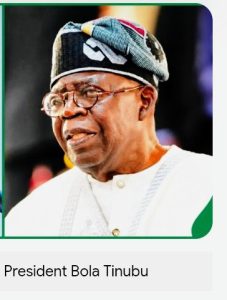
The Council described as shocking the President’s failure to condemn the growing wave of political violence, noting that, through his spokesman, Mr. Bayo Onanuga, the Presidency had instead chosen to caution opposition parties while shielding those allegedly responsible for violence within the ruling APC.
“President Tinubu cannot claim to desire peace when his own words provide cover for violence.
“‘All Is Fair in Politics’ is not the language of a Head of State. It is the language of political desperation and an open licence for thuggery, ballot snatching, intimidation and bloodshed.
“From Edo to Cross River, Gombe to Lagos, and Kebbi to Kaduna, Nigerians have witnessed attacks on opposition gatherings, destruction of campaign materials and the brutalisation of innocent supporters, allegedly by APC-sponsored thugs.
“Yet, Mr. President has not considered it necessary to call his governors and party members to order.
“Instead, the Presidency has resorted to diversionary tactics, blaming victims and preaching restraint to the opposition while members of the ruling party are accused of unleashing violence across the country,” the statement said.
The ADC-PCC challenged President Tinubu to explain why his condemnation of political violence appears directed at the opposition rather than members of his own party.
It asked: “Why has Mr. President refused to condemn APC governors who openly threaten opposition supporters? Why has he remained silent over public incitement by officials of his party? Why is his anger always directed at the opposition and never at those within his own political fold?”
The Council maintained that the ADC remains committed to peaceful, issue-based political engagement, insisting that its campaign is focused on addressing the country’s pressing challenges, including hunger, insecurity, unemployment, corruption and what it described as the failures of the Tinubu administration.
It accused the APC of resorting to violence because it had little to offer Nigerians in terms of credible solutions to the country’s problems.
Consequently, the ADC-PCC demanded that President Tinubu immediately and publicly withdraw his “All Is Fair in Politics” remark, condemn and call to order APC governors and party officials accused of inciting violence, and direct security agencies to protect all Nigerians impartially rather than allow them to become instruments of intimidation and oppression against opposition parties.
” Nigeria belongs to all of us. No political ambition is worth the blood of any Nigerian.
“If former President Goodluck Jonathan could make that profound declaration in 2015, President Tinubu has no excuse not to say so and demonstrate the sincerity of his commitment to peace in 2026.
“The ADC will not be intimidated. We will continue to campaign peacefully, and in 2027, Nigerians will have the opportunity to vote for competence, integrity and a new beginning,” the statement added.





-
News5 days ago
IGP Disu decorates 29 senior police officers with new ranks….charges them on professionalism, integrity,others
-
News4 days ago
Airstrikes kill 40 ISWAP terrorists in Borno
-
News4 days ago
We finally received CTC Of Lifu’s Judgement, without Atiku, Other Candidates Names Mentioned—Senator Melaye
-
News4 days ago
2026 U-17 WWC: Tinubu rewards each Flamingos player with ₦100m
-
News5 days ago
How Federal High Court Chief judge is beign blackmailed with EFCC, CCB- ADC Campaign Council
-
News2 days ago
Crowd Shouts ‘Bamayi’ at Tinubu, pelt convoy in Abuja
-
News5 days ago
Oil price fall: We ‘ll take appropriate action against marketers, petrol stations over unfair practices- FCCPC
-
News5 days ago
Nigerian Businessman Hands IGP Disu 7 Days Tọ Probe Police Officers Over Alleged Release Of Recovered N600m Rolls-Royce To Suspects