

News
Why State Police is Inevitable-Speaker Abbas

……Says Reps Neutral in Debate
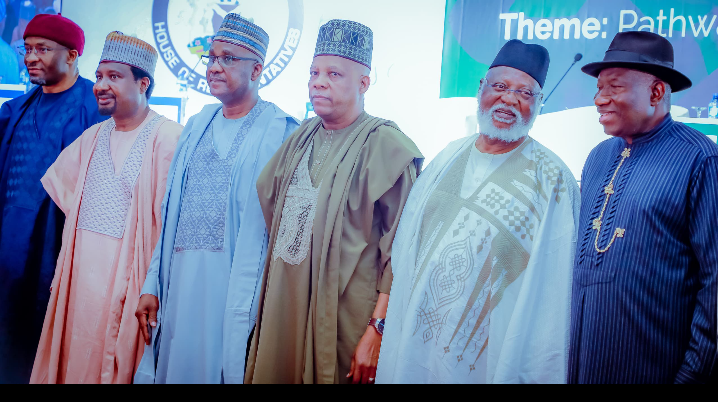
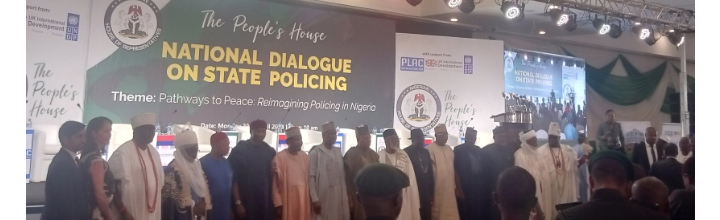
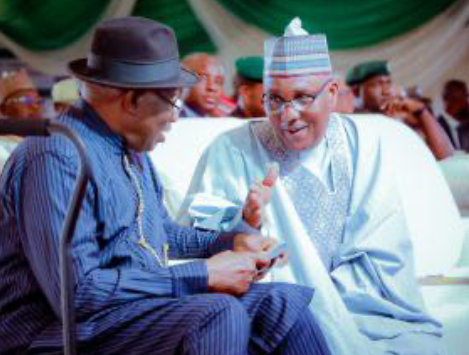
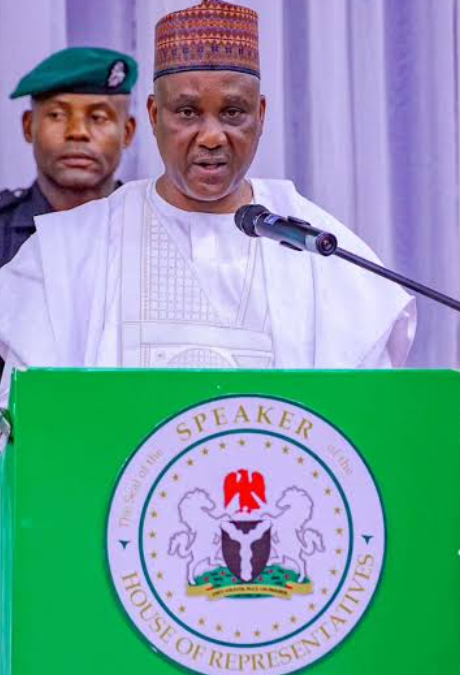
The speaker of the House of Representstives, RT Hon Tajudeen Abbas, PhD, has said that evolving security challenges in the country gave rise to demands for state police
The Speaker spoke Monday, saying that the emerging security challenges in the country have rendered the current unitary policing system under the Nigeria Police Force ineffective, leading to calls for its decentralization by way of having ‘State Police’.
Speaker Abbas also noted that the current security architecture in Nigeria has been overstretched by the numerous security challenges, pointing that the House remains neutral in the debates for and against creation of state police.
The Speaker who made this known at the National Dialogue on State Policing, which the House organised on the proposal to decentralise the current NPF and empower states to create and operate their own policing system police, noted that the proposal for state police is part of the ongoing review of the 1999 Constitution by the 10th National Assembly.
The Deputy Speaker, Rt. Hon. Benjamin Okezie Kalu, and 14 others had sponsored the bill seeking to alter the relevant sections of the 1999 Constitution to empower the states to establish their own policing outfits.
The House had on February 20, 2024, passed for second reading, the bill seeking to create police structures in each of the states of the federation.
Speaker Abbas stated: “Our mission here is simple: to deliberate the future of policing in Nigeria, reflecting on our historical context and aligning our actions with the demands of our diverse and dynamic populace and daunting contemporary security challenges that have stretched our existing system to a breaking point.
“The concept of state police involves decentralising law enforcement functions to the state level, thereby allowing for more localised and responsive policing tailored to the unique needs of each State.
“However, Section 214 of the 1999 Constitution establishes the Nigerian Police Force as unitary police ‘for the Federation or any part thereof.’ However, as noted earlier, evolving security challenges and other institutional and structural challenges have severely affected the general effectiveness of the police.”
He added: “As you are mostly aware, this deficit has resulted in the military engaging in policing functions in all States of the Federation, including the FCT. In turn, this has also overstretched the armed forces and affected their effectiveness in combatting other broader security challenges, including those that threaten the territorial integrity of Nigeria.”
However, the Speaker admitted that many have argued that a decentralised and community-based approach to policing has become imperative to empower the states to address the complex security challenges in the context of their local environment and peculiarities.
“Some see the current centralised structure of the police as a negation of ‘true federalism’. Several countries structured as Federations have well-established state, provincial, or regional police that exercise authority over relevant sub-national jurisdictions and collaborate on law enforcement matters with national or federal police, where both exist,” he added.
Speaker Abbas listed the issues he thought were critical to the overall conversation on the merits and demerits of state policing, and its desirability or otherwise for Nigeria.
He said: “First and foremost, it is imperative to acknowledge that the push for reforming our police forces is not merely desirable but necessary. We are at a stage where public trust in law enforcement is teetering.
“Also, the burden of policing the vast geographical expanse of our country and a rapidly expanding population warrants a reform of the current structure. The need for a system that maintains law and order and upholds every Nigerian’s dignity and rights cannot be overstated. Reform is essential to heal and to build – rebuilding trust, rebuilding effectiveness, and rebuilding our shared commitment to justice.”
Second, Speaker Abbas noted that, whereas most Nigerians agree on the need to reform policing, that is usually where the consensus ends, stating that “there is no agreement on how best to proceed with the reform or the best policing model for Nigeria.”
The Speaker said: “In considering the path forward, we must recognise that no one-size-fits-all solution exists. The vast diversity of Nigeria, with over 300 ethnic groups and a range of geographic, economic, and social conditions, requires a policing model that is adaptable and sensitive to local contexts. As we explore the models of state policing that have been successful in other nations, we must be judicious in adapting these frameworks to fit our unique Nigerian context.
“Furthermore, it is also important to remind ourselves that decentralised policing is not alien to Nigeria. Historically, during both the colonial and immediate post-colonial periods, Nigeria operated under a system where local police forces played significant roles in maintaining public order specific to their regions.”
Speaker Abbas recalled that policing in colonial times was purely decentralised, as evidenced by the Lagos Police Force, Hausa Constabulary and Niger Coast Constabulary. “The structure was maintained even after the merger of the Northern and Southern Protectorates, with the creation of the Northern Nigeria Police and the Southern Nigeria Police,” he said.
The Speaker added: “In fact, under the First Republic, these forces were first regionalised before their subsequent nationalisation. However, subsequent civilian and military governments adopted a rigidly centralised pattern for the Nigeria Police.”
While also noting that decentralised policing is not an entirely new proposition, Speaker Abbas said the historical precedent supports the notion that a decentralised approach can be beneficial and effective if properly managed.
He added: “However, we must proceed with caution. There is a palpable fear among our citizens – a fear of potential tyranny and the misuse of police powers if control is devolved to the State level. These concerns are not unfounded and must be addressed frontally, without bias or sentiments. This emphasises the need for robust frameworks that ensure accountability, transparency, and equitable service delivery across all states.
“Equally important are setting stringent national standards, establishing oversight bodies, and involving communities in the policing process.”
While also noting that the House is aware of the divisive and polarising arguments surrounding the issue under review, Speaker Abbas said: “Let me state categorically that the House and indeed the National Assembly does not have a fixed position. Our role is to facilitate a dialogue and generate consensus.”
Speaker Abbas recalled how President Bola Ahmed Tinubu, GCFR, committed to overhauling and transforming the Nigeria Police Force into a modern, professional and accountable institution is evident and commendable.
He also recalled how the President and state governors, earlier in the year, opened up the conversation on ‘the possibility of setting up state policing.’
The Speaker further recalled that the President had set up a Constitution Review Committee in 2023, comprising the National Security Adviser, Chairman of the Police Service Commission, and the Chairman of the Nigerian Governors’ Forum to make recommendations towards “comprehensive” police reforms, particularly because no extensive and systematic reforms had taken place in the Nigerian Police Force since its creation in 1861.
Speaker Abbas said: “Recent attempts, including the Police Repeal and Re-enactment Act of 2020, and the Police Trust Fund Act of 2019, were significant first steps but not nearly as far-reaching as necessary. Therefore, this forum is the House’s effort to support the vision of the President and further the discussion on police reforms and multi-level policing.
“This is in line with the constitutional mandate of the National Assembly to make laws for the order, peace and good governance of the country as contained in the 1999 Constitutions.
“It is also in line with our Legislative Agenda priorities to undertake judicial reform, promote rule of law and human rights; streamline and improve the constitutional reform process; and improve national security.”
The Speaker pointed out that as legislators, the House was tasked with crafting laws that address people’s immediate needs and anticipate and mitigate future challenges.
“Our role in security law-making is to ensure that any initiative, such as establishing state policing, adheres to our Constitution and aligns with the broader goals of national security and public welfare,” he stated.
Speaker Abbas added that legislative oversight is essential to ensure that these laws are implemented effectively and continue to serve the best interests of the Nigerian people.
“Through our committees and investigative processes, the National Assembly has a duty to monitor, review, and refine the operations of security agencies to prevent any abuses of power and safeguard citizens’ rights and freedoms,” he said.
The Speaker specially thanked President Bola Tinubu, GCFR, who was represented by Vice-President Kashim Shettima, GCON, noting that “your presence here signifies the importance attached by this government to national security.”
Speaker Abbas equally appreciated former President Goodluck Ebele Jonathan, GCFR, and ex-Head of State, Gen. Abdulsalami Abubakar, GCFR, “for lending their voices to this national discourse.”
He noted: “Your unique position as former Head of State and President means that you bring enormous experience to the issue being discussed here today. Your insights will no doubt greatly enhance the quality of today’s dialogue.”
In his goodwill message, ex-President Jonathan stated that the issue of state policing was a settled matter that is “non-negotiable,” adding that the debates should rather be on the structure and operation of the proposed security outfit.
The former president recalled how a security outfit was created in Bayelsa State to complement the federal police in tackling piracy, kidnapping and other crimes that were prevalent in the Niger Delta.
Similarly, General Abubakar called for caution in the design and implementation of the proposed state policing, especially concerning political and state actors.
The national dialogue fulfilled Speaker Abbas’ commitment to causing reforms in the security and other sectors.
The Speaker had on January 30, 2024, at the first plenary of the House in the year, announced plans to convoke a national conference on security.
“As we proceed with our legislative duties, our priorities are clear,” Speaker Abbas had stated, adding that with the Legislative Agenda of the House, the legislative chamber intended to “achieve significant mileage towards actualising the targets across the eight thematic areas.”
He had said: “In the area of security, the most important challenge before us is to overhaul and strengthen the security architecture to improve overall effectiveness. The proposed security summit is expected to make far-reaching recommendations and concrete areas for legislative intervention. Some priority legislative actions in our Agenda include improving oversight of the sector, legislating the establishment of a Security Sector Reform Commission to oversee reforms within the sector, introducing stricter penalties for misappropriation, misallocation or any form of financial malpractice within the security sector and passing the whistle-blower protection bill.”
“We are committed to strengthening inter-agency collaboration, improving intelligence sharing, and leading police reforms,” Speaker Abbas also stated.
Later on February 26, 2024, Speaker Abbas, at the inauguration of the House Special Committee on the Review of the 1999 Constitution, noted that state policing was part of the Legislative Agenda of the 10th House.
“…We expect the Sixth Alteration under this 10th National Assembly to be the most comprehensive yet. As such, the task before the Constitution review committee is profound. The House Agenda is ambitious in its scope and encompasses wide-ranging issues pivotal to our national growth. Among these are devolution of powers, including state policing; enhancement of fiscal federalism through local government autonomy; further decongesting the Exclusive Legislative List; recognising and assigning constitutional roles for traditional institutions; and promoting inclusivity, particularly greater gender equity and women representation into appointive and elective positions,” the Speaker had said.

The United States government has insisted that Nigeria should retain its Country of Particular Concern, CPC, designation, saying the country has not done enough to protect Christians from attacks.
Assistant Secretary of State for African Affairs, Frank Garcia, made this statement on Thursday during a congressional hearing on violence in Nigeria.
Garcia was responding to questions from US Congressman Riley Moore, who asked about the government’s efforts to dismantle militia strongholds and kidnapping camps in the Middle Belt, particularly in Benue and Plateau states.
Moore also raised concerns over the exclusion of the states from the forest guard initiative and delays in deploying 1,000 approved guards to Plateau.
“Before you answer that, we cannot take this CPC designation off of this country. They have not done enough,” Moore said.
Garcia acknowledged the lack of progress, but said Nigeria was taking steps to address the concerns, although they had yet to produce results.
He said the country’s security capacity was still being developed and that deployments were not happening fast enough.
“Unfortunately, the violence has not stopped,” Garcia added, citing continued attacks in Kaduna and Plateau states.
He said the US had provided police training and equipment, expanded intelligence sharing and worked with Nigerian financial institutions to disrupt terrorist financing.
Garcia added that Washington would continue diplomatic engagements and security cooperation to protect vulnerable communities and ensure accountability.
However, the Nigerian government has consistently rejected claims of a “Christian genocide” or targeted religious persecution, maintaining that insecurity affects Nigerians of all faiths.


Liquefied Petroleum Gas, commonly known as cooking gas, has risen significantly, forcing Nigerians to spend more to purchase the product.
The increase comes as depot owners and retailers raised their prices over the past two days.
StockGap increased its depot price by N25 to N1,440 per kilogram. Nigerian Independent Petroleum Company Limited, NIPCO, Mobil (now 11 Plc) and Ardova, on the other hand, sold the product at N1,400 and N1,390 per kilogram, respectively.
Similarly, LPG retail outlets, including Raniol, Juda Oil and Nigerian National Petroleum Company Limited, NNPC, outlets in Abuja and its environs, now dispense cooking gas at between N1,550 and N1,600 per kilogram, up from N1,400 and N1,500.
Micro-LPG dealers sell the product for between N1,700 and N1,800 per kilogram, depending on the location in Abuja.
Earlier, NIPCO’s spokesperson, Taofeek Lawal, had exclusively told DAILY POST that LPG prices could increase further between November and January next year.
The latest price increase means that Nigerians who previously spent N17,500 to refill a 12.5kg cylinder at N1,400 per kilogram will now pay N20,000 at the new rate of N1,600 per kilogram, representing an additional N2,500.
News
2027: Tinubu Must Withdraw ‘All Is Fair in Politics’ Remark, Embrace Peaceful Coexistence — ADC-PCC
The African Democratic Congress Presidential Campaign Council (ADC-PCC) has called on President Bola Ahmed Tinubu to publicly retract his controversial “All Is Fair in Politics” remark, warning that such rhetoric fuels political division, emboldens thugs and poses a grave threat to the nation’s peace and stability.
The ADC-PCC also expressed concern over what it described as the President’s disturbing silence on the conduct of some APC governors and party chieftains who have openly made inflammatory statements and allegedly encouraged political violence.
In a statement signed by its Director of Media and Publicity, Kola Ologbondiyan, the ADC-PCC urged President Tinubu to rise above partisan interests and demonstrate the statesmanship expected of a national leader, citing former President Goodluck Jonathan’s unequivocal declaration that no presidential ambition was worth the blood of any Nigerian.
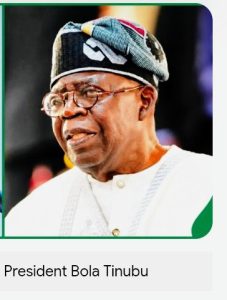
The Council described as shocking the President’s failure to condemn the growing wave of political violence, noting that, through his spokesman, Mr. Bayo Onanuga, the Presidency had instead chosen to caution opposition parties while shielding those allegedly responsible for violence within the ruling APC.
“President Tinubu cannot claim to desire peace when his own words provide cover for violence.
“‘All Is Fair in Politics’ is not the language of a Head of State. It is the language of political desperation and an open licence for thuggery, ballot snatching, intimidation and bloodshed.
“From Edo to Cross River, Gombe to Lagos, and Kebbi to Kaduna, Nigerians have witnessed attacks on opposition gatherings, destruction of campaign materials and the brutalisation of innocent supporters, allegedly by APC-sponsored thugs.
“Yet, Mr. President has not considered it necessary to call his governors and party members to order.
“Instead, the Presidency has resorted to diversionary tactics, blaming victims and preaching restraint to the opposition while members of the ruling party are accused of unleashing violence across the country,” the statement said.
The ADC-PCC challenged President Tinubu to explain why his condemnation of political violence appears directed at the opposition rather than members of his own party.
It asked: “Why has Mr. President refused to condemn APC governors who openly threaten opposition supporters? Why has he remained silent over public incitement by officials of his party? Why is his anger always directed at the opposition and never at those within his own political fold?”
The Council maintained that the ADC remains committed to peaceful, issue-based political engagement, insisting that its campaign is focused on addressing the country’s pressing challenges, including hunger, insecurity, unemployment, corruption and what it described as the failures of the Tinubu administration.
It accused the APC of resorting to violence because it had little to offer Nigerians in terms of credible solutions to the country’s problems.
Consequently, the ADC-PCC demanded that President Tinubu immediately and publicly withdraw his “All Is Fair in Politics” remark, condemn and call to order APC governors and party officials accused of inciting violence, and direct security agencies to protect all Nigerians impartially rather than allow them to become instruments of intimidation and oppression against opposition parties.
” Nigeria belongs to all of us. No political ambition is worth the blood of any Nigerian.
“If former President Goodluck Jonathan could make that profound declaration in 2015, President Tinubu has no excuse not to say so and demonstrate the sincerity of his commitment to peace in 2026.
“The ADC will not be intimidated. We will continue to campaign peacefully, and in 2027, Nigerians will have the opportunity to vote for competence, integrity and a new beginning,” the statement added.




-
News5 days ago
IGP Disu decorates 29 senior police officers with new ranks….charges them on professionalism, integrity,others
-
News4 days ago
Airstrikes kill 40 ISWAP terrorists in Borno
-
News4 days ago
We finally received CTC Of Lifu’s Judgement, without Atiku, Other Candidates Names Mentioned—Senator Melaye
-
News4 days ago
2026 U-17 WWC: Tinubu rewards each Flamingos player with ₦100m
-
News5 days ago
How Federal High Court Chief judge is beign blackmailed with EFCC, CCB- ADC Campaign Council
-
News2 days ago
Crowd Shouts ‘Bamayi’ at Tinubu, pelt convoy in Abuja
-
News5 days ago
Oil slump opens door to cheaper petrol for Nigerians …as Brent hits lowest since August
-
News5 days ago
Oil price fall: We ‘ll take appropriate action against marketers, petrol stations over unfair practices- FCCPC