

News
House’ll Make Public Participation In Budget Process Compulsory – Speaker Abbas

… as Reps hold townhall on 2024 budget, welcome inputs from CSOs, other stakeholders

The Speaker of the House of Representatives Rt. Hon. Abbas Tajudeen Ph.D, has disclosed plans by the 10th House to amend the Fiscal Responsibility Act, 2007, and make citizens participation a routine in the budgetary process.
Speaker Abbas stated that the 10th House, as the ‘People’s House,’ would work towards making the Federal Government’s budget a “people’s budget.”
The Speaker made this known in Abuja on Monday while declaring open, Citizens’ Townhall on the 2024 Budget and Appropriation Process, organised by the House Committee on Appropriations and the Programme Coordinating Unit (PCU) of the Speaker’s Office.
Several civil society organisations, non-governmental organisations, professional bodies, chief executives in the public and private sectors, as well as student unions who were represented at the event expressed their views.
President Bola Ahmed Tinubu had on Wednesday, November 29, 2023, laid the budget estimates before a joint session of the National Assembly. The House had debated the general principles of the budget during the second reading.
The bill was passed for second reading and referred to the House Committee on Appropriations, chaired by Hon. Abubakar Kabir Bichi, leading to the engagement with stakeholders at the townhall.
Speaker Abbas noted at the event that the House had taken the lead in facilitating greater citizens’ participation in the budget process, while challenging all ministries, departments and agencies of the government to do the same.
He said, “On our part, the House will review the Fiscal Responsibility Act 2007 to strengthen existing provisions to improve access to information and public consultation during all phases of the budget cycle. Specifically, we will amend the FRA to require and define public participation explicitly.
“Your participation in this townhall meeting underscores the essence of democracy – the power of the people to engage actively in governance and decision-making processes.
“You are invited to closely examine the 2024 budget proposal as presented to the National Assembly by Mr. President. As representatives of the people, it is our duty to ensure that the annual appropriation reflects the needs and aspirations of every Nigerian citizen.
“I wish to reassure all Nigerians that the President, His Excellency, Bola Ahmed Tinubu, GCFR, and the National Assembly are committed to addressing these hardships,” he said.
Speaker Abbas noted that the top priorities of the 2024 Appropriation Bill, as stated by the President, were national security, local job creation and poverty reduction, while the proposal was labelled ‘Budget of Renewed Hope.’
He said: “Your contributions must go beyond mere criticisms to constructive and evidence-based suggestions on how we can improve the budget process and make the budget more responsive to the needs of all Nigerians.”
The Speaker recalled that during the budget proposal presentation by the President, he promised that the House would convene a town hall, in line with its Legislative Agenda, to harness public input and opinion. “This event represents the fulfilment of that pledge,” he stated.
He said the townhall “is crucial to enhancing the transparency of government spending,” stressing that it would also allow the public to be more informed about how public funds are to be used and, by so doing, build greater trust in government institutions.
The Speaker said: “More importantly, however, this town-hall will allow the National Assembly to understand citizens’ needs better and explore ways to address them through the budget.
“The relevance of this interface is best understood within the larger context of diminished public trust in government institutions in Nigeria and all over Africa.
“This townhall represents a major step in changing the narrative. As indicated in our Legislative Agenda, we are the People’s House. As such, we firmly commit to strengthening public engagement and seeking inputs into the budget process, starting with the pre-budget statement, executive budget proposal, budget debate through public hearings in the legislature, and implementation, monitoring, and reporting of the budget.”
Going forward, Speaker Abbas said, the House would sustain the initiative, while noting that the lawmakers believed the process should start before the budget is presented to the National Assembly.
“This is critical to ensuring that the budget becomes the people’s budget. We expect that the 2025 budget will be discussed at the constituency level to ensure greater inclusion and engagement with diverse stakeholders at the grassroots level,” he added.
The Speaker commended the Policy and Legal Advocacy Centre (PLAC); the UK Foreign, Commonwealth and Development Office (FCDO); and the Partnership to Engage, Reform and Learn (PERL) for their partnership and supports to the House on the town hall.
The Deputy Speaker of the House, Rt. Hon. Benjamin Okezie Kalu, in his goodwill message, said the event was a testament to the House’s commitment to “transparency, accountability, and, most importantly, the active participation of citizens in the legislative process.”
He said: “The budget plays a crucial role in guiding our nation’s journey by determining priorities and allocating resources. Therefore, it is essential that the budgeting process is transparent, inclusive, and reflects the needs and aspirations of our citizens.”
The Chairman of the House Committee on Appropriation, Hon. Bichi, in his opening remarks, said the committee would always maintain an open-door policy to “accommodate the interest of stakeholders in making the process more credible, peoples oriented and veritable instrument towards good governance.”
Bichi told the gathering that his committee decided to involve Nigerians at the townhall because the budget “belongs to the people, as such, we have to carry the citizens along.”
He assured that the House Appropriation Committee would “not disappoint Nigerians” in the onerous task of budget process.
In his goodwill message, the Clerk to the National Assembly (CNA), Alhaji Sani Magaji Tambuwal, said when critical stakeholders are not consulted before the national budget and appropriations process is concluded, it is inevitable that government policies, programs, and projects will be replicated.
Tambuwal added: “This is especially true, given that the budget is a document of public policy intended for the general public. That is to say, the budget is owned by the people. Hence, the decision of the 10th House of Representatives to organise this town-hall meeting is not only consistent with democratic principles but with the 6th agenda of the present House to ensure an open and inclusive legislature.”

The United States government has insisted that Nigeria should retain its Country of Particular Concern, CPC, designation, saying the country has not done enough to protect Christians from attacks.
Assistant Secretary of State for African Affairs, Frank Garcia, made this statement on Thursday during a congressional hearing on violence in Nigeria.
Garcia was responding to questions from US Congressman Riley Moore, who asked about the government’s efforts to dismantle militia strongholds and kidnapping camps in the Middle Belt, particularly in Benue and Plateau states.
Moore also raised concerns over the exclusion of the states from the forest guard initiative and delays in deploying 1,000 approved guards to Plateau.
“Before you answer that, we cannot take this CPC designation off of this country. They have not done enough,” Moore said.
Garcia acknowledged the lack of progress, but said Nigeria was taking steps to address the concerns, although they had yet to produce results.
He said the country’s security capacity was still being developed and that deployments were not happening fast enough.
“Unfortunately, the violence has not stopped,” Garcia added, citing continued attacks in Kaduna and Plateau states.
He said the US had provided police training and equipment, expanded intelligence sharing and worked with Nigerian financial institutions to disrupt terrorist financing.
Garcia added that Washington would continue diplomatic engagements and security cooperation to protect vulnerable communities and ensure accountability.
However, the Nigerian government has consistently rejected claims of a “Christian genocide” or targeted religious persecution, maintaining that insecurity affects Nigerians of all faiths.


Liquefied Petroleum Gas, commonly known as cooking gas, has risen significantly, forcing Nigerians to spend more to purchase the product.
The increase comes as depot owners and retailers raised their prices over the past two days.
StockGap increased its depot price by N25 to N1,440 per kilogram. Nigerian Independent Petroleum Company Limited, NIPCO, Mobil (now 11 Plc) and Ardova, on the other hand, sold the product at N1,400 and N1,390 per kilogram, respectively.
Similarly, LPG retail outlets, including Raniol, Juda Oil and Nigerian National Petroleum Company Limited, NNPC, outlets in Abuja and its environs, now dispense cooking gas at between N1,550 and N1,600 per kilogram, up from N1,400 and N1,500.
Micro-LPG dealers sell the product for between N1,700 and N1,800 per kilogram, depending on the location in Abuja.
Earlier, NIPCO’s spokesperson, Taofeek Lawal, had exclusively told DAILY POST that LPG prices could increase further between November and January next year.
The latest price increase means that Nigerians who previously spent N17,500 to refill a 12.5kg cylinder at N1,400 per kilogram will now pay N20,000 at the new rate of N1,600 per kilogram, representing an additional N2,500.
News
2027: Tinubu Must Withdraw ‘All Is Fair in Politics’ Remark, Embrace Peaceful Coexistence — ADC-PCC
The African Democratic Congress Presidential Campaign Council (ADC-PCC) has called on President Bola Ahmed Tinubu to publicly retract his controversial “All Is Fair in Politics” remark, warning that such rhetoric fuels political division, emboldens thugs and poses a grave threat to the nation’s peace and stability.
The ADC-PCC also expressed concern over what it described as the President’s disturbing silence on the conduct of some APC governors and party chieftains who have openly made inflammatory statements and allegedly encouraged political violence.
In a statement signed by its Director of Media and Publicity, Kola Ologbondiyan, the ADC-PCC urged President Tinubu to rise above partisan interests and demonstrate the statesmanship expected of a national leader, citing former President Goodluck Jonathan’s unequivocal declaration that no presidential ambition was worth the blood of any Nigerian.
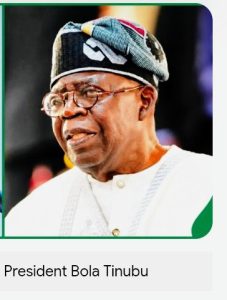
The Council described as shocking the President’s failure to condemn the growing wave of political violence, noting that, through his spokesman, Mr. Bayo Onanuga, the Presidency had instead chosen to caution opposition parties while shielding those allegedly responsible for violence within the ruling APC.
“President Tinubu cannot claim to desire peace when his own words provide cover for violence.
“‘All Is Fair in Politics’ is not the language of a Head of State. It is the language of political desperation and an open licence for thuggery, ballot snatching, intimidation and bloodshed.
“From Edo to Cross River, Gombe to Lagos, and Kebbi to Kaduna, Nigerians have witnessed attacks on opposition gatherings, destruction of campaign materials and the brutalisation of innocent supporters, allegedly by APC-sponsored thugs.
“Yet, Mr. President has not considered it necessary to call his governors and party members to order.
“Instead, the Presidency has resorted to diversionary tactics, blaming victims and preaching restraint to the opposition while members of the ruling party are accused of unleashing violence across the country,” the statement said.
The ADC-PCC challenged President Tinubu to explain why his condemnation of political violence appears directed at the opposition rather than members of his own party.
It asked: “Why has Mr. President refused to condemn APC governors who openly threaten opposition supporters? Why has he remained silent over public incitement by officials of his party? Why is his anger always directed at the opposition and never at those within his own political fold?”
The Council maintained that the ADC remains committed to peaceful, issue-based political engagement, insisting that its campaign is focused on addressing the country’s pressing challenges, including hunger, insecurity, unemployment, corruption and what it described as the failures of the Tinubu administration.
It accused the APC of resorting to violence because it had little to offer Nigerians in terms of credible solutions to the country’s problems.
Consequently, the ADC-PCC demanded that President Tinubu immediately and publicly withdraw his “All Is Fair in Politics” remark, condemn and call to order APC governors and party officials accused of inciting violence, and direct security agencies to protect all Nigerians impartially rather than allow them to become instruments of intimidation and oppression against opposition parties.
” Nigeria belongs to all of us. No political ambition is worth the blood of any Nigerian.
“If former President Goodluck Jonathan could make that profound declaration in 2015, President Tinubu has no excuse not to say so and demonstrate the sincerity of his commitment to peace in 2026.
“The ADC will not be intimidated. We will continue to campaign peacefully, and in 2027, Nigerians will have the opportunity to vote for competence, integrity and a new beginning,” the statement added.





-
News5 days ago
IGP Disu decorates 29 senior police officers with new ranks….charges them on professionalism, integrity,others
-
News4 days ago
Airstrikes kill 40 ISWAP terrorists in Borno
-
News4 days ago
We finally received CTC Of Lifu’s Judgement, without Atiku, Other Candidates Names Mentioned—Senator Melaye
-
News4 days ago
2026 U-17 WWC: Tinubu rewards each Flamingos player with ₦100m
-
News5 days ago
How Federal High Court Chief judge is beign blackmailed with EFCC, CCB- ADC Campaign Council
-
News2 days ago
Crowd Shouts ‘Bamayi’ at Tinubu, pelt convoy in Abuja
-
News5 days ago
Oil slump opens door to cheaper petrol for Nigerians …as Brent hits lowest since August
-
News5 days ago
Oil price fall: We ‘ll take appropriate action against marketers, petrol stations over unfair practices- FCCPC