
News
Faces of Open Government: The Clem Agba Exemplar

Looking back at Nigeria’s time with OGP, what are some of your proudest moments?
OGP’s implementation in Nigeria has been on the rise since the country joined in 2016. Nigeria has implemented two national action plans since then. The third was recently signed by President Muhammadu Buhari and is currently rolling out.
Looking at the journey thus far, I can say that I am very proud of our achievements with regards to the development of the beneficial ownership register, public financial management reforms, and more. These feats wouldn’t have been possible without the tireless efforts of reformers in the country.
OGP’s co-creative principle played out strongly in facilitating Nigeria’s achievements. There is increased partnership and synergy between the government and non-government stakeholders in driving the reform agenda in the country. Subject matter specialists and technocrats from both the government and non-governmental sectors are contributing to change and civil society involvement in governance has expanded through advocacy and technical support which has contributed immensely in facilitating the reforms achieved thus far.
Nigeria has advanced many open government reforms since it joined OGP in 2016, including enhancing beneficial ownership transparency in the extractives sector. Why was that issue such a priority for Nigeria?
Prior to President Muhammadu Buhari’s assumption into office in 2015, the economic and financial crimes indicators were worrisome. OGP is a child of necessity occasioned by the desire to eliminate corruption in governance through transparency and accountability, which led to Nigeria joining the global initiative in 2016. All Extractive Industries Transparency Initiative implementing countries including Nigeria are expected to maintain a publicly available register of the beneficial owners of the corporate entities. In line with this charge, Nigeria Extractive Industries Transparency Initiative (NEITI) ensured that Nigeria developed a beneficial ownership register of oil companies operating in the country. This register initially created by NEITI is being linked to the more expansive beneficial ownership registers for the oil and gas sector, mining sector and for all companies in Nigeria in collaboration with the Department of Petroleum Resources (DPR), the Mining Cadastre Office (MCO) and the Corporate Affairs Commission.
The issue is a priority for Nigeria because of the anonymity that is related to non-disclosure. It enables many illegal activities, such as tax evasion, corruption, money laundering, and financing of terrorism to take place out of the view of law enforcement authorities. Having a comprehensive beneficial ownership register will help to insulate the country, its citizens, and the legitimate businesses operating in Nigeria from the hazards of corporate anonymity and promote transparency and accountability.
The beneficial ownership register has been celebrated by many stakeholders and international organizations and even received the OGP Impact Award for Africa and the Middle East in 2021. What do you think contributed to its success? What lessons can other countries learn from your experience?
Nigeria’s feat developing the beneficial ownership register is attributable first to the political will exhibited by President Buhari who promised to eliminate corruption in all its ramifications and forms in his inaugural speech of 2015. This effort has been sustained with his embrace of institutionalizing public financial management reforms in the country. Without the president’s sustained and deliberate effort, this feat would not have happened.
Secondly, the support of the World Bank throughout the process of developing the register is another factor and lesson worth sharing. The World Bank is renowned for its professionalism and focus on results delivery in line with its vision of shared prosperity and poverty alleviation, which drove the development of the BO register.
Thirdly, the implementing agency, the Corporate Affairs Commission, and the OGP national secretariat and other key stakeholders collaboratively worked to champion the development of the beneficial ownership register.
Nigeria has been a member of the OGP Steering Committee since 2019, playing an important role in creating and launching OGP’s 2023-2028 Strategy. How can governments such as Nigeria’s help implement the new strategic shifts and goals envisioned by the OGP community?
Nigeria stands to support the implementation of OGP’s new strategic shifts of becoming a more political, people centered, and inspiring partnership by suggesting the following strategies to be considered for adoption by the OGP global towards the delivery of the 2023-2028 OGP strategy:
▪︎ In line with OGP’s reinforcing goal of inspiring open government innovations, evidence, and stories, a performance measurement system, for delivering the strategy should be introduced. Countries could be assessed on their deliverables.
▪︎ To accelerate progress on open government reforms, OGP should institutionalize peer review sessions beyond what the IRM does by facilitating more opportunities for countries to share experiences on OGP implementation according to commitment areas. The engagement will serve as a shared learning platform to identify what works well and what needs to be done differently with consideration for country specifics and peculiarities.
▪︎To encourage the implementation of open government as central to how all levels and branches of government function and deliver on their priorities. The implementation of open government as central to how all levels and branches of government function and deliver on their priorities, will need to be done with OGP members ensuring that OGP’s new strategic thinking is permeated in their national and local action plans. Also, the window period for action plans that are still being implemented should be targeted to ensure this new thinking is reflected accordingly to address local peculiarities while considering the new strategic shifts.
▪︎ To support the adoption of OGP principles, OGP will need to partner with donor and development partners to initiate new programs that can be implemented in countries. Examples of programs include the one experienced under the States Fiscal Transparency, Accountability and Sustainability (SFTAS) Project implemented in Nigeria. By so doing, rewards and incentives will be tied to performance by countries in their implementation of OGP.
▪︎Governments such as Nigeria can help to implement the new strategic shifts and goals envisioned by the OGP community by leveraging on national structures such as the National Economic Council in Nigeria. This will stand to create visibility and buy for OGP implementation at the policy level.
▪︎Finally, the OGP global should adopt best practice of specifically targeting the National Secretariat staff across the implementing countries for fit for purpose workshops or capacity building in specialization areas like Communication, Civil Society, Monitoring and Evaluation, ICT, and beyond. This stands to build the capacity of the coordinating partners with the basic knowledge, skills, latest trends and innovations in OGP implementation to be stepped down.
(Source: www.opengovpartnership.org
The United States government has insisted that Nigeria should retain its Country of Particular Concern, CPC, designation, saying the country has not done enough to protect Christians from attacks.
Assistant Secretary of State for African Affairs, Frank Garcia, made this statement on Thursday during a congressional hearing on violence in Nigeria.
Garcia was responding to questions from US Congressman Riley Moore, who asked about the government’s efforts to dismantle militia strongholds and kidnapping camps in the Middle Belt, particularly in Benue and Plateau states.
Moore also raised concerns over the exclusion of the states from the forest guard initiative and delays in deploying 1,000 approved guards to Plateau.
“Before you answer that, we cannot take this CPC designation off of this country. They have not done enough,” Moore said.
Garcia acknowledged the lack of progress, but said Nigeria was taking steps to address the concerns, although they had yet to produce results.
He said the country’s security capacity was still being developed and that deployments were not happening fast enough.
“Unfortunately, the violence has not stopped,” Garcia added, citing continued attacks in Kaduna and Plateau states.
He said the US had provided police training and equipment, expanded intelligence sharing and worked with Nigerian financial institutions to disrupt terrorist financing.
Garcia added that Washington would continue diplomatic engagements and security cooperation to protect vulnerable communities and ensure accountability.
However, the Nigerian government has consistently rejected claims of a “Christian genocide” or targeted religious persecution, maintaining that insecurity affects Nigerians of all faiths.


Liquefied Petroleum Gas, commonly known as cooking gas, has risen significantly, forcing Nigerians to spend more to purchase the product.
The increase comes as depot owners and retailers raised their prices over the past two days.
StockGap increased its depot price by N25 to N1,440 per kilogram. Nigerian Independent Petroleum Company Limited, NIPCO, Mobil (now 11 Plc) and Ardova, on the other hand, sold the product at N1,400 and N1,390 per kilogram, respectively.
Similarly, LPG retail outlets, including Raniol, Juda Oil and Nigerian National Petroleum Company Limited, NNPC, outlets in Abuja and its environs, now dispense cooking gas at between N1,550 and N1,600 per kilogram, up from N1,400 and N1,500.
Micro-LPG dealers sell the product for between N1,700 and N1,800 per kilogram, depending on the location in Abuja.
Earlier, NIPCO’s spokesperson, Taofeek Lawal, had exclusively told DAILY POST that LPG prices could increase further between November and January next year.
The latest price increase means that Nigerians who previously spent N17,500 to refill a 12.5kg cylinder at N1,400 per kilogram will now pay N20,000 at the new rate of N1,600 per kilogram, representing an additional N2,500.
News
2027: Tinubu Must Withdraw ‘All Is Fair in Politics’ Remark, Embrace Peaceful Coexistence — ADC-PCC
The African Democratic Congress Presidential Campaign Council (ADC-PCC) has called on President Bola Ahmed Tinubu to publicly retract his controversial “All Is Fair in Politics” remark, warning that such rhetoric fuels political division, emboldens thugs and poses a grave threat to the nation’s peace and stability.
The ADC-PCC also expressed concern over what it described as the President’s disturbing silence on the conduct of some APC governors and party chieftains who have openly made inflammatory statements and allegedly encouraged political violence.
In a statement signed by its Director of Media and Publicity, Kola Ologbondiyan, the ADC-PCC urged President Tinubu to rise above partisan interests and demonstrate the statesmanship expected of a national leader, citing former President Goodluck Jonathan’s unequivocal declaration that no presidential ambition was worth the blood of any Nigerian.
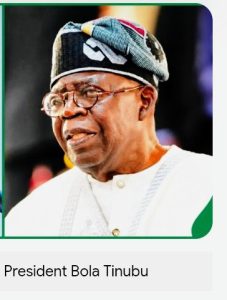
The Council described as shocking the President’s failure to condemn the growing wave of political violence, noting that, through his spokesman, Mr. Bayo Onanuga, the Presidency had instead chosen to caution opposition parties while shielding those allegedly responsible for violence within the ruling APC.
“President Tinubu cannot claim to desire peace when his own words provide cover for violence.
“‘All Is Fair in Politics’ is not the language of a Head of State. It is the language of political desperation and an open licence for thuggery, ballot snatching, intimidation and bloodshed.
“From Edo to Cross River, Gombe to Lagos, and Kebbi to Kaduna, Nigerians have witnessed attacks on opposition gatherings, destruction of campaign materials and the brutalisation of innocent supporters, allegedly by APC-sponsored thugs.
“Yet, Mr. President has not considered it necessary to call his governors and party members to order.
“Instead, the Presidency has resorted to diversionary tactics, blaming victims and preaching restraint to the opposition while members of the ruling party are accused of unleashing violence across the country,” the statement said.
The ADC-PCC challenged President Tinubu to explain why his condemnation of political violence appears directed at the opposition rather than members of his own party.
It asked: “Why has Mr. President refused to condemn APC governors who openly threaten opposition supporters? Why has he remained silent over public incitement by officials of his party? Why is his anger always directed at the opposition and never at those within his own political fold?”
The Council maintained that the ADC remains committed to peaceful, issue-based political engagement, insisting that its campaign is focused on addressing the country’s pressing challenges, including hunger, insecurity, unemployment, corruption and what it described as the failures of the Tinubu administration.
It accused the APC of resorting to violence because it had little to offer Nigerians in terms of credible solutions to the country’s problems.
Consequently, the ADC-PCC demanded that President Tinubu immediately and publicly withdraw his “All Is Fair in Politics” remark, condemn and call to order APC governors and party officials accused of inciting violence, and direct security agencies to protect all Nigerians impartially rather than allow them to become instruments of intimidation and oppression against opposition parties.
” Nigeria belongs to all of us. No political ambition is worth the blood of any Nigerian.
“If former President Goodluck Jonathan could make that profound declaration in 2015, President Tinubu has no excuse not to say so and demonstrate the sincerity of his commitment to peace in 2026.
“The ADC will not be intimidated. We will continue to campaign peacefully, and in 2027, Nigerians will have the opportunity to vote for competence, integrity and a new beginning,” the statement added.




-
News5 days ago
IGP Disu decorates 29 senior police officers with new ranks….charges them on professionalism, integrity,others
-
News4 days ago
Airstrikes kill 40 ISWAP terrorists in Borno
-
News4 days ago
We finally received CTC Of Lifu’s Judgement, without Atiku, Other Candidates Names Mentioned—Senator Melaye
-
News4 days ago
2026 U-17 WWC: Tinubu rewards each Flamingos player with ₦100m
-
News5 days ago
How Federal High Court Chief judge is beign blackmailed with EFCC, CCB- ADC Campaign Council
-
News5 days ago
Oil slump opens door to cheaper petrol for Nigerians …as Brent hits lowest since August
-
News2 days ago
Crowd Shouts ‘Bamayi’ at Tinubu, pelt convoy in Abuja
-
News5 days ago
Oil price fall: We ‘ll take appropriate action against marketers, petrol stations over unfair practices- FCCPC